Electronic Gaming Monthly had a frat house like atmosphere, with plenty of late nights and crazy humour. Contributors would throw ninja stars at cardboard standees of their favourite characters and were always up for some bowling in the hallway.
Just ask Ethan Einhorn.
He is now a Digital Media Producer for one of the biggest video game developers in the world, he but started his carrer in the gaming industry as a freelance editor for EGM.
It was an incredibly fun place to learn.
“I was actually working at a local television station because I was a film major and one of the guys I was working with saw that I had a poster for EGM in my house. He told me that he used to work for the company as an archivist. He kept in touch with those guys and asked if I could talk with them because they had an opening.”
It seemed as though everything was falling into place for Einhorn. It did, but not in the way he expected.
“Turns out, I didn’t get the opening, but I did get a freelance gig that I took very seriously.”
He devoted a year to getting as many opportunites as possible to write for the magazine. Eventually, his hard work paid off with a full time position.
He didn’t have journalism training but rather his focus in college was screen writing.
“I was furiously reading video game magazines at the time, so I really understood the language of game editors and how to clearly communicate with readers.
“That kind of knowledge was critical, because when you are given the chance to do freelance work, they are looking very carefully at your writing style and if it matches the expectations of the magazine you will get more jobs. If it doesn’t, you will not.”
The process was challenging to get the hang of at first, but as time progressed it became easier to master, he said.
“Eventually I could do quickly and easily reviews that would take me a much longer time to compose when I started out.
“Didn’t get paid much. I had to take a second job at a game store to be able to support myself, but it was well worth it. Working full time for the magazine was certainly a livable wage, but it took me a year to get it.”
Even though people have the conception that working at a game magazine is all about fun and games, there is actually a lot of effort put into every issue, Einhorn said.
“Most people think when you’re an editor at a magazine you’re sitting around playing games all day. The reality is you’re taking the games home with you so you can play them there. The time spent in the office is entirely spent on editorial. Getting information from developers, deciding what the news stories and layout are going to be.
“It is a tremendous amount of work, but there are few things more gratifying than going somewhere out of state, going into the Walgreens and picking up a magazine that has your words in it.”
Over the past few years, gaming journalism has expanded beyond the format of print magazines. With the growing popularity of the Internet, video game journalists can report the news as it happens on various websites.
Destin Legarie of Screwattck.com, is the host of the site’s video blog, Hard News.
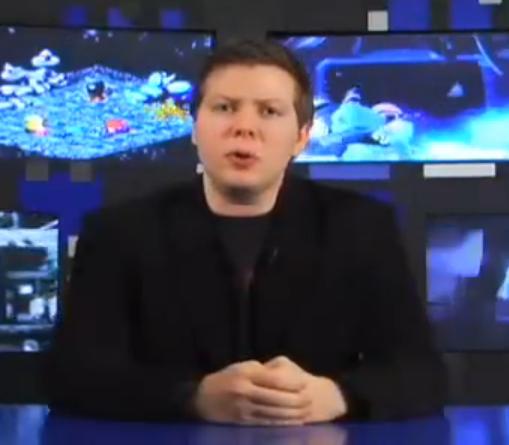
He may not consider himself a journalist, but he does his fair share of reporting. For each story on Hard News, Legarie said he browes the web, going over countless different websites looking for the best stories of the day.
“Once I find three, I’ll run with them after reading the articles I have found and those articles sources etc.”
Sometimes he’ll get news tips from watchers and investigate those as much as possible before running them, he said
“Looking up the person’s name, the facts they’ve given me, etc. Aside from those methods, we do get a lot of the same press releases that all the gaming blogs get and occasionally I will use information from those.”
