 Editor's note: Many of us on Bitmob are aspiring professional writers ourselves -- whether we envision penning scripts for a development studio or criticizing the content they produce, Louis's interview with BioWare Senior Writer David Gaider can offer some insight. -Rob
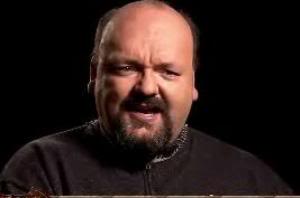
David Gaider (pictured right) is a senior writer for BioWare, and has worked with the company since 1999. He was lead writer for Dragon Age: Origins and Awakening.
The Edmonton, Alberta based writer has worked on Baldur's Gate 2: Shadows of Amn, Star Wars: Knights of the Old Republic, and Neverwinter Nights. He also penned both Dragon Age novels The Stolen Throne and The Calling.
Currently, he's working on Dragon Age 2.
Louis Garcia: How did you become a writer for BioWare?
David Gaider: It was kind of in a weird way, actually. I didn’t even know that BioWare was in Edmonton. This was back when they had released Baldur’s Gate one, which I had heard of but hadn’t played.
I had a friend who worked at BioWare -- He was an artist here. He’s not at the company now. BioWare at the time was looking to hire some new writers and designers, and they said to the people who worked here, "if you know anyone who’s written something or created something game related to completion, hand it over and we’ll check it out."
I had written this game that this artist friend of mine was playing, and he gave it to longtime BioWare Lead Designer James Ohlen without actually telling me he was doing so. James contacted me and it was out of the blue. I hadn’t applied or anything. It was very bizarre, and I came in for an interview. I managed a hotel at the time.
I actually turned down the job at first. I thought, "Oh, game development company in Edmonton…that doesn’t seem very stable or anything."
I went into work at my hotel the next Monday. My boss had flown in from Mississauga, which was unusual, and told me that the management company that I worked for had been bought out.
They let all of their general managers go. I walked off the property that day and went, "Oh, maybe I will try that BioWare job." I phoned them back and asked them if the job offer was still good, and they said "yeah."
It just kind of worked out. It was very fated, I guess. It’s not a path into the industry that I would recommend [laughs]. I get e-mails all the time asking, "Can you advise me how to get a writing job at BioWare, like how did you get started?" I’m like -- I don’t think my path is even available to people [laughs].
LH: What is it like working for BioWare?
DG: I certainly don’t feel like a star or anything. A huge team is responsible for a game, right? I’m just one part of the machine. I feel appreciated, sure. I think they believe that I’ve done some good work for them. I feel grateful for the role I’ve been given. I’m now in a lead position.
It’s a fun job. It’s still a job. There are days where you want to slit your wrists [laughs], especially when cuts and such happen. Some of them can be really heartbreaking.
When you have something that you pour your creative energy into, sometimes things don’t go the way you planned and then it’s not fun. Some days it’s just drudgery.
But then on other days you realize, "Who else has the chance to do this stuff?" You work at a job where you can turn to the person next to you and have some bizarre conversation, and you stop in the middle of it and you’re like, "Nobody else gets to do this." So that’s kind of awesome.
LG: [Gaider veered onto this topic during the question.] On Dragon Age: Origins finally hitting stores and filling eager gamers’ consoles.
DG: It was sort of a justification. Before it came out there were a lot of people that said, "Oh, it’s a little too old school for modern audiences."
It did really well, so there was a lot of...you kind of want to call some of the people up and say "I told you so." I think the result speaks for itself, right?
LG: What is the writing process like? Separate writers work on different characters and scenarios. Do you guys kind of all come together at some point and share your work?
DG: We tend to work in the same room. Right now we have what’s called "the writers pit" where everyone on the same project works nearby, so writers can bounce ideas off of each other.
A project requires a lot of writing, so we do split everything up. You have an area of responsibility.
It depends on the phase, right? The initial phrase is all about coming up with the concepts and what is our overall story. We have to break it down into whatever the quests involve and make sure that the quest design is solid. The writer is not alone in that. Several other disciplines in design are involved and help design the quests. The writer just takes an overall responsibility for it, but we don’t write them ourselves.
I think some people picture it as top down, like the writer says "this is what I’m writing," and everybody else in the company runs around to implement our vision. That’s not quite the way it is.
The overall vision is the responsibility of the lead designer. The other disciplines, like the combat designers or level designers, add their two cents...like "we’d like to try this" or "can we do a quest that focuses on this gameplay element."
Once you’ve got that broken down, it’s a matter of the writer putting together the dialogue for it. We try that out and see if it’s fun and revise and then try it out again and then revise. You end up throwing out a lot of stuff you worked on.
Sometimes it just isn’t working, and it ends up getting cut. That’s always heartbreaking.
LG: How much freedom did you have with writing different aspects of the game?
DG: Some. As lead designer, I have a little more freedom. If someone is a senior writer, I would give him a plot with a general plan, and he would be responsible for going ahead and breaking it down into more detail.
He doesn't usually have the freedom to create his own characters…minor ones -- yes…but the major ones -- no. They don’t get to decide the major plot. A more junior writer basically gets handed a much more detailed plan. They’re more responsible for implementing that.
As a lead writer, you get a little bit more freedom -- I’m given parameters as in "this is what we need the story to be" or the lead designer talks to me about the overall vision for the story.
We toss ideas back and forth. And then in the end, once I understand the parameters that the game’s story has to be made with, and I create that.
Inside those parameters, I actually have a lot of freedom, so that part is gratifying. It’s not a case of me deciding I want to write this story. In that respect, I have little freedom [laughs].
Up next: part two -- creativity and the novels.
1