Do Japanese developers really need to westernize their games?

Default_picture
Monday, October 01, 2012
EDITOR'S NOTEfrom Rob Savillo

Atsushi Inaba, a producer for Platinum Games, recently criticized opinions that Japanese developers are in trouble, noting that many Western studios also release terrible games. But at the same time, former Square Enix president Jun Iwaskai now heads GungHo Online Entertainment America in a quest to capitalize on the Western game industry.

So what's going on? Joe just hopes that the unique qualities of Japanese games still shine through.

It feels like just yesterday that I was sat in my living room watching my brother play Sonic 3 and Knuckles on the Mega Drive as a wide-eyed child. The tropical colors of Angel Island and mood-lifting music were simply mesmerizing. What made Sega's console truly amazing to me, though, was that this machine had been created in a place that was literally on the other side of the world; it was mysterious. That sense of wonder obviously diminished as I got older -- not just because the enigma of foreign technology had been lifted but also because in the 18 years since that day, the rest of the world has had time to catch up.

Slow changes over time are always less noticeable and more acceptable than sudden ones. Perhaps it's for this reason that gamers and the industry as a whole have only recently started to publicize the disheartening news that Japan, arguably the spiritual home of interactive entertainment, is losing ground to their Western counterparts. It's a worrying thought, to be sure, but the question on my mind (as I’m sure it is on many others') is, "Why?"


The emergence of Western studios, like Ubisoft and Electronic Arts, and Microsoft's entry into the console market in 2002 with the Xbox have contributed massively to popularizing gaming culture outside of Japan. But this is just one system of a trio that has defined this generation of console wars -- both Nintendo and Sony are two of the biggest entertainment giants in gaming, not to mention the world, so attributing the Western manufacture of hardware to the receding Japanese market would be a shortsighted stance to take.

Japanese companies like Capcom and Square Enix have increasingly begun to cater to Western audiences to stay competitive, going so far as to lease out licenses like the upcoming DMC: Devil May Cry. The leasing out of established works may be a sign of Japan's lack of confidence when it comes to grabbing the attention of Western audiences. One could also argue that outsourcing development duties detracts from everything that makes a foreign production unique in the first place.

Of course, i'm in no way trying to devalue the efforts of studios that do take on treasured franchises from the Land of the Rising Sun, and I have no doubt that developer Ninja Theory will make Dante's upcoming adventure an eventful one. However, it seems that Japanese studios are also attempting to westernize titles that are developed in-house in an attempt to appeal to a mass audience.
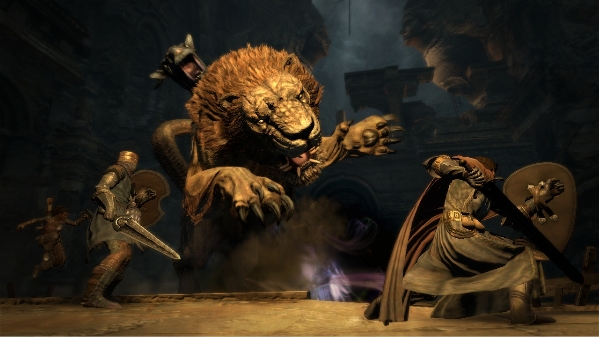
Dragon's Dogma is the most recent example that comes to mind. Capcom's take on the open-world role-playing game certainly wasn't a bad game by any means; in fact, I enjoyed it immensely despite its flaws. Its environments and art style may have been generic fantasy fare, but the combat -- as expected of a Capcom game -- is fluid and frenetic even by action game standards.

But there's a reason that Dogma has been compared to developer Bethesda's Skyrim since it's release: Both titles are RPGs inspired by Western medieval mythology, and Dogma is inevitably going to be seen as an Eastern interpretation of the goliath that is the Elder Scrolls series.

Dogma may have been reasonably well-received by players and critics alike, but deeply identifiable Japanese games are still arguably the most successful and critically acclaimed to have come from overseas. It feels strangely ironic that their industry is trying to move away from its roots.
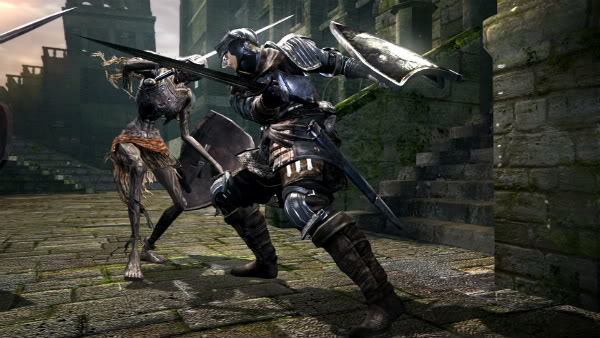
Both Bayonetta and Dark Souls feature some of the most fantastically designed environments I have ever experienced. They may both be inspired by European architecture, but the gothic nature of the castles and cathedrals in Souls' Undead Burg, for example, just drag you into its atmosphere of dread.

If there is one thing that Japanese developers can be lauded for, though, it's difficulty. Forgive my conjuring out of thin air phrases to describe my meaning, but true difficulty is a different entity to artificial difficulty. The Ninja Gaiden and Souls' series are renowned for their difficulty not because they are too hard but because they feature the type of hardships that can be overcome with skill and planning and by learning how the mechanics themselves combine into such a fluid system.

It would be a shame to see Japan lose its digital identity by catering to Western audiences, but it is a fact that gaming is no longer something the West has adopted into its own culture. I just hope that Japan can find a suitable alternative to falling sales that allows its developers to continue creating unique, standout titles that don’t drown in the sea of shooter and sandbox experiences that now dominate the shelves.

 
Problem? Report this post
BITMOB'S SPONSOR
Adsense-placeholder
Comments (5)
Default_picture
October 01, 2012


What about the Resident Evil or Metal Gear series? Both are from Japanese developers, and both have been around for a long time. Yet these two games have always felt “western”.

Also what about mobile gaming in Japan. Mobile games are big sellers over there. Do you think that Japanese developers may be making more “Japanese type games” for mobile platforms because that market is in Japan, while for the AAA consoles they make more "western style" games because the big market is in the west?

Default_picture
October 01, 2012

You're absolutely right, the Resident Evil and Metal Gear series are obviously clear exceptions but they are also part of the minority. I did assume readers would have some prior knowledge so didn't touch on this but Japanese developers are starting to slide towards westernizing new releases.

In addition to the games mentioned in my article, releases such as Platinum's Vanquish have clearly been influenced by mechanics seen in games such as Gears of War. Perhaps I didn't make it clear enough in the article but Japanese games being westernized goes beyond just the visual and environmental presentation, but includes the actual mechanics, narrative and overall presentation also.

A relevent example, for me, would be the Metal Gear games. Arguably it is part of the same genre as the Splinter Cell series, yet the character design, dialogue and the overall narrative structure couldn't be more different to Sam Fisher's adventures.

Admittedly, I don't know as much as I would like about the mobile gaming market in Japan and that could definately be the case. Mobile gaming for me is an entirely different topic though, and it is becoming increasingly popular in Europe and America as well as overseas. 

Default_picture
October 02, 2012

I somewhat disagree with you on both of these series. Not necessarily the first games in either but certainly subsequent ones. Code Veronica and Zero both had terribly outdated and undeniably Japanese control schemes upon release. Even Metal Gear Solid 4 suffered from awkward and unnecessarily complex controls in comparison to its contemporaries. While they both featured Western settings and characters, mechanically they were obviously developed in the East.

Japanese mechanics seem to transcend time without much refinement more readily than Western ones. I really like Bayonetta but its combat is firmly rooted in the conventions of the past, the only real difference being that it is slightly more forgiving than the older games I never liked. This same reason is most likely behind the DMC transferral; Japanese developers often seem reluctant to update core mechanics, often to the detriment of a perfectly good property. I can count five Resident Evil games that played almost exactly the same between 1996 and 2002. In comparison, the Grand Theft Auto series went from being top-down and sprite based to entirely polygonal and sprawling in a shorter timescale. It also fundamentally overhauled all aspects of its game play and added significant layers of depth to character, setting and peripheral details, especially the fantastic audio work.

I really like some Japanese games, especially one off titles, the trouble seems to stem from the serialisation of a concept. Mechanics and narrative conventions appear to be much more sacred to Japanese developers and this inevitably stifles progress. Many Eastern properties are worthy of praise, they just seem to often be smothered by years of minor iteration and too many sequels and are ultimately left as hollow totems to a faded glory.

Default_picture
October 02, 2012

I totally agree with your first paragraph Leigh, and as I said in my previous comment, my personal definition of a Japanese game goes far beyond the visual presentation of a game. I did actually intend to mention the unique nature of narrative in Japanese games but the article become a little too lengthy.

The Resident Evil series has always historically been very western in terms of setting and character design but to us, its story comes across as quite hammy and generally becomes a guilty pleasure. There are multiple reasons why the narrative doesn't translate well; I think a likely cause is the difference in culture between Japan and the west. 

Your comments about the stifling of control mechanics in Japanese games interests me too. I entirely agree that the Resident Evil and Metal Gear series convey the feeling of legacy issues, i.e. there seems to be a reluctance to change tried and tested formulas, but I don't think those issues are specific to Japanese developed games.

Look at the CoD series or even the FPS genre as a whole, there's been a lot of publicity about how stifling and formulaic shooters have become in recent years, maybe it's because developers simply don't know what else can be done to innovate or perhaps it's the ageing technology of this generation that is just simply holding companies back.

Default_picture
October 03, 2012

It seems like you're just catching on. I'm not sure which part but there is one big group of people in japan which always aims to be westernise because they idolise the west. Nt everyone from japan is like that, just some. That's why naruto is white. Japan is being seduced by America, it wants to make money like America. Japanease views which are good and American views which are also good are mixing, and what comes out aint always pretty.

You must log in to post a comment. Please register if you do not have an account yet.