Japanese video-game developers should ignore their critics

Default_picture
Wednesday, March 28, 2012
EDITOR'S NOTEfrom Rob Savillo

Justin articulates well that I've long been thinking but unable to put into words: Japanese game developers should just stay Japanese. Criticism from western journalists (paraded around as reasonable because a few, high-profile Japanese developers echo a similar sentiment) is naive at best and weirdly ethnocentric at worst.

Almost all of my favorite titles from this console generation are from Japan, and I don't want its developers to lose their unqiue cultural perspective in order to cater to unreceptive western audiences.

It’s no secret that Japan no longer dominates the global video-game market, but according to luminaries like Hideo Kojima and Keiji Inafune, the Japanese development community is mostly oblivious of western tastes and doomed to fail in its current state.
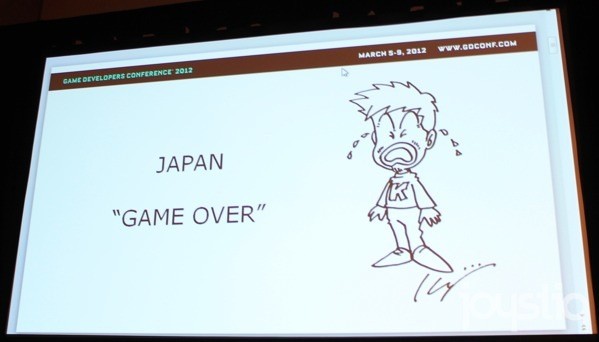
Inafune has it all wrong.
 

Most of the critics mean well, but they paint a picture of a sinking ship, with only a handful of people smart enough to get on the last few lifeboats. It’s a grim outlook for a nation that I typically associate with optimistic, ragtag groups saving the world and colorful curiosities that emphasize harmony over violence.

But is the situation really that dire? It’s a question my friends and I have been asking ourselves for a couple weeks after Game Developers Conference 2012, and I think we’ve realized that maybe it isn’t a problem that needs fixing. Maybe we’re looking at the new status quo.


Last year, you would be forgiven for forgetting some of the modest industry successes in the midst of blockbusters like Modern Warfare 3 and Skyrim. Although the payoff can be huge, development costs and advertising budgets for these games are staggering -- to the point where many talented individuals are leaving the triple-A world for indie pet projects and iOS tidbits.

But there is some territory in between, and the folks at Atlus and From Software seem to appreciate that. With Catherine and Dark Souls, respectively, they took two seemingly niche concepts and turned them into hits. Neither game is compromising: Catherine is a bizarre psycho-sexual, thriller puzzle game, while Dark Souls has made its fortunes by making players cry in frustration. And yet somehow, with reasonable expectations and budgets, these developers were able to find western audiences.

Compare that to Final Fantasy 13, the poster child for a Japanese game industry gone awry. With over 5.5 million copies sold, the lessons learned from this game’s development remain unclear. But whether or not you’re like me and managed to eke some fun out of the game, I don’t think it can be disputed that the title hurt the franchise’s reputation.
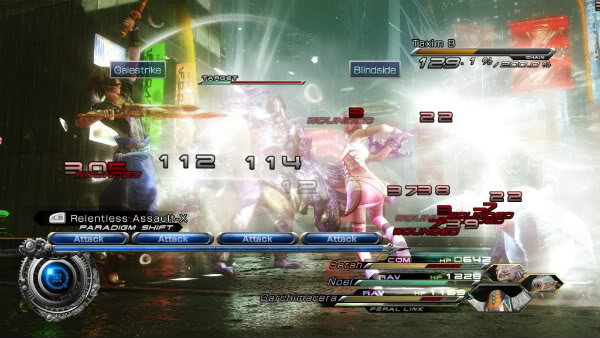
Developer Square Enix’s top talents spent over five years creating the engine, scenarios and 50-plus-hour quest. In that time, Atlus and Xseed (among others) successfully published numerous smaller projects that made money back and gave fans both new and old experiences. It’s great that Final Fantasy 13 was a grand experiment, but it was also a tremendous gamble that now has many writing Square Enix off after a single maligned entry in a beloved series.

But maybe Atlus-size business isn’t big enough. I can understand that; Europe and North America combined have over ten times the potential audience of Japan, and by catering to only Japanophiles, you end up leaving a lot of money on the table.

Well, if you’re so insistent on making inroads in the west, for the love of gamers everywhere, be careful with whom you work. Pick your projects carefully. Right now, I’m looking at scathing reviews for the latest Resident Evil spinoff, Operation Raccoon City, and wondering how Capcom let that one out the door. Ditto for Dark Void and Bionic Commando, the latter of which should have given the company pause the moment it was revealed that Rad’s wife was programmed into his arm. Our store shelves are just as crowded here in the States as they are in Japan, and we’re just as good at sniffing out half-assed dreck. (OK, so maybe that’s a stretch.)

Sometimes, though, it’s not even a matter of quality. I have some qualms with Vanquish‘s storytelling, but it’s every bit as competent as the latest Gears of WarCritics genuinely seemed to like Binary Domain, too. The problem is that on the surface, these games look and sound just as generic as countless other shooters, and neither Vanquish nor Binary Domain was ever going to get the same kind of advertising budget that helps Battlefield or Call of Duty stand out. I’m not saying that Japanese developers have nothing to add to the genre, but on this side of the Pacific, it’s an extremely brutal marketplace without much room for imports.
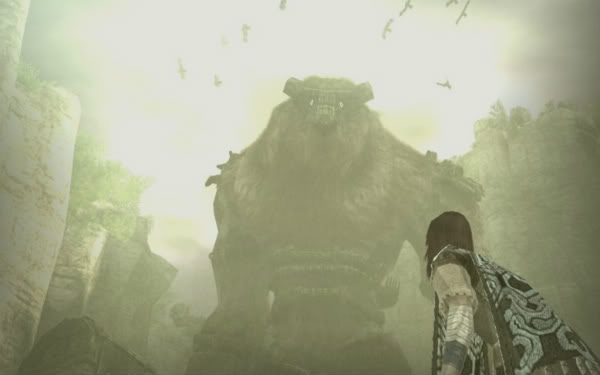
In making these "western friendly" games, Japanese developers also run the risk of losing their cultural identity. I think globalization is wonderful in a number of respects, but in this particular case, it is the enemy of artistic expression. When I look back on the most memorable Japanese games of the past few generations, I think of games like Okami, Katamari Damacy, Valkyria Chronicles and Shadow of the Colussus. Granted, not all of these games were huge sellers, but they all pushed video games forward while also remaining true to their country of origin. In chasing the dollar and farming out development elsewhere, you run the risk of losing the joy and flourish that make Japanese games so special.

There is one other alternative even though everyone dismisses it as an anomaly: Nintendo.* Miyamoto and crew have had their ups and downs over the past three decades, but they've remained on top through consistent quality and a willingness to move in new directions.

You can bag on the Super Mario Bros. or Legend of Zelda series for falling back on tried-and-true mechanics, but there's a reason both series have remained relevant, and it's not the iconic characters or the marketing. Those help; but at the end of the day, when you buy a Nintendo game, you know that you are picking up something that has been play-tested and carefully crafted. Years of research and development go into each one.

Companies like Capcom that damage their brands with shoddy products would be foolish to ignore Nintendo's track record. (Plus, Nintendo isn't against publishing cultural oddbals like my beloved Chibi-Robo and Animal Crossing.)

Of course, "Be Nintendo" isn’t much of answer to a problem that is taking a heavy toll on Japanese developers (and the global video-game industry to some extent). But while there are many quick options, such as social network apps, iOS quickies, and western collaborations, none of them are going to patch things up if you lose sight of what makes you special.

Japan, in this era of gory shooters and jingoistic military sims, you’re still giving us experiences like the synesthesia wonderland of Child of Eden and the biblical hodgepodge El Shaddai. Your games are capable of giving us unbridled joy and somber and contemplative journeys, and no matter what, it’s important not to lose sight of that.


* Renegade Kid’s Jools Watsham recently touched upon this defeatism in a great blog entry about the 3DS eShop and effectively making and selling games.

 
Problem? Report this post
BITMOB'S SPONSOR
Adsense-placeholder
Comments (24)
Default_picture
March 28, 2012

No one should ever ignore their critics, though some are definitely worth listening to over others.

That said, my own grievance with Japanese games aren't that they're "not Japanese" enough, it's that they're less than stellar in any context. An example: I don't play a JRPG where characters display Japanese style societal mannerisms and think "this is too Japanese." However if that same game had those characters displaying said mannerisms in a very contrived way, where it doesn't make sense given the context of the world but a storyteller really wanted it to happen for some reason, I think "what a badly written scene/story/etc."

Mechanically, I see a game like Skullgirls do a proper, easy button config, in the character select screen. I see it having motions where the devs tried to make it easier to do what you want (e.g., DPs take priority over QCFs, but a HCF will always produce a QCF input despite earlier F inputs). I see devs openly listening to critics and polishing the game to near perfection. I don't see that out of too many Japanese fighting game makers.

On that topic, I don't see too much encouraging of community and feedback, either. Where arbitrary design decisions are made (i.e., tripping and locked characters in Smash, three-button Ultras in SF4), there's no avenue to express dissent or suggest improvement. I personally would really like to ask Shigeru Miyamoto why he feels 2D Mario games still need a Run button when running is always what you want to be doing, or Namco why they felt the need to ruin Vesperia's great story of racial and environmental dichotomy with an almost quintessential eldricht abomonation plot.

Default_picture
March 28, 2012

I don't think it's true that they are less than stellar. Many of the Japanese RPGs feature some of the storytelling I've ever seen. In comparison, Western RPGs hardly have the same emotional punch. It's not true that they all solely express Japanese-style societal mannerisms.=

In terms of Western fighting games, I think Japanese titles also possess a lot more depth. There's plenty of old-style fighters that hearken back to the earlier Street Fighter 2 days. On the other hand, the newer fighters include many intricate controller movements. Blazblue especially dives off the deep end with its air dash/button pattern/circular controller motions.

I think the reason why there isn't much encouraging or feedback is because they didn't need them in the past. Many of the games were designed as a finished project that didn't need any changes. The developers had to change their concerns after the backlash to Final Fantasy 13.

The Internet feedback system is fairly new for Western developers too, so this isn't solely a Japanese problem. The entire Mass Effect 3 ending issue was a bit messy, to say the least.

Default_picture
March 28, 2012

i agree

Default_picture
March 28, 2012

@Jonathan: Don't misunderstand: my favorite game is probably Final Fantasy 6, and some of my favorite games come from Japan. In fact quite a few of my own Bitmob posts are about Japanese games, and usually -- Chrono Cross notwithstanding -- praise said games.

I just wanted to point out that my own distaste isn't because Japanese games are culturally Japanese, it's because I'm not liking what I'm seeing in modern Japanese titles, and I dislike story and design decisions I don't feel I can protest or were necessary.

Default_picture
March 28, 2012

and your welcome to that view

Default_picture
March 28, 2012

Yeah. It's not wrong to dislike the popular Japanese games. I still have my gripes in Final Fantasy 13 about Lightning's explanation for her own code name.

To be honest, the Japanese games give me more memories of all the cheesy epic movies that come out in the U.S. I just saw the Hunger Games and I expected Katniss to act like Lightning. Lol.

Default_picture
March 28, 2012

the west has criticism so does the east

the point is to ignore falsehoods and generalizations


fyi kojima has been completely pro japan. Even calling the west a bunch of gun shooting morons (poetic license)

Default_picture
March 28, 2012

Kojima didn't say this. He has waxed poetic about Japanese devs getting more mileage out of less hardware power compared to the rest of the world (which is partially, though not completely, true).

Any dev or gamer, Japanese or otherwise, who would honestly make that blanket assessment about our games (i.e., MovieBob, far too many internet fanboys, this imaginary Kojima you're "taking license with") would be making a fool of himself.

Default_picture
March 28, 2012

he said exactly that quote.

Default_picture
March 28, 2012

Source?

Default_picture
March 28, 2012

"Americans like games where you have a gun and you're shooting at space aliens."

Default_picture
March 28, 2012

/sigh

Default_picture
March 28, 2012

@carlos


you dont have the rpg or fighting genre without japan...............lets be real on a global level the amount of japanese rpgs critically received has TROUNCED the west

Default_picture
March 28, 2012

This is misleading at best. Where a genre originated doesn't really matter when assessing today's games. Also, RPGs were big in PC gaming before Final Fantasy hit Famicom/NES, and even if critical reception for Japanese RPGs really is universally better (I'm skeptical), that's not an argument winner.

Default_picture
March 28, 2012

how is it misleading>

ff was not the first big japanese rpg..........not even close

Lolface
March 29, 2012

Japanese developers don't need to cater a Western audience, they just need to make good games. The problem is (as far as I can tell, I'm no expert on Japanese culture) that videogames aren't as mainstream in Japan as it is over here. With the skyrocketting costs of game development this generation, many Japanese devs have gone to handhelds, because they're cheaper to develop for, and the handheld systems outsell consoles. It doesn't help that most Japanese studios have to build their game engines from scratch instead of liscencing one (like the Unreal engine), which only increases development costs.

Also, looking at JRPGs vs WRPGs (and let's be honest, by WRPGs, we really mean games by BioWare and Bethesda), WRPGs strive for open worlds with cutting edge graphics, while JRPGs delve further into niche territory with anime inspired designs in games like the Tales and Atelier series.

(However, let's be honest, JRPGs were always a niche genre with Final Fantasy being the only breakout series with crossover appeal.)

Default_picture
March 29, 2012

alot of what you say is true..........but in reality gaming is just as NOT mainstream in japan as it is here


I think the fact that they make there own engines leads to more creativity.............


jrpgs delve further into everything really. You want a sports rpg.........sure, you want a bullet hell srpg...........sure, you want a platforming rpg, sure, you want a vn rpg sure...........

In japan rpgs are so much popular you see everything.............


Not only do they do the anime art thing, they do the sprite thing, the wator color thing, the cell shaded thing, the realism thing, everything,

If we compare the top selling japanese rpg and the top selling wrpg, it becomes clear that worldwide niche doesnt discribe it. Because alot of times jrpgs sell more

Default_picture
March 29, 2012

Hey Rob, you mispelled "ethnocentric."

Robsavillo
March 29, 2012

Oops. Thanks!

Default_picture
March 30, 2012

This is something a lot of people within the gaming industry don't understand. The Japanese gaming market is based on tradition. One in which, is respected and upheld by the older gaming developers there. There is no other gaming market that offers the creativity that Japan does. Here in the west, it's mostly a copy and paste regime, especially in regards to FPS. In Japan, it's the opposite, for the most part they are making new IP's, the exception being flagship/franchise titles.

The real problem this gen, is that Japanese games are absent from consoles. There are a few that are made for consoles, but compared to last gen, it's not the same. The writer of this article noted some exceptional titles, Okami (hasn't been another game like it) Catherine (reminiscent of Intellegent Cube) El Shaddai: Ascension of the Metatron, and Katamari the series in general, (who would have thought rolling objects into balls would be fun)

The fact, Japanese video game developers should not listen to any critics, be it here in the west or in their native land. (Kojima and Inafune) They only need to bring their games back to consoles and or split development between consoles and handhelds. 

Default_picture
March 30, 2012


To imply Japanese developers tend to foster creativity while non-Japanese developers don't is folly. And factually untrue. More than just a few Japanese developers have expressed frustration at never being able to do more than just push endless sequels, and more than just a few non-Japanese developers have given us creative and/or innovative (there's a difference) games in every generation.
 
Believing otherwise is foolish, and attempting to persuade others of this fallacy is harmful. It's like when Official XBox Magazine insulted every console that wasn't the original XBox and slammed everything that wasn't Halo.
 
That said, I think you're on to something when it comes to console development. And that's partly why I wish those rumors of a Steam console were true. 
CThriticism -- where valid, where constructive, where meaningful -- should never be ignored. Ever, by any developer based anywhere in the world listening to criticism from anywhere in the world.imply Japanese developers tend to foster creativity while non-Japanese developers don't is folly. And factually untrue. More than just a few Japanese developers have expressed frustration at never being able to do more than just push endless sequels, and more than just a few non-Japanese developers have given us creative and/or innovative (there's a difference) games in every generation.
 
Believing otherwise is foolish, and attempting to persuade others of this fallacy is harmful. It's like when Official XBox Magazine insulted every console that wasn't the original XBox and slammed everything that wasn't Halo.
 
Criticism -- where valid, where constructive, where meaningful -- should never be ignored. Ever, by any developer based anywhere in the world listening to criticism from anywhere in the world.
Default_picture
March 30, 2012

actally it factually is true................ japanese devs swarf the west in creativity

And the same amount of western devs have complained about the same thing...........peter m, thq before they fired everyone, even rockstar does the same generic shit.................

Default_picture
March 30, 2012

"The real problem this gen, is that Japanese games are absent from consoles.'


who says this is a problem? Other devices other than consoles are far more popular


"There are a few that are made for consoles, but compared to last gen, it's not the same."

The ps2 was number 1 last gen, the gba number 2 so both those systems got the most support. This then the ds and psp are numbers1 and 2. THATS THE DIFFERENCE


"The writer of this article noted some exceptional titles, Okami (hasn't been another game like it)"

okamiden was a better game, did you play it?

"The fact, Japanese video game developers should not listen to any critics, '

the real problem is the west has even more critics but bias media coverage distorts the picture


"be it here in the west or in their native land. (Kojima and Inafune) "

1) Kojima is fairly pro japan

2) inafune believes idea factory is a company who does things right


you wanna listen to them?>

Dscn0568_-_copy
March 31, 2012

I don't mind if you two disagree with each other on the issue, but keep personal snipes out of it.

You must log in to post a comment. Please register if you do not have an account yet.