Home
Home

Derek argues that Peter Molyneux's overpromising proves him a visionary designer and that we should embrace such forward-looking developers. What do you think?

If I remade Tombraider I'd make you play as Lara's butler, then you can just enjoy exploring and getting treasure without abuse from locals [Link]
How about an escort mission where YOU play as the escort for a horrible agent. Give them a mental breakdown by repeatably getting in the way [Link]
-Tweets from parody Peter Molyneux account @petermolydeux
While he may currently be best known for exaggerating the features of his still-in-development games and the satirical Twitter account that mocks his outlandish ideas, there was a time when infamous game designer Peter Molyneux was a prince of the gaming world.
His remarkably unsuccessful first entry into the medium, a text-based business simulation called The Entrepreneur, sold two copies. Luckily, Amiga erroneously provided Molyneux and his partner Les Edgar with 10 computers after confusing his company with another already successful software operation with a similar name. Molyneux and Edgar used those computers to write a database program for Amiga called Acquisition that was far more successful than his business sim. They used the money from sales of Acquisition to found the most famous developer Activision ever destroyed: Bullfrog.
In 1989, Bullfrog released Populous, a god game, wherein players control the environment in which digital agents live in an effort to meet certain goals, be that keeping those people alive or perhaps even something as abstract as happy.
While it wasn't officialy the first god game (Utopia was released in 1982), Molyneux's breakout title brought this genre into the mainstream. This doesn't seem a strange premise now -- we have the legacy of Populous and other Molyneux titles like Theme Park, Syndicate, and Black and White that have popularized this type of gameplay mechanic. At the time, though, the mechanics of dozens of preprogrammed agents reacting to the decisions of the player was a novel concept. Tackling the logistics and coding of those agents in a decade where design was in its infancy pushed the idea of what a video game could be.
Pie-in-the-sky ideas are Molyneux's modus operandi. In an era when most development "studios" were one guy coding text adventures ripping off popular contemporary fantasy and sci-fi properties, Molyneux created a game out of something seemingly mundane: small-business ownership. It wasn't successful -- hell, most of Molyneux's ideas aren't. Even when his games sell hundreds of thousands or millions of copies, they do so in spite of all his broken promises about futuristic interaction with digital agents and emergent gameplay.
Hence the existence and popularity of the @petermolydeux Twitter account. The off-beat game ideas are all meant to be in good fun. But, as a challenge, read the feed and tell me thatyou don't see at least one idea for a game that you think might actually be kind of neat.
In fact, so many people read @petermolydeux's tweets and found nuggets of interesting game design that they created a competition called Molyjam, wherein contestants create short games inspired by a tweet. A parody of the man's outlandish thought-processes has resulted in a game in which the player, as the ghost of Rambo, must draw out and bear-hug the ghosts of his slain enemies. If that's not a legacy, I don't know what is.
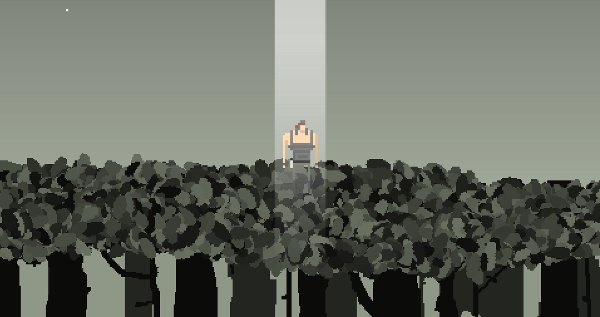
Rambo: Last Blood
Molyneux seeks to engage his audience in a thought-provoking way. He's eager, even desperate, to make us care very deeply about the people we meet (or manipulate) in his games. He wants the digital beings we encounter to elicit genuine emotion, be that spite or empathy. I believe that, ultimately, Molyneux even wants us to love his creations.
You can tell from the way he speaks when interviewed that he is passionate about the games he is creating. He wants to pass that passion along to his audiences through innovative design. He promises much. He delivers on only a small portion of what he promises. But do you truly believe he fails because he doesn't know what he's talking about? Or that he's purposefully getting people's hopes up purely to sell more copies? Are we collectively that cynical? This is the man who gave us Dungeon Keeper.
That's not to say that his past glories negate his more recent bungles. The Fable games are significantly flawed and superficially deep. The choices you make have an impact on your kingdom and its inhabitants, but there are certainly games that better execute that aspect of game design (e.g., Fallout 3 or Fallout: New Vegas) and with far more complex "morality" mechanics than dancing equals good and farting equals bad. The Fable series also has a financial system so broken that you can easily save your kingdom without a single casualty by becoming a real-estate magnate.
But that didn't stop me from playing both Fable II and Fable III for an absurd number of hours. The charm of the world was and is a huge draw for players of Molyneux's games, which often outweighs how the game falls short of the man's vision.
Ultimately, though, we should appreciate that Molyneux is trying to innovate in the triple-A space. Across the game industry, people are groaning at the stagnant state of design. To generalize: Every shooter is a Call of Duty clone, every massively multiplayer online game is a World of Warcraft clone, and every sandbox game is a Grand Theft Auto clone.
What game is Fable like besides...well, Fable? It pulls from so many different influences and attempts so many different gameplay styles that it's tough for me to think of an example. These days --among the big-name releases -- that's pretty rare.
So, mock Molyneux's broken promises if you must. Call him a snake oil salesman if you feel strongly about it. But Molyneux's singular-vision approach to game design (shared by the likes of Ken Levine of BioShock fame) and his enthusiasm for strengthening the player's interaction and emotional engagement with digital worlds and agents is what will continue to move the medium forward.
Even when he misses the mark by a mile, at least his mark was a mile away from the same-old.