Home
Home

I think certain developers, and even some key individuals, receive a lot of love from players and the media. You just need to look at Double Fine's Kickstarter success to see what I mean. James makes a passionate argument, however, and I feel he has some intriguing points.
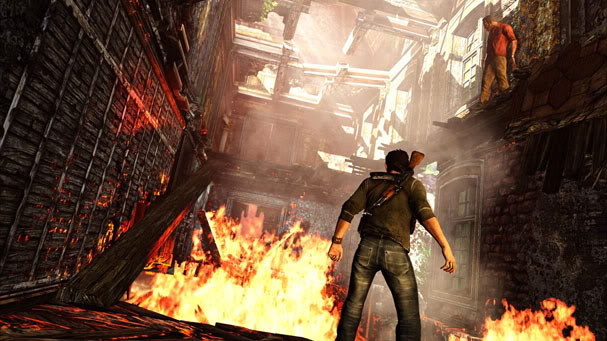
Way back in 2004, Jason Rubin, co-founder of Naughty Dog, came out on stage at the D.I.C.E. Summit and said that developers need more credit. He said that the video game industry operates more like one that sells bleach than one that sells entertainment. Seven years later, nothing seems to have changed. The people who make our games are just as unknown now as they were back then, yet publishers and brands have grown to gargantuan proportions.
Even the most diehard gaming historian can only name a short list of very highly regarded developers, leaving 99 percent of the people who put their hearts into the medium we love unknown. I love Hideo Kojima, but he did not develop Metal Gear Solid by himself. I think he would tell you that immediately if asked.
It is fair to say, however, that creating a game is a collaborative effort, probably more than any other type of media. And to give the credit to a single person would be a disservice. As true as the previous statement might be, we then find ourselves stuck with no one to commend for the effort. In this approval vacuum, the publisher steps in, and the people we need to thank are left out.
Ask the average gamer who makes Call of Duty, and I bet his or her answer will be Activision. Treyarch, Sledgehammer Games, and even Infinity Ward don't typically come to mind because we have no one to look at as the creator -- no driving force that personifies the game. Activision becomes not only the publisher, but it also becomes the developer in the minds of consumers. This is the worst thing we could possibly do for the people whose work we love. We are not selling their vision but selling a brand.
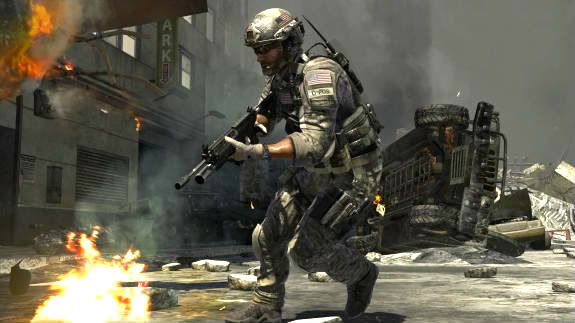
Games are treated as consumables and not as pieces of work. Electronic Arts markets a game, puts it in a box, and sells it to consumers not as an expression of the creators but as a toy or a "packaged good." The work of art that potentially hundreds of people worked on becomes an item no different than the G.I. Joe action figure or the Barbie play set.
This happens because we do not treat games as works of art like we treat movies, music, or books. Overall brands are strong in those areas too, don't get me wrong. But a George Lucas movie means something. A Radiohead album means something. And a Dan Brown novel means something. As sad as it is to say, a Peter Molyneux offering doesn’t mean anything to the broader audience, even though it should.
You could argue that studios get recognition and not individuals. Blizzard Entertainment has name value to a great number of people. That’s true, but Blizzard is the biggest outlier. The studio created a game that not only spoke to the core gaming community but to arguably the biggest audience we have ever seen. I know 13 million subscribers is not the highest number in terms of sales, but the social penetration of World of Warcraft is astounding.
Does a Sucker Punch Productions game get the same reaction as a Blizzard game? When you hear about a new movie from Michael Bay, you conjure the image of high-budget action films with generally bad plots that are usually fun, nonetheless. Darren Aronofsky gives almost the complete opposite reaction, yet both are understood. Their creative talents, while different, are what sell their films.
Rockstar is another developer whose name holds clout. When a title has the Rockstar logo on it, you know what to expect from the experience. I admit that part, but how many could name the Houser brothers or any of their teams? Now, how many of us know the Coen brothers and wait in line to see their movies just because their names are on the posters?
I do not mean to say that publishers are evil and that they stifle creativity or block accolades. In fact, if you look at the amount of different ideas the gaming industry has produced, you could argue the inverse. All I’m saying is that the model needs to change and that developers should be regarded as talent and not as assets.
Maybe developers don’t want their names on the box, and if so, that's fine. I’m not saying we need to stage a coup and force people to be more outspoken, but we need to be able to praise these people. Their work should be reflections on themselves and their teams, not on the publisher. People who create games are artists. And that’s true even if you don’t regard the releases themselves as art. We need to give these talented people all the accolades and criticism that are common in any other medium.
We are more than seven years past Jason Rubin’s speech. Maybe it's time we start listening.