Players need to embrace digital distribution

Default_picture
Thursday, May 31, 2012
EDITOR'S NOTEfrom Eduardo Moutinho

I’m part of the old-school few who prefer to have discs and cases. But I’ve already succumbed to the fact that the era of physical media is slowly coming to an end, so I’ve begrudgingly accepted our downloadable, DRM-happy future.

We’ve all grown used to the act of driving down the street to go buy a title. Before, we couldn't simply sit at home in our big, comfy chair and download a game straight to our PC or console.

The way we buy games has changed drastically, however. Pricing models are transforming, and day-one downloadable content is ripping apart communities.

Within just 12 short years, however, the way we buy our games has changed three times. It started with boxes that could only be purchased online or in a store. Then, the market transitioned over to a digital-download platform. And now, as we speak, the market is moving to a free-to-play system.


That free-to-play world is overruled by hidden fees and microtransactions that, on the outside, seem cheap, but after a while, all of those little fees add up. Who wouldn't mind laying a buck or two down on a silly, little hat or a new multiplayer map to play on? The small price seems harmless until we've purchased so many of those things that we receive an enormous bill in our mail at the end of the month.

The quality of our games is now sacrificed for more money. I can't argue against that position because from any business standpoint, the idea makes perfect sense. But from a gamer’s perspective, the next generation of consoles is shaping up to look very different.

Our next batch of systems will be ruled by digital content. Rumors upon rumors have circled the web lately of a PlayStation 4 that ditches the optical bay and forces consumers to buy games through the PlayStation Store. The same goes for the next iteration of the Xbox. Many rumors have suggested that the system will also eliminate an optical drive in favor of a digital-distribution system.

Living in a digital world has its good and bad sides, and I think they balance out pretty evenly.

On the good side, a digital form of game distribution would lead to cheaper games or perhaps more free ones since the free-to-play structure has become increasingly popular over the last few months.

We'd also be able to buy our games from anywhere we'd like and be able to download them onto almost any compatible system. Look at the PlayStation 3 and the PlayStation Vita. The Vita can play some of the same releases as the PS3 can, and the handheld also supports cross-platform play, meaning you could start playing a game on your PS3 and later finish on your Vita. This is an exciting concept that would probably take off if it weren't for the Vita's hefty price tag.

On the other side, better hardware is probably expensive to make. With that new technology comes higher prices, which no one wants. When consumers avoid buying these devices with higher price tags, the platforms can no longer be supported, and we're back down to where we started -- with cheaper, older tech.
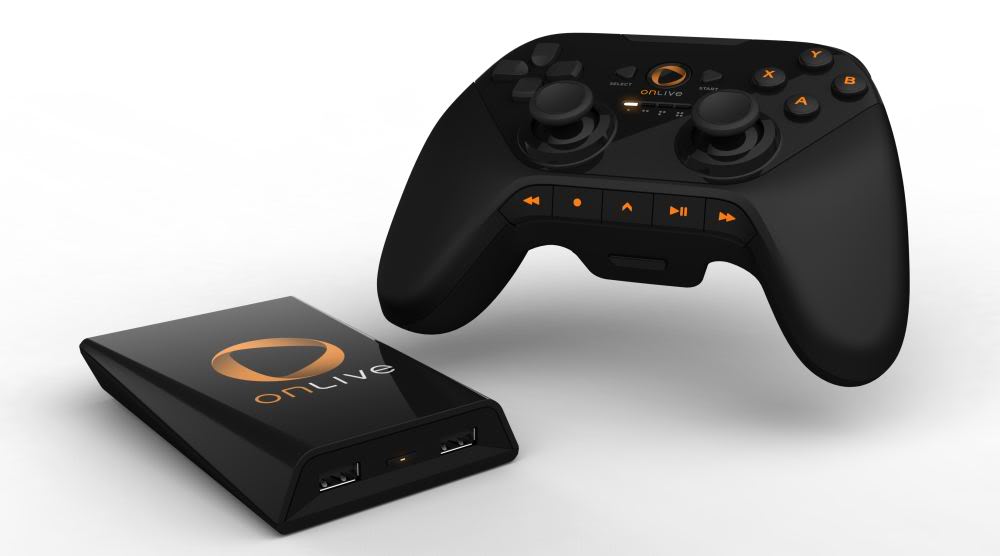
OnLive 1

But with services like OnLive, we can now stream our favorite games straight to our PCs or TVs with no hardware at all. We can even play some of these games on our phones and tablets! You just need a speedy Internet service. I believe that this is the future of gaming. If we can pump out amazing visuals on our big screens without the need for big, clunky, and expensive hardware, that’s a winning proposition.

Going to a fully digital distribution platform has other cons, though. What if a piece of tech becomes too old to be supported or if that tech’s maker goes under? Will the store for that system be effectively shut down as well? That would mean that all your purchased titles would be gone forever. You wouldn’t ever get them back like you would with physical copies.

Even if we aren't ready to support such a model, I fear that we're going to be forced into accepting this reality. The age of brick-and-mortar stores is over.

Over.

Stores are closing up shop left and right because no one needs them to be around anymore. Many of us are purchasing our products from the comfort of our homes instead of going out and buying them.

In the U.S., huge electronic chains like Circuit City have gone out of business with Best Buy, the only major retailer left, soon to follow. Borders, a major book retailer in the nation, went under because of digital e-readers. In Europe, major chain GAME has also experienced financial problems and is on the verge of shutting down.

I still think that possessing a physical copy of something signifies ownership, and it’s fun to show off an entire collection of games on my bookshelf when people come over.

Yet, whether we like it or not, a future ruled by digital distribution is coming.

 
Problem? Report this post
CHANDLER TATE'S SPONSOR
Comments (29)
Default_picture
May 31, 2012

Here's the problem I have with digital distribution for games: I can't get rid of them if I don't want the games any more. On my PS3 and Wii lies hundreds of games I got through their online stores and they just sit there. With physical media, they become trade in credit for games I may actually be interested in. And what if I hate the game and just wanna get rid of it and get my money back? I'm not ready to handover my consumer rights just because the industry is pushing something expensive.

Plus, digital distribution will only work if it makes the product cheaper to buy. One of the reasons I have such a huge backlog is because Amazon loves to put good games on sales at amazingly affordable prices. If someone want Black Ops, a sale will make it 25-30 bucks for the hard copy. It'll still be 40-50 bucks on the PSN Store/XBLA Marketplace.

Default_picture
May 31, 2012

I'm not sure if that's entirely correct. While you can't trade them in or remove them from your download list, you can remove them from the device. Even if you traded a game in, you're only going to get maybe 1/3rd of the price back. Also, I picked up AC2 and RDR for about $20 each back in december digitally, so the prices don't always stick at such a high rate, they do come down eventually even if it takes longer than retail.

Steam has even shown that they can drop to below retail if the company wants to do so.

Default_picture
May 31, 2012

I'd take that 1/3 than nothing. And Steam is one of the few people doing it right when it comes to pricing. Console manufacturers have yet to figure it out.

Default_picture
May 31, 2012

Don't you think that Atlus dropping the price on most of their persona games to $15 on PSP was a good pricing move? And Disgaea games being in similar ranges... How about all of the PS1 and PS2 games for $6-10? Some of those were going for well over $100 on ebay when they were released on PSN. There'l often many PS3 games in the $15-25 range that were $60 new on PSN for PS+ members.

That 1/3rd is also pretty rare. I used it as an example because I went to the store and bought Resistance on tuesday, and for the heck of it I asked them what the tradein value was. $16... For a $40 game the very day it came out. Also, Resistance was completely unavailable at retail for those who didn't preorder, all 5 copies the store recieved were spoken for by preorders, so digital was the only way to get it in my town if you didn't pay your $5.

Most of the time, the games I trade in only net me $2-5. With the Vita, most games are getting a $6-8 discount for digital download on day 1.

Default_picture
May 31, 2012

I'll concede that this current and future gen will make older games that are hard to fine more accessible but then again, most console makers are still withholding a lot of that content for many reasons, focring the insane prices. But that's only because they're older games and the systems and the formats they're created for are no longer supported.


And 16 out of 40 is 40 perecent, so 2/5. At Best Buy, I traded in 3 recent games and was able to get SSX for 5 bucks on the day it came out. Amazon offers 10 dollar credit on most preorders, making future purchases cheap and I don't have to worry about the store having enough copies on launch day.

And I don't know what you're trading in but you're going to the wrong stores to just get 2-5 bucks or trading in some really discontinued stuff.

Default_picture
May 31, 2012

Hah, I knew you would nitpick that particular point. 1/3rd was a ballpark estimate, I'm not going to ballpark down to the fifths level generally on these things... ;)

I trade things in after I finish them, and I'm very busy, so by the time I'm trading them in they're 2-3 years old... I generally don't trade new games in because I'm usually not in a rush to finish anything. Resistance is a bit of an exception, because they're usually really short and I don't replay them very much. I find that rushing through games just to get better tradein values from them makes me less likely to enjoy them... and isn't that the main purpose of games?

Default_picture
May 31, 2012

I'm not a fan of the practice at all and I get rid of games and rush through them once I feel 'I've gotten all the excitement out of it' The backlog I've got growing is ridiculous.

And I had to nitpick because dollar amounts are important, so when I see a small discount vs a huge reduction, I'm gonna go with what's saving the most money.

Default_picture
May 31, 2012

Yeah, where it's less important to me. If the difference between 1/3rd and 2/5ths were important ($2.67,) I'd be buying Used games every time... As it is, I only buy them if no New options are available from any of the retailers I use. To see a small, small portion of my backlog, look at the trello link I posted below. The Todo column is massive, and it doesn't include the majority of my PS1/PS2 games.

Default_picture
May 31, 2012

The rumors about the PS4 are incorrect, as Sony has decided not to go digital only. Really, it really wasn't much of a chance anyway. There's huge sections of the world where the internet infrastructure isn't strong enough to even download PS2 sized video games, let alone ones made for the PS3. 

I get all of my PSP games digitally now, but I still buy more than half of my Vita and PS3 games physically because that lets me save more of my space for other things. I can carry 4 Vita cards in my vita and its case, which could save me up to 16 gigs of space on my 32 gig card (if all 4 games were Uncharted: GA sized monsters.)

I like having physical games though. I have a small pile of games on my desk that help remind me of the ones I'm working on right now. There's little to bring me back to games I've downloaded like Assassin's Creed 2, Bastion, and Read Dead Redemption, so those games get played a lot less. I do have a way of tracking my digital games, but it's something I have to bring up on my screen and don't just see when I sit down. ( https://trello.com/b/CSqeVTdT ) Also, when I bought AC2 and RDR back during christmas, it took 2 days of background downloading before they arrived on my console even with my 30 megabit connection. If I bought them physically, I'd have had them instantly.

Default_picture
May 31, 2012

If companies are going to ban the sale of second-hand games, and with this new garbage of an idea from Sony and Microsoft where the tech in order to do so is going to be in the console from day one, then you can bet your house, your car and your first born son that book companies are going to do the same with second-hand copies of physical books. They already stick DRM on Kindle, Ipad and Kobo books bought online, so it isn't as far fetched as it may seem. 

All it would take is the usual willing idiots of the Media companies, the easily persuaded Judge and bribeable politician and bam, new law.

Default_picture
May 31, 2012

There were rumors back in 2004-5 about the PS3 having the same sort of baked in, used game preventative techs from day 1. They didn't happen then, so I wouldn't jump all over any rumors now of the same tech being in the PS4...

Robsavillo
May 31, 2012

"On the good side, a digital form of game distribution would lead to cheaper games or perhaps more free ones...."

I'm not convinced that this is entirely true. We're still talking about walled gardens (consoles), so the manufacturer/network operator has little incentive to lower prices.

In fact, what we see now with digital offerings of retail games on consoles is that they are fully priced at $60 and retain their high price for a longer period of time than physical copies. Not to mention that some digital offerings are iniitally priced higher than the current physical version sells for.

Removing physical copies would likewise reduce competition, and therefore, remove some of the downward pressure to lower prices (limited-time sales nonwithstanding).

Default_picture
May 31, 2012

They do have an incentive to lower prices. To get additional sales once the sales of a game have dropped off. So far, full priced digital games is primarily on the PS3, and they've already experimented with 10% discounts on the Vita.

Dcswirlonly_bigger
May 31, 2012
The problem many gamers have with DD isn't DD itself, but the policies with which it's being implemented. If more DD was like Steam or GoodOldGames or even iTunes and Amazon, I think a lot fewer gamers would have a problem with it. DD games on consoles are mostly the same price as new physical games and often more expensive than used physical games and are released online long after retail releases. On the flipside, digital music and movies are cheaper than their physical counterparts - their producers decided to pass the savings from digital along to consumers where game publishers have not. Digital PC games are on sale often enough to create the same effect. Hell PSP games in Japan are cheaper on PSN than at retail, but they are the same price in the US. Basically, console DD has been painfully slow to evolve and is probably being hobbled by retail policies. On PC, many people insist on buying games over Steam becuase the service actually provides unique advantages not unlike buying things on iTunes. There are pre-purchase deals and you can pre-load games. If you buy a game on GOG it has no DRM - you can do whatever you want wtih the data, and that has actually been shown to convert former pirates. They've learned the uselessness of DRM just like digital distributors of other media have. Personally, I still like having a disc and going to the store to buy a game, but I also like the advantage of having my media stored in my hard drive where I can boot it up immediately. That's why I buy movies on Blu-Ray with digital copies and that's why whenever a PC game is Steamworks I buy a disc so I can have a disc along with the benefits of Steam. I wish there could be some kind of similar solution for consoles. Whatever happens, the way console companies handle DD needs to evolve to the standards everyone else has adopted.
Default_picture
May 31, 2012

I want it to be LESS like Steam, and more like GoG. I can't stand having to keep the steam client open to play games on it, and I find it annoying to have to reauthorize my gaming PC just because my general purpose PC is logged into steam right now. I go out of my way to avoid steam and buy on other services if they are at all available.

PSN used to be like iTunes in its model, though it's gotten a lot more restrictive since last october.

Default_picture
May 31, 2012

There is little to no evidence that digital distribution would lead to lower prices. Right now, full games on PSN and XBL cost the same as their physical counterparts. And other types of digital media -- especially e-books -- haven't enabled significant price reductions under the pretext of "reduced overhead" (a cynical line of reasoning by publishers). The bottom line is the destruction of the secondary market. I see no benefit for the consumer other than convenience, and personally, I'd rather go through the trouble of obtaining a physical copy if it means I have more options.

Default_picture
May 31, 2012

There are companies selling books that did lower their prices for digital distribution. Baen Books being the primary one, as you can get 6 books from them for $15 digitally, or buy a single book for a couple of dollars off the paperback cost.

But PSN definitely has reduced price games, even if a subset of the games are introduced initially at full price. I've found games on PSN+ at lower than you can pick them up used at Gamestop, often with full DLC attached. Vita games are, for the most part, lower digitally by 10%.

Default_picture
May 31, 2012

...and then there's the vast majority of books, which cost the same (or more) in digital form. I did a random sampling of books from my library -- A Dance with Dragons, Carnage & Culture, The Ultimate History of Video Games, and All Your Base Are Belong to Us: How Fifty Years of Videogames Conquered Pop Culture -- and compared their physical vs. digital prices on Amazon. In every single case, the physical version (sometimes even the hardback) costs less than its digital counterpart. If we include the secondary market (which digital distribution neccesarily excludes), the difference is rather substantial.

Once digital distribution is the only game in town, I see no incentive for publishers to lower their prices.

Default_picture
June 01, 2012

All you need to do is avoid companies that sell books for ridiculous prices, and ones that only sell with DRM laden junk... Doing that managed to bring another publisher around recently, Tor. You should have enough entertainment options out there that missing one book series won't be the end of your world...

100media_imag0065
May 31, 2012

I don't think I'll ever accept it. They only thing I've accepted is that, when everything goes digital, I will either quit gaming for good, or become a criminal and steal everything.

When I researched how much money an average publisher saves by releasing their games digitally compared to the cost of releasing said game through a retail store, I was shocked. Anywhere from 20% to 40%, and usually closer to 40%. Many factors are at play in that savings percentage, but it is a lot of savings nonetheless.

Now just think about how much they cahrge you for those games. Do they offer to pass any of those savings on to you? Nope. Do they at least discount their games to match the price of what their games are going for used? Nope. Well, do they at least price them to match what they are going for brand spanking new at retail? Nope. Almost 100% of the time, they ask you to pay more for a digital version on a retail game than you would pay at an actual store.

If that isn't complete contempt for the consumer, I don't know what is. They refuse to offer us any savings, even though we are loosing so much, and they are saving even more. EA has refused to lower their prices by $5 for their digital games on the Vita, for example, even though many indie publishers were doing just that. Even Sony has backed away from it, and has been asking full price for the recently released Resistance: Burning Skies on the Vita, instead of offering us the $5 discount they promised the would on all day and date Vita releases.

Once retail is taken out of the picture, publishers will have complete control on prices. As it is now, retailers have complete control, and that is great for consumers. Retailers are all competing against one another, and consumers win. That's why as little as a week after a game ships you can find it for $40 at a store near you. They want you to shop there. When retailers are taken out of the picture, publishers will control everything, and that means we will be paying full price for games for up to 6 months after their release, and then dropped $10 after that for every 6 months that passes.

I've done my research. Right now, on Xbox Live, there is not a single digital version of a retail game that is cheaper than what you would pay for that game brand new at a number of huge retailers. Not a single one. Many of them are $10 to $40 more than what you would pay at a retailer. This means that, when everything goes digital, I wouldn't be able to buy new games like I do now. As the industry is now, I can buy 2 or 3 new games a month, but when everything goes digital and prices are artificially inflated,  I will be able to buy one game every 4 to 6 months.

I might as well just stop gaming at that point, or learn how to pirate them. Game publishers are not going to do us any favors when everything goes digital, that's why they want it so bad. You won't be able to trade in your old games anymore to afford new ones. You won't be able to buy used games anymore. You won't be able to borrow a game for a friend, or lend one. You won't be able to actually own the games you buy. We would loose literally every single advantage we have right now.

Some PC gamers right now might be saying to themselves "But look at Steam! That's all digital, and we get crazy good sales all the time". To them I say this. The PC market is very, very different than the console market. Pricing on the PC has always been different. If you need positive proof that, when everything goes digital on consoles, we won't be getting any crazy sales like Steam has, then consider this. When was the last time any console manufacturer had a crazy good sale like Steam regularly has?

When was the last time you turned on your PS3 or 360 and saw a huge, massive sale where many games reduced as much as 80%? Never. It never happened, because pubishers know that console gamers will tolerate paying much higher prices, whereas PC gamers wont. Don't be fooled for one moment. When everything goes digital, we will be paying a hell of a lot more for games than we do now, and we won't own a damn thing.

If you enjoy being able to go to your local game store and buying a brand new copy of, say, Resistance 3 for $30, you better get ready to pay twice that for any 6 month old game when the industry moves to digital distribution.

Default_picture
June 01, 2012

Well said. Thank you.

Default_picture
June 01, 2012

It's like he can read my thoughts...

Default_picture
June 01, 2012

Where are you getting the full price for Resistance idea? It's 10% off just like most of the other games on the Vita. The only one I can think of that was full price downloaded was Disgaea 3.

When was the last time I turned on my PS3 and saw a massive sale? Last night. 6 full versions of games with full DLC, all priced between $15 and $25, for the record, that's 60-75% off the original price, not even counting the cost of the DLC.

Screw Xbox Live and its overpriced games.

Default_picture
June 01, 2012

Here's the sales list for PSN right now of full games you can buy in the store. I've tacked the prices for a new copy from gamestop to each line. Some of the new copies include DLC, some don't, but they're ALL more expensive than downloading it with full DLC.

Bioshock 2 Complete Edition (PS Plus Price: $19.59) - $20 new
inFAMOUS 2 Complete Edition (PS Plus Price:$23.79) - $40 new
Just Cause 2 Ultimate Edition (PS Plus Price:$14.69) - $20 new
L.A. Noire: The Complete Edition (PS Plus Price: $19.59)  - $40 new
Mafia II Bundle (PS Plus Price:$14.69) - $20 new
Mortal Kombat Bundle (PS Plus Price:$24.49)  - $50 new
Red Dead Redemption and Undead Nightmare Collection (PS Plus Price:$19.59) - $30 new

Rayman Origins (PS Plus Price: $23.99) - $30 new

And here's some that are more than $25, but still cheaper than new from gamestop.

Call of Duty: Black Ops Bundle (PS Plus Price: $46.54) - $60 new

MotorStorm Apocalypse (PS Plus Price: $35.34) - $60 new

Default_picture
June 01, 2012

This is exactly what people need to get through their heads before jumping on the steam propaganda bandwagon.

Don't get me wrong, Steam has a good thing going, but to expect the market to be better than how Steam is now (which it has to be, aka no DRM, true/transferable ownership even of downloaded copies) when everything were to be on such a model and a disappearing retail is foolish.

Everyone only has so much money to spend on entertainment, and if you really had a situation where everyone would be selling you copies you can't own, and expect you to buy everything out there. Who really thinks everyone is going to be successful then? There is only so many buyers and when they have spent their money into the void, that is digital ownership of games. When you can never retrieve any amount of the intially paid value, then where is the consistent money going to go? Company coffers, and for what? To make even more games and expect sales for everything as big and better than before? It's not going to happen the way people think it will, you can take that to the grave.

Default_picture
May 31, 2012

I love digital distribution, I would happily buy all of my media content digitally if I could (I already have made the transition to only ever buying music and books digitally).

The big problem with digital distribution (on consoles at least, Steam is fantastic on the PC) is that content tends to come late to the digital platform and is usually massively over-priced. Recently Prototype 2 was released on the PSN and cost £49.99, whilst the physical game can be bought for £24.41 on amazon.co.uk, less than half the price of the digital version!

Until digital games cost the same, or ideally less, than their physical counterparts it is simply not economically viable to switch to an all-digital purchasing strategy for games.

Default_picture
June 01, 2012

In many cases, they do cost less. I take your 1 anecdotal example and counter with the 10 examples I posted above for releases this week of them costing less (In the US at least.)

Robsavillo
June 01, 2012

EK, you're right that Sony should be applauded for its digital strategy (especially Vita, but this is currently an exception, not the norm), but your examples are aren't a good indictator of the real issues here.

Those are all old games. All of them. Digital releases of brand new games cost the same as their physical retail counterparts when they first release. Even on Steam. Max Payne 3 is $60. Hell, Skyrim still sells for $60 there. This is the issue. The digital release is inherently inferior to the physical release, yet we're expected to pay the same.

Without physical retail, which experiences downward pressure from the secondhand market and competition between different stores, publishers have little incentive to move the price at all. Publishers would have monopoly-pricing power. And I can't think of any monopoly business in the history of capitalism that did not exploit that power for its own financial gain.

Default_picture
June 01, 2012

Which is why I don't buy digital games at $60. I think the most expensive I"ve purchased is $25 (RDR, back christmas of last year...) I have enough games that I don't need to grab new ones on the first day they're released, especially if they're at an unreasonable price. Because of that, I still don't own games like Arkham City, and only recently purchased Arkham Asylum for $20, but I probably wouldn't have gotten around to playing arkham asylum until now anyway with how many games I already have on the pile.

That said, several of those games are less than a year old, they aren't universally old... And they've mostly held their value at retail.

You must log in to post a comment. Please register if you do not have an account yet.