Home
Home

Jon takes a look at the abysmal state of public assistance for game developers and publishers, offering his sensible solution based on other successes and why he thinks the issue is so important.

Public funding is a tricky issue for game developers. We live in a world where conservative media still view video games as murder-trainers for impressionable youth. Understandably, this means politicians aren’t always leaping in to promise they’ll support the local industry.
Historically, this has meant a lack of public funding for the industry, especially when compared to the sizeable amounts given to authors and filmmakers.
But in 2010, Curt Schilling approached the Rhode Island government with a promise of 450 jobs by the end of 2012 and landed himself a deal. Unfortunately, it doesn’t look like that promise will be fulfilled, and now there’s $75 million of debt to worry about.
The fact remains, Rhode Island was willing to prop 38 Studios up even when things weren’t looking great. They were willing to grant an enormous amount of money and were honestly expecting a good return. This proves that the attitudes of governments may be changing, but the way in which they help to foster the games industry still need revision.
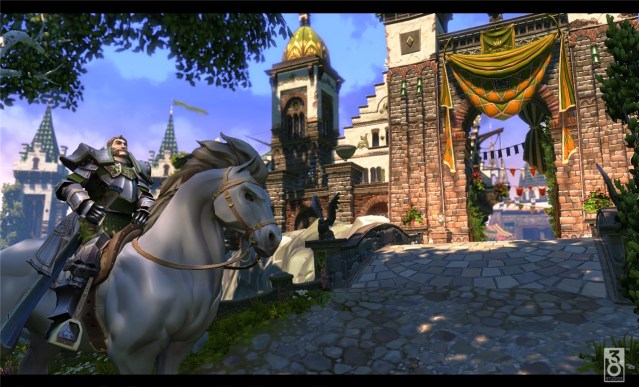
The problem is political. If game funding is unpopular with voters, politicians can (and will) exercise their power in bringing it to a grinding halt.
38 Studios was entirely reliant on the state for their life support. This just isn’t viable, especially given that Kingdoms of Amalur was always going to be a lengthy, expensive project. While large investment is required for development, the nature of politics is far too volatile to maintain a studio throughout the development cycle.
On the surface, this is not so different from the way publishers interact with their shareholders, but publishers have an intimate knowledge of the industry born from years of experience.
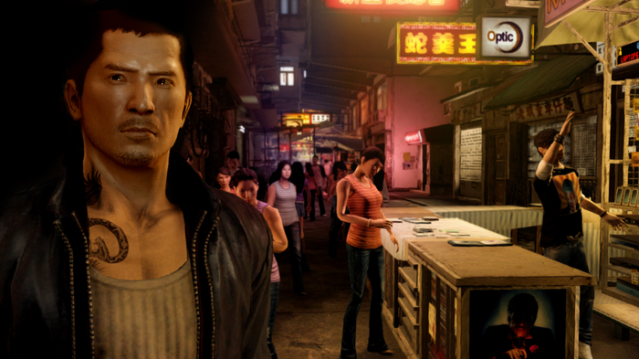
Say what you want about Bobby Kotick, but True Crime: Hong Kong (rebranded as Sleeping Dogs) is coming out in a few months. Activision saw a loss and cut it loose but knew enough to realize that someone might want to buy it. It cost far more than it’s worth to anybody, I’m sure, but at the end of the day, we’re going to be able to sit down and play it, and the people at United Front Games are going to eat. The same can’t be said for 38 Studios.
So, what’s the solution? Put simply: tax breaks.
I can’t count the number of TV shows I watched as a kid that had "Product of Canada" at the end. Now -- eliminating the possibility of Canada being the true residence of Santa’s elves -- this is probably thanks to massive tax breaks.
Not only is there a section of the National Tax Act dedicated to "Artists and Writers," but the Provinces compete to lower taxes further. That’s why Rockstar Vancouver is now Rockstar Toronto, with 37.5 percent of their labor cost covered by tax refunds.
This is great for bigger, already established companies, but Australia has come up with a scheme to support indies as well.
Australia hasn’t been having a good run. Sega Australia recently shuttered following basically every other large scale studio in the country. Krome (Blade Kitten), BlueTongue (De Blob), and Team Bondi (LA Noire) have all dissolved -- and not on good terms either.
The government responded with some direct funding. That’s one of the reasons you’ve probably heard of Firemint’s Flight Control. The key difference to the situation in Rhode Island is that the studio was funded by an extension of the state film grant. This wasn’t an economic investment but a cultural one.

Now there’s a scheme to assist companies earning less than $20 million per year. It’s labeled the Research and Development Tax Offset. The good news for Australian developers is that -- provided they are willing to do the extensive paperwork -- all of their work falls under this provision.
So at the end of the day, there are a couple of conclusions to be made. Firstly, tax breaks are better than cash injections. It just makes better economic sense. Yes, cash injections are a necessary part of development, and I have no authority to judge governments who do so, but it doesn’t incubate a whole industry to maturity in the same way a tax break does.
Secondly, public funding should aim to foster cultural diversity, not healthy balance sheets. While studios can be a great source of employment and exports, that’s not what games are for. They are the forefront of software technology, pushing the information age forward. They are cultural artifacts, representing the values of the individuals and societies who created them and preserving those values as historical curiosities for generations to come.
That’s the line I want our politicians to follow when they finally organise support for the industry. Not another investment but an effort to help create pieces that we can stand behind with a kind of nationalistic pride. It may be a long, long, long way off -- it may never happen -- but I’d love to imagine that one day people recognize a nation for a thought provoking game the same as they recognize it for it’s pop stars and landmarks.
I -- for one -- prefer Nathan Drake to Soulja Boy any day.
[Top-photo credit: Velo City]