I don't mind cheating in Uncharted 3

Default_picture
Monday, November 07, 2011

Uncharted 3’s puzzles run the gamut from head-scratching to hair-pulling. If you don’t complete a brainteaser within an allotted space of time, the game offers you hints and, eventually, a solution. I always choose the latter. I don’t mind “cheating” if it moves the plot along.

As our own Rus McLaughlin aptly demonstrates, Uncharted 3 is a wholly linear experience. The value derived within doesn’t come from the player’s ability to influence the outcome. Rather, U3 follows the standard template set forth by four decades of gaming -- simple interactivity distinguishes it from passive entertainment mediums like film. We become invested in our virtual avatars; in a very literal way, we’re part of the story (even if we’re merely fulfilling a predetermined script). Anything that reminds you that you’re playing a video game breaks that sense of immersion.
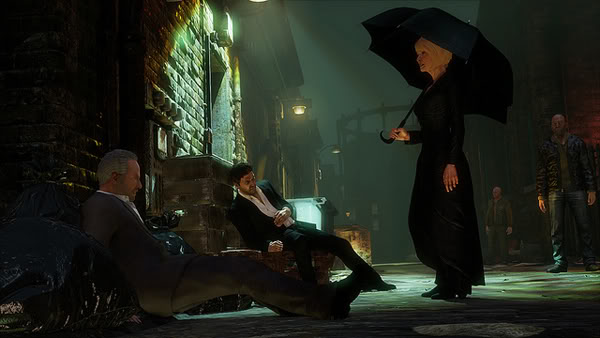
Uncharted 3

I don’t remember Indiana Jones spending hours (or even 5-10 minutes) solving a puzzle. Sure, Indy tackled three tests at the conclusion of The Last Crusade...even though #3 was nothing but a “leap of faith.” And the fedora-clad adventurer frequently consulted his diary or supporting documentation to light the way. But he never stood idle for twenty minutes, trying to decipher ancient Latin Psalms. X marked the spot...not a protracted brainteaser. Spielberg knows a thing or two about pace, and inactivity (without rhyme or reason) puts people to sleep.

When Uncharted 3 soars, its trappings are reminiscent of the best of Indiana Jones, National Treasure, and The Mummy. Snappy dialogue and a sweeping plot distinguish it from the vast majority of interactive entertainment. One moment you’re zipping along, entranced by the cinematic direction and high production values...and then you're standing still.


At their best, the puzzles are requisite pace-setters; a plot needs peaks and valleys. Moreover, the brainteasers are aesthetically pleasing...they capture the exploratory spirit of popular adventure serials. But they also slap you in the face with the inescapable fact that you’re playing a video game. This is not to say that puzzles are intrinsically bad.

I completed the entirety of Portal 2 without consulting an FAQ or walkthrough; I consider that minor achievement a mark of pride. And the test chambers never felt like a distraction. Quite the contrary -- Portal 2’s physics-based gameplay is the core experience. But Valve’s gem subscribes to a different brand of storytelling than the Uncharted series. A game that draws inspiration from Raiders of the Lost Ark comes with certain preconceived notions regarding narrative techniques.
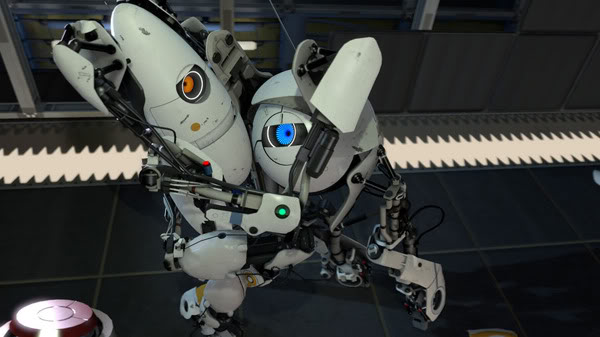
Portal 2

Uncharted 3’s formula is intimately familiar -- gameplay, cutscene, gameplay, cutscene, etc. Anything that curtails the brisk pace (i.e., stopping to rearrange stone tablets) disrupts my sense of immersion.

Portal 2 doesn’t have the same inherent restrictions. It doesn’t pay tribute to a beloved cinematic franchise, so the game’s template is essentially a blank slate. Thus, we have no expectations. Elaborate test chambers that tax the player for hours on end never distort the pace or flow of the story.

Nathan Drake’s latest adventure is a textbook case of ludonarrative dissonance. The story conveys exciting escapades ala Indiana Jones, but the game betrays the spirit of the narrative. The elaborate puzzles stand in stark contrast to the breezy dialogue and thrilling cutscenes. And the dichotomy is more than a little jarring.

Do I just suck at puzzles? Maybe. But that shouldn’t matter. Since Uncharted 3 is unflinchingly linear, the player’s input shouldn’t detract from the core experience (vicarious thrills courtesy of Nathan Drake). If a tricky brainteaser derails the plot, I have no problem “cheating.”

 
Problem? Report this post
BITMOB'S SPONSOR
Adsense-placeholder
Comments (11)
Default_picture
November 07, 2011

This is interesting.  I personally don't feel that "it makes it more cinematic" is an excuse to streamline, linear-alize, or otherwise compromise gameplay and immersion.  But then again, I also don't believe that, as 2 separate and distinct mediums, games should strive to be "cinematic" as their end goal.  

If a game shoots to recreate the fast pace of a movie screen it will be nothing BUT ludonarrative dissonance, since a game's mechanics can usually never keep up with a film's narrative pacing.  I think the "cinematic" was a good place to start as far as advancing games, but we're at a point now where we can go above and beyond that so to try and make a game "movie like" is, in my opinion, doing the medium a disservice.

Sheesh - do you think I qualified these statements enough?  In my opinion, I think that maybe I did.  But that's just me :p

Default_picture
November 07, 2011

I think the action scenes largely maintained the pace of the cutscenes. It's during the puzzles that the pace slowed down considerably.

Then again, I loved Heavy Rain...I tend to see games as an "experience" rather than a challenge to be conquered (if the challenge is part of that experience...all the better). And this is coming from a guy who thinks Portal 2 is the best game of the year.

Robsavillo
November 08, 2011

But what of the player who "sucks" at the action sequences? A player to continually dies over and over only to respawn again and again at the same checkpoint for 20 minutes? Wouldn't that be just as detrimental to an action-film-like narrative pace?

At this point I have to ask: Why make a game at all? I'm with Patrick. This chase to mimic film is a disservice to the meduim of games.

Default_picture
November 08, 2011

Difficult action sequences wouldn't bother me as much (and they didn't) because they closely mimic the pace and feel of the cutscenes. I died repeatedly in several spots, but I never felt frustrated like I did with the puzzles. And as pointed out, the puzzles weren't extraordinarily difficult...but because of the ludonarrative dissonance between those scenes, where the action screeches to a halt, and the fast-paced cutscenes, I became frustrated much quicker.

I enjoy games for the "experience." Look at Heavy Rain. Unless you can't comprehend basic controller functions, no one could call Quantic Dream's game difficult. It was more about playing a part in the evolving story (which you influenced). Uncharted 3 is obviously a great deal more linear than HR, but both enable you to experience a great story as a first-hand participant.

I won't say that all games need to become "interactive entertainment" like HR, either, because that discounts the entire history of gaming and about 99% of the titles out there.

Robsavillo
November 08, 2011

There's a key difference between a game like Uncharted and Heavy Rain: Heavy Rain doesn't ever force you to sit in once place for too long, and thus, the game maintains its pace well.

I don't see how you can claim that being stuck on a puzzle for 20 minutes or dying repeatedly to the same rocket volley for 20 minutes are any different functionally. Both halt the pace of the game's narrative in the same way.

The ludonarrative dissonance you cite applies equally here. (Not to mention that this dissonance goes further with the character conflict between murdering hundreds of people and Drake's non-sociopathic personality.)

Default_picture
November 08, 2011

"Not to mention that this dissonance goes further with the character conflict between murdering hundreds of people and Drake's non-sociopathic personality."

Yes, yes, and yes.  This is one of the biggest obstacles I think devs face in making their characters "relatable."  Games need conflict,  which usually translates to violence, which means that all these kind-hearted characters we're developing are, at their heart, mass murderers.

Also, more to the point - Heavy Rain is a much slower game than Uncharted.  The latter is practically on a treadmill - always moving forward, never giving you a second to stop and take in the scenery.  To drop puzzles that require you to stop and think for 20+ minutes breaks that flow SO badly.

To be clear - I'm not hating on Uncharted!  I think the game is a technical marvel and a lot of fun to boot.  I still maintain that, as a whole, when games shoot to be cinematic they back themselves into this corner over and over again.

Default_picture
November 08, 2011

All things being equal, I had a higher tolerance for difficult action sequences over difficult puzzles because the former is more consistent with the flow of the story. Moreover, sitting still doing nothing (while you contemplate a puzzle's solution) is a much bigger pace killer than repeatedly attempting an exciting action sequence. The action sequence will get frustrating eventually, but at least you're doing something. I'd rather be stuck at such an impasse than be completely idle. That's the key difference.

And you're absolutely right about Heavy Rain's pace. HR doesn't hit you over the head with mindless action sequences or bore you with frustrating puzzles. By involving the player in even simplistic tasks (like rocking a baby to sleep), it maintains a superb pace for the duration.

For the player to get the same "experience" from Uncharted 3, they'd need to solve every puzzle instantly, on the first try, and never die. Hence my sentiment regarding the puzzles.

4540_79476034228_610804228_1674526_2221611_n
November 07, 2011

I really hate having to cheat or look for solutions to puzzles online and will only do so as a last desperate resort - I pride myself on taking the time to figure them out all on my own, even if it takes way longer than it shoud. I'm also somebody who went through Portal 2 without looking at a FAQ (some tricky puzzles, but nothing a little trial and error and some creativity couldn't ever solve) - The puzzles in Uncharted 3, while trickier than those in Uncharted 2, never left me frustrated and never did I feel compelled to have the solution revealed to me, though I did spend quite a lot of time on a couple of them. 

The last game with puzzles that stumped me were a couple of glyph puzzles from Assassin's Creed II or Brotherhood (I think it was Brotherhood). After spending about 30 minutes on one I'd decided to just swallow my pride and look online. Apparently I'm really good at solving spatial 3D puzzles like those in Uncharted, but some of the more mathy and sequence recognition puzzles in Assassin's Creed are more of a challenge to me. Must be the math hating artist in me. 

I like Uncharted's puzzles - the break from all the shooting and climbing, peeking in Drake's journal to seek out clues, etc. 

Default_picture
November 07, 2011

Portal 2's puzzles were far more difficult than Uncharted 3's. But because of U3's structure, its brainteasers frustrated me more, and I inevitably lost my patience (leading me too "cheat"). In my opinion, Uncharted's puzzles should be far simpler...they should contribute to the atmosphere, but not be a stumbling block in any way, shape, or form.

Mindjack
November 07, 2011

I hate going online to solve puzzles, but sometimes it can't be helped. Getting stuck in games makes me sleepy, so I'll cheat the shit out of Uncharted 3 when I finally play it.

Default_picture
November 08, 2011

I think the puzzles in Uncharted 3 are simple, and I can sometimes get frustrated easily. I'm not sure how long the game even took me, maybe eight hours. I struggled more with jumping and in shootouts. There was one part where I wasn't sure exactly where to jump as it initially seemed I couldn't jump far enough to grab a chain, but that was just my poor ability to line up jumps and jump at the latest possible point. I also don't like looking up puzzle solutions online though I'm sure I have in the Tomb Raider games. Although completely defeating the purpose of puzzles, in games like these you have to sometimes wonder why you can't simply blast a hole in the wall with one of your grenades. The bad guys somehow always get ahead of you and I doubt they have any acrobats making death defying leaps just to open a door :)

You must log in to post a comment. Please register if you do not have an account yet.