
Innovative games are "broken" for a reason

Tumb
Monday, May 23, 2011
EDITOR'S NOTEfrom Rob Savillo

Rafael argues that truly new experiences begin at a technical disadvantage compared to their sequeled counterparts because of a lack of an existing foundation for developers to build upon. Perhaps the audience expectation of high-quality presentation has superceded the developer's focus on polishing the final release?

When I look at a game like Brink with its arguably ground-breaking potential buried beneath a thick layer of technical issues like bugs, glitches, and connectivity problems, and seeing how people -- myself included -- are often unwilling to give the game a chance despite the trouble that it's having, makes me realize how we treat all games alike when we really shouldn't.


Creating an innovative game is a lot more challenging than creating the 10th iteration of Call Of Duty. With the latter example, you as a developer already have a lot of things understood, like technology, methodology, and gameplay design choices, that form a good place to start from and evolve into a new direction for a sequel. But with any original title -- including a truly innovative game -- you have to create many of those things from the ground up.

Previously, few released games have featured a parcour mode -- even fewer have offered it in a first-person shooter, possibly none. So, you as a developer first have to design its logic as well as its implementation, which takes development time away.

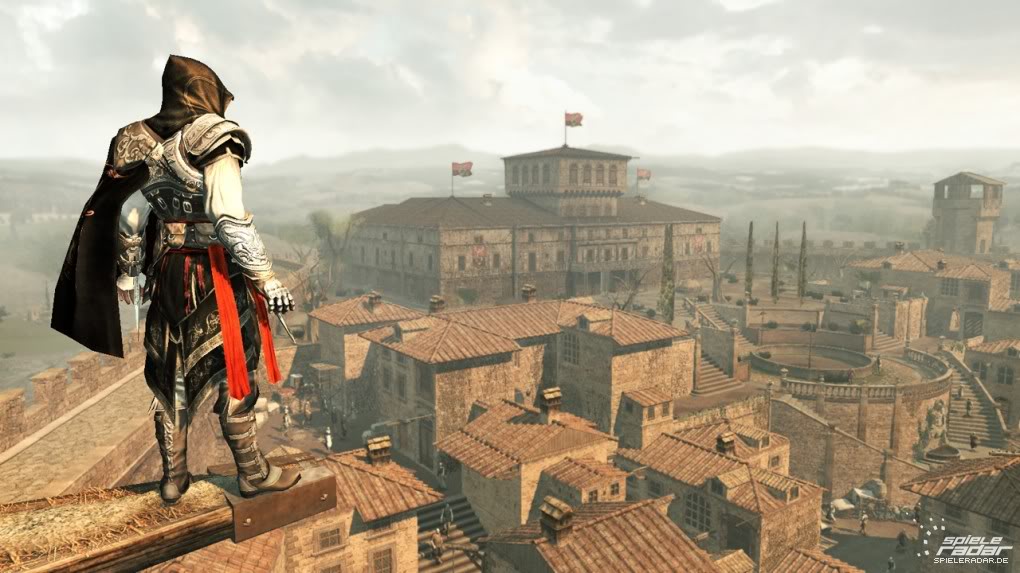
Another aspect is research: Depending on the desired look of your game, you first have to spend time probing several visual experiences; whereas with the new Assassin's Creed, you already have that archive of source material and that look established. You merely need to polish that with a higher polygon count and maybe add some spice. Sure, you also have to create new models from scratch, but the overall framework of the game has already been built, so you already have half the work done.
Despite that fact, with Brink a lot of gamers expect the same experience out of the box that they get from a Battlefield game -- a refined lobby system, a large-scale set of unlockables, a balanced class system -- but with the addition of the new gameplay features that it promised in the trailers. Gamers should realize that developers have to make choices where to put their efforts. It's not like they have more time than the "sequel devs" to add the same plus more. That inevitably leads to either flaws in the design, poor realization, and/or less time for beta testing in order to avoid unforeseen glitches.

Heavy Rain was a similar story: It did a few major things differently, like delivering a complex story system as well as playing with our emotions like no other game before. Therefore, the development team had a lot more to discover and establish in the same amount of time. The game suffered from instances of face-warping glitches, freezing issues, and blur-effect bugs, and yet, I liked the product and didn't regret that I bought it. But did the reports about a desputably "broken" game scare away some other potential buyers? I bet they did.

So, what's the solution to this mess? To ask gamers to be more tolerant? Although this seems to be the best choice in my opinion, I think that's rather utopian. Should we ask publishers to sell innovative games and original works for a slightly lower price point than sequels? I don't know if that is fair, but it would definitely allow me as a consumer to be less harsh with a flawed but innovative game.

 
Problem? Report this post
BITMOB'S SPONSOR
Adsense-placeholder
Comments (22)
Default_picture
May 23, 2011


I applaud what you’re saying here – I think it’s good to compare this with films though. I remember that when Clerks first came out, it was so different and interesting that I was willing to forgive the flaws – particularly some poor acting, lines delivered in such a way that they spoiled an otherwise well-written joke. Innovative games are often flawed in a similar way, but with the downside of being more expensive to try than an off-beat film.

Maybe the best way for developers to launch a risky, new title is to follow the example of Portal, which was short and inexpensive. 

Tumb
May 23, 2011

Maybe so - maybe it also works with downloadable games. Hybrid comes to mind. I didn't want to actually go that far however. Personally, I wouldn't mind if there was a middle-ground between $19 and $69 games.

Default_picture
May 23, 2011

It's definitely unfortunate that some innovative games could bad press because a lot of people are picky, pointing out every little bug and saying that somehow that makes it a failure. Such an example is even from Gabe from Penny Arcade where on Twitter (@cwgabriel) he was bitching and moaning about how awful Brink was; he was playing the 360 version, which is apparently pretty glitchy. But the PC version is FINE, my brother has been playing it and it looks great. Such a gaming/nerd celebrity speaking ill of a new game just because he's too narrow-minded to play more than 1 version of it doesn't help a new innovative game either. And the same thing happens when reviewers and other outlets start nit-picking about bugs, gives that game a bad image.

Tumb
May 23, 2011

As far as I read from Tycho describing Gabe's experience with Brink, Gabe did try the PC version. But unfortunately he did run into trouble there as well. As is the case with PC games, sometimes you run into incompatibility issues.

At least, that's how I got it.

Mikeshadesbitmob0611
May 23, 2011

It's not a consumer's job to be understanding. For $60, it's safe to demand a quality product. This is a free market. I like what you're saying here, but ultimately, it comes down to dollars and sales figures. Effort is appreciated, but if it doesn't result in something that feels like it's worth the cash, you can't expect people to take a kick in the nuts and say "well, he was aiming for a handshake. Close enough."

Default_picture
May 23, 2011

Couldn't agree more. I don't believe that consumers owe developers anything. It isn't our job to support "innovative games" if it means purchasing an inferior product. When it comes down to parting with my hard-earned money, "effort" isn't good enough.

Not to mention the fact that "innovation" and franchise-starters aren't always so rough around the edges.

Tumb
May 23, 2011

I don't think you understand the point, Michael. They are trying to deliver a quality product but have to work with the same amount of time and price point as with a sequel. Although the risk is much higher. Either their price point should be lower or their development time longer.

If there was a lower price point, then publishers would be more willing to allow more innovative games due to the lowered financial risk; if there was longer development time, they would have the time to polish it.

Default_picture
May 23, 2011

"we treat all games alike when we really shouldn't."

Rafael, this is exactly what we should be doing. As gamers and consumers, we should be demanding the very best, not tolerating mediocrity. Should we permit mediocrity by voting with our wallets, the cycle continues.

Moreover, there's a wide gulf between buggy "innovative" games like Brink and polished franchise titles like Modern Warfare. Case in point: Heavy Rain, which you mentioned. Gamers rightly criticized its assortment of bugs, but the good outweighed the bad (by a large margin). For me, the innovative gameplay, elastic story, narrative and writing, atmosphere, and music overshadowed the roughness. Gamers are smart enough to distinguish between a good, innovative title with a few bugs from a mediocre title that uses "innovation" as a crutch.

Mikeshadesbitmob0611
May 23, 2011

Welcome to game development. Nobody gets extra time and money without a good reason, and "this product won't be good enough without it" just speaks to the inability of the devs to deliver, in the minds of upper management and the investors.

A lower price point just isn't a reality with most publishers. They're looking for return on investment. They're not looking to foster good will and offer an appologetic price for their buggy title. A game that has a lower price point costs as much to make, in many cases, as a game that has a high price point, which defeats your point. Unless we're talking budget titles, in which case innovation is possible, but you're going to end up with something that likely looks and plays poorly.

It's a matter of economics, however you slice it. The game industry isn't altruistic. It's a business, and more people need to realize that.

Default_picture
May 23, 2011

I agree with Michael, Assassin's Creed was buggy and had its issues, but ultimately it did well enough to warrant a sequel in which they greatly improved upon.  Even if a game like Brink isn't worth 60 bucks to most consumers, it may have enough success for splash damage to develop a sequel, improving on those problems.  However, I disagree with the notion that someone should buy a game based on "what it should be" or what it will be like in the sequel, because if a developer improves the sequel, the sequel can be a great game and the first game a stepping stone.

100media_imag0065
May 23, 2011

Look at Nintendo. When they released Super Mario 64, nothing like it had existed already. From scratch they had to create 3D worlds, cameras, gameplay mechanics and tie it all together in a way that no other game before it had done. They had nothing to draw on, nothing to emulate. From scratch, they created one of the best games ever made that still plays just as wonderfully as it did the day it released.

The same goes for Ocarina of Time. Nintendo did not ask that we excuse mountains of glitches simply because they were trying somethin new. If you are a developers who is dead set on creating a new experience, you better have to money, to talent, and the drive to make sure you launch the product you have envisioned. I can't excuse bad games simply because the developers were trying something new.

Plus, when looking at Brink specifically, they had Mirrors Edge to draw inspiration from. You could easily play Mirrors Edge as a first person parkour shooter. Mirrors Edge played like a dream, Brink did not. I just don't see how anyone should give Brink a pass. They weren't doing anything original. Nothing in the game was fresh. It had all been done before in better games.

Heavy Rain, for example, had a lot of flaws but it was a good game despite them. My enjoyment of the game did not come from my ability to forgive the games flaws. I did not actively forgive the flaws simply because I knew they were trying something new. The game was fun because the flaws did not affect the larger picture. A couple of face glitches do not ruin a game. Just ask Fallout New Vegas.

With Brink, game breaking bugs and lag often severely affect the final product. That, and the lousy controls.

Tumb
May 23, 2011

But (a) Nintendo took its time to develop these games: with Mario I'm not sure, but Zelda had a then-epic development time. Because a big software developer like Nintendo can afford to do such a thing. And (b) Mario and Zelda aren't innovative games - at all! They both have had predecessors that were desputably perfect. So the respective game design was already done.

I didn't think of Mirror's Edge - but even then, you are comparing a single-player game with a multiplayer-game. Also, I don't agree with Brink being unoriginal. Maybe they don't add an innovative component, but the mix that they are offering is very original.

Honestly, I don't want to buy a broken game either if it severely affects the gameplay. But if it doesn't, there should be tolerance. That's all I was trying to say.

100media_imag0065
May 23, 2011

Mario 64 was nothing like any of the previous Mario games. So Nintendo did not even have their previous Mario games to work off of. Absolutely everything about the game was brand new, and never done before. The perfected it on attempt one.

What I was saying is that splash Damage should not have even tried. If they knew they did not have the "Money, talent or drive" then they should not even attempt it. What they did was try to launch a brand new IP without having everything they needed to make it work.

Nintendo at the time of Super Mario 64 was not the massive company it is today. At the time, gaming was not as widely universal like it is today. So their acconplishments with Super Mario 64 are even greater when taking that into consideration.

Tumb
May 25, 2011

Compare Mario 64 and Super Mario Land: jump on enemies to kill them; a power-up temporarily enhances your skill set (blinking star vs. hats); a boss awaits you at the last stage of the level; stages are connected and selectable via the "overworld" map. You may take that for granted now because many of these features are in nearly every game you see, but that had to be established first.

Sure, the Nintendo devs had to create new elements to make the new Mario 64 interesting - and succeedingly so - like a health bar, a traversable "overworld" or a controllable camera; but they built that on top of the old formula - an already established game design concept.

Game design has nothing to do with 3D Studio Max, polygon models, coding, character sprites, voice acting or the soundtrack - it starts with pen & paper.

Miyamoto and his team did innovate with these new elements that - you are right - were never seen before. But when I said "Zelda and Mario aren't innovative at all", all I meant is that they aren't "truly innovative" games on which the devs started their game design at zero. Like Heavy Rain. My bad, for not articulating myself accurately enough.

Cucco-obsessed-link
May 23, 2011

Hmm, this topic kinda puts me on the fence... While I would never completely put off a game just because it might have some bugs, or bad localization, or whatever other problems would make it look 'mediocore' in the general eye, I would rarely pay full price for such a game, either.  If a devleoper knows that they won't have enough time or money to be able to fully recognize the potential of their idea, I say they should slash the price a bit.  It's always a risk for a company to delve into a new, unestablished franchise, and if said new franchise comes out at full price but without the full price polish, then it's going to look really bad in the company's eyes for future titles.  It's be nice if there was more flexibility with the pricing of games, and I personally think that'd be a good solution, but I'm also not sure if the developers have complete control over the prices of their games, either... So it's kind of hard to say what really can be done to help the issue at all.  Mostly, though, if gamers are paying the full sixty bucks for a game, they shouldn't have to settle for something that's obviously worth less than that, even if it is trying to break new ground.

Oh, and to add to the 'Nintendo' bit, Nintendo is a first-party developer, so they knew their hardware better than anyone else.  They didn't need to spend nearly as much time figuing out what works and what doesn't work, from a technical standpoint.

Default_picture
May 24, 2011

No. Just no. When I buy a new car, I don't hope that it is going to drive well and keep me safe. I expect it to be perfect. When I buy a new TV set, I don't hope that it will display good picture quality. I expect it to. When I spend my money on someone elses product, it better be worth it. Otherwise, as a consumer, I've been wronged. -- Oh, incidently, Brink was also terrible. Bought it used. Got almost all the achievements in a weekend, turned it back in for my money. I have no desire to go back to it.

Default_picture
May 24, 2011

TVs and cars aren't, relatively speaking, new technology. Cars have been refined for over a century; and the television is pushing its centennial.

Default_picture
May 24, 2011

And games have existed since 1942-1947, whether you consider NIM to be a game, or the Cathode Ray Tube Amusement Device. Considering TVs were developed only 20 years prior, it isn't much of a difference. And the point remains the same; Only in this industry do we seem to think its OK to not have finished products. Imagine if you bought a new dining room table and it wasn't constructed properly. Just wait for the patch, or the sequel, right?

Default_picture
May 24, 2011

You're being unrealistic. Games work by precedence.

To reverse your comment: all art is iterative process. Only in this art do we seem to neglect ideas in preference of their delivery.

Default_picture
May 25, 2011

You can have all the ideas in the world. But if your presentation is garbage, then your product is garbage. By your reasoning then no game should ever have patches. An artist doesn't come and patch a painting he sold you.

Default_picture
May 25, 2011

Actually, that's by your reasoning. You're saying patches shouldn't ever happen, a game should be perfect by shipdate. The problem is that not many developers can afford to take the time to make it perfect by then, therefore not many developers can afford to make games with a large amount of new ideas. You want that to be different? Then the developer should have way more money, and that either happens by increasing game prices or selling many more copies. The alternative is monopoly.

"An artist doesn't come and patch a painting he sold you."

When you commission a piece, you generally pay in incriments and review the work in progress. (1/3 upfront, 1/3 once the creative is accepted, 1/3 once the work is delivered.) This is so that you can request rewrites or changes if necessary. If you're buying a painting after it's done, you're getting it because you like it; it's not a blind purchase like your TV and car analogy, at which point the research is your responsibility.

You're trying to sound driven by an opinion but all you're really saying is, "I hate going into a store, buying whatever, and being disappointed with it. All games should be perfect everytime." Don't be that naïve. Demand better games, absolutely. But then in turn allow them to do the bettering. If it's now or never, it'll be never.

Default_picture
May 24, 2011

This makes a lot of sense to me. From an artistic point-of-view, anyway, this rings true. Some nay-sayers here have trouble seeing past the business side—id est, an experience versus a product.

You must log in to post a comment. Please register if you do not have an account yet.