Poor design choices lead to ludonarrative dissonance

Default_picture
Wednesday, January 25, 2012
EDITOR'S NOTEfrom Jason Lomberg

Omar discusses the fascinating concept of ludonarrative dissonance, whereby a player's actions conflict aesthetically with a game's narrative. And while I disagree with Omar's characterization of Portal 2, the article is great food for thought.
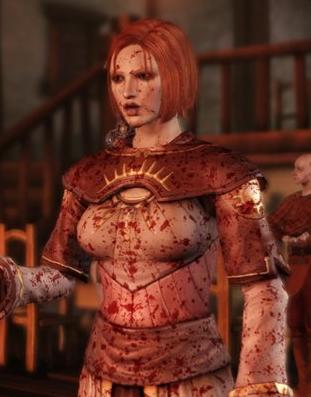
Dragon AgeJust when your mind has plunged itself completely into the fantasy of a game, something always manages to break the illusion. And while invisible walls and dialogue glitches share the majority of the blame, it's sometimes short-sighted design that reminds you that you're playing a video game. 

Take Nathan Drake, for instance. During cut-scenes throughout the Uncharted series, he appears to be an approachable everyman. Nate (I feel like I can call him that) makes bad puns, stubs his toe, and regularly proves how little control he has. Developer Naughty Dog endeavored to give players an alternative to the cartoonish space marines we see too often. 

And yet, as soon as a cut-scene fades to black and the player regains control, Drake does an about face, and Mr. Hyde takes over. Suddenly, he's maiming faceless henchmen with reckless abandon. Breaking up the scenes of carnage, however, are cinematics which innocuously avoid the subject of mass murder. Despite convincing visuals, the continuity lapse reminds you that you are, indeed, still playing a video game. 

Naughty Dog has violated aesthetic distance. The term refers to the gap between the viewer's conscious reality and the game's fictional reality. Since Nate rarely, if ever, acknowledges the acts of violence he committed, the entire fantasy breaks down.  


Sometimes, in a bid to close the aesthetic gap, developers may inadvertently widen it. Back in 2009, the astute minds at BioWare noticed that blood, when shed during in-game confrontations, tended to disappear rather quickly in most games. So while developing Dragon Age: Origins, they insisted that players drenched in ogre's blood stay drenched. The theory made sense until the Redcliffe blacksmith greeted me -- despite being covered head-to-toe in blood -- with the same cheerful mantra. And just like that, the game broke an illusion that the player had cultivated over a five-hour dungeon crawl.  

Ultimately, the industry-wide race to fabricate the most "realistic" game hinges on the ability to close the aesthetic gap. But it's not simply a matter of visuals -- after all, Star Wars: The Old Republic still manages to make me second guess real life. Instead, it's a question of continuity. Players become invested once they accept certain axioms of a game's fictional universe. Break one of those rules, and the dream begins to tear at the seams. 

In his book On Directing Film, writer/director David Mamet (Wag the Dog) brushes this entire discussion to the side. He asserts that any depiction of graphic violence is an inherrent violation of aesthetic distance. This because the instinctive reaction of humans is to judge whether the violence is real or not, pulling us out of the story. Because so many video games liberally depict acts of violence, Mamet suggests that gamers are permanently cognizant that the experience isn't real. 

Developer Clint Hocking coined the term "ludonarrative dissonance," which refers to a break in the aesthetic gap between video games and their players. 

Glados

Krystian Majewski, who works at the Cologne Game Lab, suggests that Portal 2 is the best case study for ludonarrative dissonance. Throughout the campaign, Chell (the involuntary test subject of Aperture Labs) finds the experiments disagreeable. As a character, her hope is to escape the facility and its torturous field tests. Yet the player wants to stick around for as long as possible. The narrative leads us to believe that the experiments are painful, while the gameplay indicates they're fun. 

To Chell, we must seem like sociopathic researchers intent on getting our kicks. Ironically, the player shares more in common with GLaDOS, the game's homicidal A.I., than with the avatar. 

Whether a miniscule glitch or a glaring design choice creates the aesthetic distance, players will have a tough time staying with the experience for very long. Though one day we'll play games that will go beyond mere simulacrum, I'm content to leave the blood on my face for now. 

 
Problem? Report this post
BITMOB'S SPONSOR
Adsense-placeholder
Comments (15)
230340423
January 24, 2012

The concept of ludonarrative dissonance fascinates me. It's one of the most interesting things about the developing nature of video-game narratives. Seems like an insurmountable challenge, but my favorite games always seem to be ones that handle it best. We're getting closer. 

Justme
January 25, 2012

Which games do you feel handled it best?  Top 3?

230340423
January 25, 2012

Hmm, not sure...many games have moments or aspects where they handle it well, but maybe not the whole experience.

My prime example will probably always be Shadow of the Colossus. Its gameplay is so stripped down that it perfectly matches the labors and intentions of the protagonist. Your goal: Restore the girl to life. Everything the game allows you to do serves this goal, even if you're not actively killing the next colossus yet. It manages to balance the illusion of player freedom against absolute linearity without ever breaking the sense of urgency and purpose. 

What would you say?

Default_picture
January 25, 2012

Heavy Rain's gameplay aligns perfectly with its narrative; you retain a certain degree of control during cut-scenes and action sequences, which helps to maintain the aesthetic distance.

Sexy_beast
January 25, 2012

Heavy Rain would have been an example of mine. Character actions never seem to undermine their intentions or personality...perhaps with the exception of the twist ending, when the Origami Killer is revealed. That one droppped out of nowhere.

I also consider the Half-Life series to be a prime example of great narrative immersion in games. Mind you, the protagonist is a non-character, and we're shooting aliens rather than people, but the delivery of expository information within a ceaseless experience seems like the most idiosyncratic means for a game to tell a story...and HL has done is almost perfectly.

Seems like the best bet is to go with either extreme: heavy cut-scene based or no cut-scenes at all.

Default_picture
January 24, 2012

I strongly disagree with Krystian's (and presumably Omar's) characterization of Portal 2. We may find the gameplay "fun", but I'd attribute that to a well-designed game -- the antithesis of what leads to ludonarrative dissonance in the first place.

I thought that Valve did a fine job making you feel -- albeit vicariously -- Chell's frustration, desperation, and the absurdity of it all. To suggest that, in order to experience our avatar's irritation, we need to somehow not have fun playing a game, misses the point of an interactive medium.

I get that Nathan's willingness to slaughter thousands of bad guys in gameplay sequences conflicts with his compassionate nature during cut-scenes (even if I disagree that it violates the aesthetic distance). But Chell never changes -- she's more or less a blank slate, with the player left to fill in their own characterization.

Default_picture
January 25, 2012

Ludonarrative dissonance, a great idea that i will probably spend way too much time thinking about. But like Layton suggests, it seems like an insurmountable challenge. I think that's because it's fundamentally flawed, or perhaps doesn't have a wide enough scope. The fundamental flaw seems that it assumes our reality and the game's reality can theoretically align perfectly, given our current tools for creating games, and create a seamless synthesis. I don't think this could ever be the case, (not including robot overloads putting us in VR and using our body energy as batteries.)

I would like to see the theory widen it's scope, and take a look at the medium of videogames itself. We play games for the kinetic energy of gunfights, endless killing and shooting. If Nathan Drake killed a total of 3 people (still an atrocity) would it still be the same award winning video game?

Default_picture
January 25, 2012

@Steven

While I certainly agree that a sort of dichotomy exists between ludonarrative continuity and fun, I think games developers are quickly improving their ability to tackle that paradox.

For starters, games are getting bigger -- both in terms of in-game content and the scope of action. Although it may require billions of combined man-hours (barring any procedural revolution), the games of tomorrow promise to be incredibly comprensive. That means fewer possibilities for the illusion of the video game to be broken, which in turn make for more immersive and arguably fun games.  

I feel like the cyberpunk prophecies of yesteryear are quickly becoming today's reality. So I don't call me crazy, but I think that VR--the likes of the holodeck and the Matrix--is not altogether impossible. Indeed, it may be the inevitable point which game development is marching toward. You mention VR in jest, but the entire question of ludonarrative continuity is in the context of player immersion. The more developers plug up these virtual reality-breaking glitches and bugs, the sooner we'll have hyperreal (in Baudrilliard's sense) video games. 

I feel a bit like I'm rambling, so I'll sit it out and wait for someone to give me a reality check   :P 

Default_picture
January 25, 2012

Too bad most developers want the next generation simply to make better looking games eh?  I wouldn't mind a generation based on making games with more depth but what can you do?

While games of this immersion would be amazing to see, I wonder how close we truly are.  The technology has to evolve, yes, but not just on the technical side of game consoles and PC's.  The development tools also have to evolve to allow developers to create lifelike places without spending 5+ years doing so. 

Good designers can make sure to distort our perception of what is truly going on to fool us into thinking a game is more immersive but they are few and far between.  Easier tools that allow lesser (with no offense meant) developers to perform some of the same tricks are needed to drive this resurgence.

I also feel that part of the responsibility is on us.  As technology has advanced, human beings have become harder to fool.  We need more and more realistic things in our media in order to be immersed.  Remember the early days of science-fiction movies with model UFO's on strings?  Being immersed in those movies required a bit of a jump for viewers to look past the silly special effects and believe in it.

Default_picture
January 25, 2012

Whenever people bring up the "Drake is a sociopath" argument, I tell them to try playing Uncharted without shooting back at the people trying to murder them. See how far you make it and get back to me! He doesn't have to be murderer if you don't want him to, folks! We also have to remember that Drake is essentially a mercenary, just like the guys trying to kill him. He was never supposed to be a saint.

Snarky comments aside, great article! I didn't know there was actually a term for this sort of thing! 

Sexy_beast
January 25, 2012

Great article, Omar!

Plenty of fine examples of the struggles and inconsistencies games face with narrative. My biggest problem with Nathan Drake (and a problem that 99% of games have, in fact) is your point, exactly. It's hard to really feel for a character who can so blatantly kill other men who I can only assume have lives of their own. How many orphans have some of our most cherished protagonists created?

Violence is pretty trivial in this medium, and it's pretty much the crusty mole on the face on videogame narrative immersion. It has become quite tasteless, and I personally am becoming very sick of it all...to the point where I'm now more interested in other mediums that treat the subject with a little more dignity and consciousness (such as film).

Games have a lot of growing up to do...and that's apparent when I've yet to play as an upstanding character who shows remorse for ending another man or woman's life. Nothing takes me out of the experience more than that.

Default_picture
January 25, 2012

Agreed. I'm finding it harder and harder to overlook the juvenile writing that passes for "story" in most video games. The medium has a lot of growing up to do, and the technology is advancing at a much quicker pace than narrative techniques. I end up latching on to the "exceptions" -- Heavy Rain, Portal 2, The Force Unleashed, etc. -- and replaying them 3-4 times each.

Violence simply becomes uninteresting when it's employed at every available opportunity.

Default_picture
January 26, 2012

I wrote essentially the same article when Uncharted 2 came out (http://bitmob.com/articles/nathan-drake-globetrotting-killer). Seems that the formula worked fairly well for them the first couple times and they're just sticking with it. They are just relying on the player to suspend their disbelief. I think that the ridiculous damage model in 3, poor aiming and obviously telegraphed combat sequences make 3 more tiresome and the pattern is wearing a little thin for me. If they stay the same route for 4, I'll be much less interested.

I'd love to play an Uncharted game that's all traversal, exploration and puzzles, but I don't know how many others would. Some dudes just won't play a game if you can't shoot people in the face.

Default_picture
January 26, 2012

I understand the problem with Uncharted but I don't see any good way to avoid these problems.  Your character could always be a psycho, making their story less entertaining. They could take out the killing, making the game less fun.  Alec makes a very good point, that in most cases (in Uncharted 2 at least, I haven't played the others) Nate is on the defensive.  He mostly only harms people in self-defence.  Another Indiana Jones comparison.

The only emotion I attached to Chell in Portal 2 was despair, a feeling that she'd never manage to escape.  There were times I felt like that was true.  But the game never stopped being fun, which is a remarkable achievement by Valve

Default_picture
January 30, 2012
And this is why Deus ex is such a brilliant game.

You must log in to post a comment. Please register if you do not have an account yet.