On homogenization and gaming’s spleen

Default_picture
Monday, June 11, 2012
EDITOR'S NOTEfrom Sam Barsanti

I love a big, dumb shooter as much as the next guy, but I have to admit I'm pretty disappointed in how Dead Space 3 is looking. Nothing says "this game will be scary" like a pair of dudes in robot suits bro-ing it up....
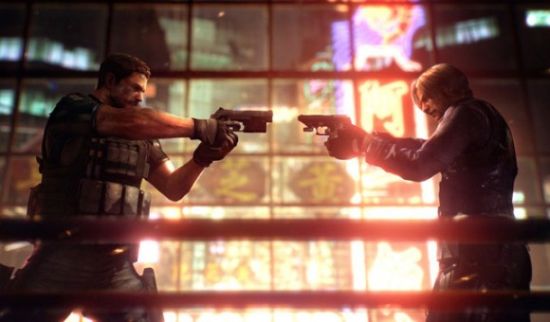
RE 6

I've argued that games are an art form before, but with one major caveat: most are bad art. One of the more likely reasons that games struggle between being meaningful vehicles for experiences and a frowned-upon pastime of the ADD generation is that so few blockbuster games aspire to be anything more than big, dumb Hollywood action flicks. In fact, that's the standard of the industry. Yet, even as I write this, there are hundreds, thousands, or perhaps even hundreds of thousands of people all over the world defending their hobby as something more than an interactive version of the movie Crank.

You don't have to tell me that there are plenty of games that don't involve gratuitous violence (some of my current favorites are Flower, Journey, and Fez). That's not the issue. The issue is that so few triple-A titles contend to be anything more than that and that those are the titles that an outsider to the medium is going to read about in the paper or hear about on TV when some staunch conservative is arguing that Call of Duty is going to make their kids open fire in an airport. But really, as you'd tell them, games are no different than any other medium when it comes to opening up new experiences for you that are sometimes intentionally graphic or controversial. 

However, if you paid attention to E3 this year, you likely heard about Call of Duty: Black Ops II, Halo 4, The Last Of Us, Dead Space 3, Resident Evil 6, Watch Dogs, Tomb Raider, and Far Cry 3, all of which are shooters. Sure, they each have their own elements, but is this really the type of diversity we should be hoping for in this burgeoning young medium? The only real difference between a lot of them is the setting or what you're pointing the barrel of your gun at.


Poet Charles Baudelaire spoke about the French concept of the "spleen." This idea doesn’t refer to the bodily organ, but to a sense of never-ending melancholy due to being disgusted with the world as a whole. Philosopher Walter Benjamin would later illuminate upon Baudelaire's "spleen," saying that audiences' attention spans were growing shorter, and that mediums such as poetry would have to evolve to be quicker and more concise for the increasingly impatient and unhappy masses. Are we seeing an evolution of Charles Baudelaire's concept of the spleen in today’s video games? Are we unable to enjoy an experience unless at its core lies the exact same mechanics as those behind every other triple-A title? 

It's hard to tell if that's what gamers want or just what developers think gamers want. Either way, it's an aggressively bad trend to follow. It's as if developers are worried that their new intellectual property just won’t make it unless the protagonist is holding a firearm. For example: Watch Dogs' trailer was so engrossing and unique to me until the trench-coated hacker main character pulled out a gun. This drew immediate (and distressing) parallels to existing IPs like Grand Theft Auto. We're getting another third-person shooter.
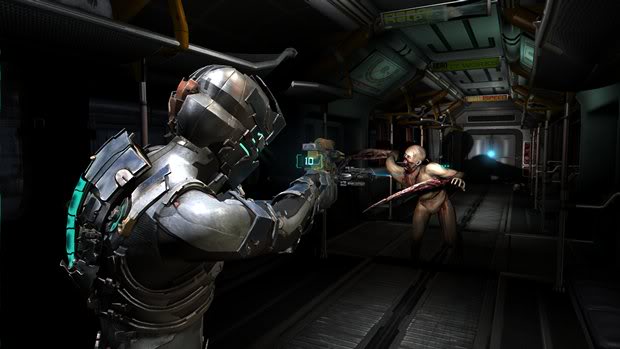
Dead Space

It's not even just the lack of creativity in hardcore-oriented games that I'm talking about. When Dead Space came out in 2008, it ushered players into a tense and frightening survival-horror atmosphere that was largely unlike anything most had felt since the original Resident Evil games. It had a personality. As the Resident Evil franchise appeared to be moving away from survival-horror (with most of its recent titles looking more like Black Hawk Down than Night of the Living Dead), Dead Space was a welcome addition to gamers' libraries. It was the go-to title for a current-gen survival-horror fix.

Then the series changed its focus with the release of Dead Space 2. The sequel was faster and more of a shooter than its predecessor, which was focused on the solitary, claustrophobic atmosphere with an emphasis on horror. Our hero, Isaac, was an engineer -- not a war hero -- and it felt like it. At this year's E3, we saw an even more action-based game in the trailer for Dead Space 3. Similar to Resident Evil 5, it appears as if you'll have a co-op partner, which will certainly detract from the horror element by completely shunning the solitary feel of the first game. Many even compared Dead Space 3's trailer to the Lost Planet franchise since it seems to take place on a snowy planet inhabited by trailer-sized monsters with glowing weak points. Isaac, who was a frightened engineer in the first game, seems to have become a battle-hardened soldier. He’s not Isaac anymore, he’s Master Chief. Of course, this character progression isn't illogical given what he's been through, but it really does shift the focus away from what made Dead Space so great. Why even call it Dead Space at this point? For that matter, why is Resident Evil still called Resident Evil?

If it weren't enough that gamers are able to choose between painfully few genres, and that the vast majority of blockbuster titles aimed at the hardcore have gameplay primarily centered around pointing at enemies and clicking them to death, we now see the hardcore games further homogenizing themselves into bigger, dumber action flicks. How is Resident Evil 6 the logical progression from Resident Evil 1 or 2 when it has a trailer that emphasizes action and explosions over scares and item management? I'm not asking for Resident Evil 6 to be a remake of the first game or for Dead Space 3 to be exactly the same as the original, but it's like if Godfather 2 focused on a skateboard competition between the Mafia starring Pauly Shore instead of Al Pacino. There's just none of that original personality that made it great and it represents a radical and, for me, unwarranted change.

It's terribly upsetting to see games that had a personality and a story to tell aspiring to be more like Call of Duty than to really explore what they can accomplish within the universe and mechanics that once made them a standout. It's even more upsetting that the very people who would call themselves hardcore fans are the same people who seem to freely accept the bevy of intellectually bankrupt projects coming down the pipeline.

When film was originally invented it was deemed a carnival attraction. Nobody could have guessed that it would blossom into a medium capable of capturing our dwindling attention spans while still provoking us with challenging new ideas and perspectives. In the video game market of today, we see few titles worthy of true critical acclaim. Video game journalists and reviewers are content giving perfect scores to games that are nothing more than our industry's equivalent of the latest Mark Wahlberg summer action romp. With some hope and a more diverse player base with more diverse wants and needs from video games, someday we might see our humble media juggernaut become more accepted as a legitimate art form...instead of just a diversion. 

 
Problem? Report this post
BITMOB'S SPONSOR
Adsense-placeholder
Comments (10)
Default_picture
June 11, 2012

Not sure what your core argument is. At first it seems as if you are trying to justify that games are not an artform because of the homogenization of AAA, but towards the middle your argument you seem to fixate on the E3 games that are moving further away from their original premise without relating that to video games as an art form. You also refer to Hollywood movies a lot and I think it is safe to say that the latest Fast and Furious is rarely referred to as artistic. It's just a blockbuster that gets people to sit in a theater. It's the same with AAA games.

The medium can be used for artistic purposes if the creator deems it necessary. However, most of the time, the creator deems money more necessary. If we look at the indie darlings of video games and compare them to the more artistic films, than we see a similar pattern. Lower box office takings, cult followings, smaller budgets. What you are arguing here has been said a thousand times on a thousand sites and its not an issue that is likely to die off as long as the AAA titles make money.

However, I think you missed an opportunity to discuss the artistic merit of action blockbusters here and opted to go the traditional lack-of-innovation-frustrates-me route.

Default_picture
June 13, 2012

Jackson, he's not saying it's a case between art vs not, he's saying good art vs bad art, and points that out in the very first sentence. That's where a lot of misunderstanding comes from where saying that CoD should be rated on the same level as Bach because they're both art. It's not a binary reference where it's the best or nonexistant (also a problem with fan reviews, but that's a seperate rant).

The crux of the article is that while other mediums and indie development in the game medium seem capable of putting out a large variety of content and emotional and mental stimulations. Big promotional items which tend to be what most non and casual gamers see as what the game industry is (I still refuse to call them AAA as that's an indicator of quality which is laughable) can't seem to go beyond senseless run-and-gun however and that really needs to change.

100media_imag0065
June 11, 2012

Great read. I myself often get frustrated when I see great franchises move away from what made them great in an attempt to appeal to a wider audience. I can't blame the developer for wanting/needing to make money, but at the same time, if you're just in it for the money, you're not doing your job. Dead Space 3 was a great example. Here we had a franchise that was doing survival horror right. Finally we had a game that was stealing the crown back from Capcom and giving survival horror fans their due.

Then, the sequel undid a lot of what was great about the franchise, but still managed to be an enjoyable shooter. Notice I said "shooter". Now we have Dead Space 3, a game that looks to completely remove any survival horror elements that was kept intact with the previous game, and churn out a straight up third person shooter. That's not what I want, and I don't plan on giving Dead Space 3 a single glance on store shelves.

There are a ton of shooters I can play if I wanted to play one. However, if I wanted a true survival horror game on consoles, Dead Space was the go to franchise. With that out of the picture now, we have nowhere left to go. They took the one truly original thing about their game and removed it to appeal to a wider audience. We are seeing this more and more lately and because of it all games are starting to look and feel the same. Mass Effect used to be an RPG, now its a shooter. The same can be said of Deus Ex: Human Revolution.

Dragon Age 2, X-Com, Syndicate, Metal Gear Solid 4, I honestly could list about 2 dozen games this generation alone that have lost what made them unique in the first place. However, what really, really drives me crazy are the reviewers. These people claim they want originality. They claim they hate the same old thing over and over again, yet when it comes time to put their money where their mouths are, they routinely shower praise on the latest Call of Duty, while shunning a truly great original game like Metro 2033.

Singularity, Metro 2033, Call of Juarez: Bound in Blood, all great shooters that strived to be something more than just another military shooter knockoff, and succeeded. Yet, each one was met with slow sales. I blame the journalists for this. They claim these are the games they want to play, yet when it comes time to let people know about these original shooters, they instead spend their time talking about Infinity Wards latest. It just breaks my heart to see so many great games get burried under a see of "AAA" nonsense.

Default_picture
June 12, 2012
I would agree with Jackson W Ryan. That there are currently a multitude of Hollywood movies that make a lot of money but would not be considered "artistic". For example look at the highest grossing movies over the last few years and have they been considered the most artistic movies for that year or even been nominated for any best movie awards? I see games as something similar. For something artistic you would normally go look at the indie developers. The AAA games serve the purpose of being entertaining and enjoyable much like a hollywood summer blockbuster. So if you find a good artistic game, spread the word and let people know but don't expect it to reach the sales of a AAA titles. We will continue to see games chase the money AAA titles get as the developers/studios will inevitably think there is more money there.
Default_picture
June 12, 2012

I think the difference, Jackson W, is that Hollywood, despite pumping out plenty of mediocre action movies that appeal to the lowest common deniminator, still manages to frequently release movies with merit. Plenty of big, mainstream movies out in theaters win awards and innovation isn't coming solely from the private sector. However, in games we have much less innovation coming from the biggest titles that earn the most money. Hollywood (Since I keep using Hollywood as an example) is definitely partial to sequels, but you can hardly compare it to how sequels work in the games industry. So many major game titles are slated for sequels every year or two and companies get to work filming the next game immediately after. It just seems to really stifle creativity when developers don't feel like they can take risks or bring a new IP to life.

I guess my main problem is that the film industry equivalent to most games really is something as stupid as the Fast and the Furious 8 and that's why it's so difficult for people to see the artistic merit in them. You don't have to look too hard to find a film that's thought provoking, but you do have to dig pretty deep into indie game sections to find anything that's worth more than entertainment. Also, it's so much worse that the majority of consumers and the same people who visit video game sites and want to talk about the artistic merit of games would primarily be playing intellectually bankrupt sequel grinds. GTA4 is like our Departed.

I know that I'm not the first person to notice this trend. I know that money will always be the ultimate factor controlling the industry. I just wanted to weigh my two cents, because this E3 was extra depressing considering the few titles that are even the slightest bit unique in an industry of copycats are totally changing their personalities to be even bigger and dumber and I think it's sad.

Default_picture
June 12, 2012

Also, I totally agree, Ed. Pretty sure I touched on that in my article as well. I think that journalists are definitely a reason why we see the industry becoming so stagnant. Innovation and experimentation rarely get good review scores, but well-worn territory with solid mechanics is what earns Modern Warfare 3 an 88 on Metacritic. It's really a problem because instead of reviewing any merit that the game has reviewers just review the gamyness of the game. It's like people praising a well written but totally unoriginal book or a movie that stole its plot from another movie, but was well directed.

Default_picture
June 13, 2012
I would have to agree with you there Ryan and in particular the scores and reviews of MW3. Whilst it might have been enjoyable I don't think it warranted the high scores it seemed to get everywhere. I do still hold out hope that the gaming industry is still relatively young and that truly creative games will carve a niche market for themselves. Finally I wonder why people feel the need to defend gaming as a hobby. If you enjoy it then I don't think you need to justify it to anyone. For example I could not enjoy sewing as a hobby but some people do and I respect that. I would not ask them to justify why they like it.
Default_picture
June 13, 2012

The only reason I criticize you is because you put the blame on video game journalists for making this a problem. Most of us have come to terms with the fact that review scores mean little and I think it hypocritical of you to say that journalists that give the same scores to titles that do the same things are the problem. By your own admission, everything in your article above is repeating what has been said. I just don't think its fair to lump the blame on video game media, in fact, I think that is quie ridiculous.

Default_picture
June 13, 2012

In a world where metacritic scores grant bonus wages and are discussed among investors, I do not think it's appropriate to say that scores mean little.Scores certainly have a large effect on the industry, especially on publishers.

Big budget games are multi-million dollar projects, and innnovation can be a very scary thing to investors, who are only there to make money. At the end of the day, this is a business, and that is what hinders innovation. 

While more money invested doesn't necessarily mean a better game, more often than not less technical flaws will exist in a high budget project. What does the critic do, then? It's a difficult question; can they simply lower the score because the piece lacks newness? While this is a frequent occurance in cinema, it may not pass in a gaming review. 

While Ryan mentions in his comment that critics play into this, he does not imply that they made it a problem. I am sure you did not think he meant they were the cause of the problem, Jackson, because I don't think he ever explicitly stated that. Yet, in a business where critics have the power to detach investors from publishers, can we really say they don't play a part in keeping big-budget titles "safe" from innovation? 

And really, it's not the fault of the critic, because that's a business too. If you want more revenue, you get on meta-critic. To get on meta-critic, you need to give a score. For most (and this is truly unfortunate) the score weighs more heavily on the game's industry than their actual words and feelings about the game.

I am not saying we should all be jaded about the way it is, but in the end the true thing that hinders innovation is money. That is why indie games have so much more of newness, because they don't have thousands of investors watching their every move. It's like Matt says though, it's still a young industry. With the popularization of low-budget mobile games, there are more indie developers than ever before. It's a growing industry, and more people are making games every day. It's only a matter of time before we see new ideas: innovation in the mainstream. I'm a wishful thinker, but wouldn't a games renaissance be nice?

Default_picture
June 13, 2012
The only thing I would add about reviews of games and their corresponding scores is that my personal situation has changed (having a family) so now I have less time for gaming. I partially rely on reviews to give me an idea of what the game may be like as I can longer play every game I may want. I am skeptical of most reviews and I don't buy a game solely on their advice but I do gather some information from them.

You must log in to post a comment. Please register if you do not have an account yet.