Home
Home

David pores over a recent Penny Arcade Report editorial arguing that the games media's focus on sound bites and "gotchas" does a disservice to not only readers but the relationship between press and developers.
But how can journalists find a balance between needing to generate page views versus serving the audience's best interests with informative content?

As long as video game journalists talk to video game developers, we will read about controversy and sensationalism. I should expand on that statement: As long as journalists talk to anyone, we will read sensationalist articles. Let’s expand that one more time: As long as people talk to people, we will read about sensationalism, and journalists will blow everything way out of proportion, and they will take things said out of context, and did Jenny really say that about Peggy?
People will talk.
Ben Kuchera, the man in charge over at the Penny Arcade Report, makes some good points about the way the media interacts with developers. Let’s rewind. Mr. Kuchera’s article, "Sexism as inclusion, racism as criticism: Why the press and developers have trouble communicating," is about two developers saying sexist and racist things. Kuchera talks about the potential conversations we missed by over-sensationalizing recent controversies, specifically the comments made by Borderlands 2 lead designer John Hemingway and Assassin's Creed 3 creative director Alex Hutchinson.
Here’s a little background information. Hemingway dubbed an element of his upcoming game -- an element aimed at making it more accessible -- "girlfriend mode." Kind of a dumb name, and, of course, it caused a media firestorm.
Kuchera argues that a few stupid words and phrases destroyed real conversations about inclusion and how to widen the game market. He sort of accuses other journalists of only chasing page views and mouse clicks, which, well, they are. It is their job; they get paid by ad revenue (cough, click the fabulous ads on the left, cough).
His article also discusses the recent Hutchinson interview. where the creative director accuses reviewers of being racist because they don’t mind Japanese games with bad stories but pan poorly written American titles. Hutchinson went on to say, “Just think about how many Japanese games are released where their stories are literally gibberish. Literally gibberish.” Beyond the fact that the man doesn’t know what the word "literally" means, that’s a fairly hostile comment, and the media latched onto it.
At the end of Kuchera’s article, he bemoans the missed opportunities: The lost conversations that could have taken place if journalists didn’t sensationalize everything and if developers thought before they spoke. He cleverly gives this section the subtitle "There is yelling but no conversation." And he’s right. Everyone has these raised voices, and they are scaring the neighbors, and nothing is getting done.
I agree with Kuchera that we had a missed opportunity to talk about sexism and inclusion in triple-A titles. That, in essence, developers could use what Hemingway calls "girlfriend mode" to bridge the gap between novice and veteran players. Hemingway doesn’t think about younger brothers or parents or any other person who doesn’t game and who is likely to take advantage of his wholly inappropriately named "girlfriend mode."
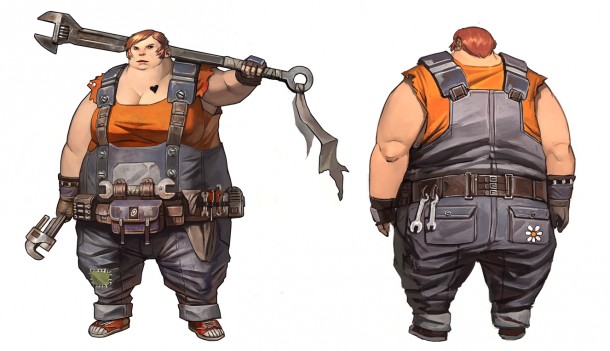
But Hemingway’s goal is to broaden the industry and to invite more people to play. And that is admirable and, as Kuchera points out, a worthy topic of discussion. The actual game, Borderlands 2, seems to address sexism in the medium with its non-standard female character designs. But now, the only thing that people will talk about is that silly mode that was actually a means of inclusion, not exclusion. This is an example of the media not being willing to have a legitimate conversation -- the page views from this "gotcha" moment just looked too appetizing.
The same can’t be said about the comments Hutchinson made about Japanese games being "gibberish." Kuchera thinks we missed an opportunity to talk about the difference between Eastern and Western forms of storytelling. That is a great conversation -- one that could go on for years. Kuchera and I could have that conversation, as could a lot of people.
Hutchinson, on the other hand, has no interest in talking about diversity. His comments are more than a little hostile -- we could simply call them hostile or even very hostile. Right before he claims that many Japanese stories are "gibberish," he accuses the media of being racist -- literally saying, "I think there's a subtle racism in the business, especially on the journalists' side, where Japanese developers are forgiven for doing what they do. I think it's condescending to do this."
This is not something someone says before starting a calm and informed discussion. I would have a hard time seriously talking to someone who calls a large group of people racist right before he makes a fairly racist comment himself. You don’t start a conversation by saying, "God, I hate you, and everything you say is entirely invalid. Oh, and you’re super duper racist against white people 'cause, you know, white people are the best." That’s just not a good opening statement.
In the case of Hutchinson, this wasn’t really a "gotcha" moment. This wasn’t just a slip of the tongue; it was a statement of his beliefs and his dismissal of an entire group of people -- the same people he was trying to converse with.
I wish the media and developers were able to communicate a little bit more effectively. I wish that both sides could respect one another and could, you know, just get along, man. But that’s not going to happen. At least not as long as journalists require ad revenue to get paid and as long as developers let their tongues slip.
I want these real conversations to happen. But not everyone is looking to have a real "talk." While Kuchera can get page views by having legitimate conversations about games, most journalists can’t. They aren’t interested in an equal debate or discussion, and sadly those types of articles don’t get a lot of mouse clicks. On the other hand, some developers are ready to talk about issues within the industry -- things like inclusion. Then we have people like Hutchinson who are openly hostile to anyone with a journalist badge.
Kuchera is right: We need to try and have legitimate conversations, but to do that, we must have at least two willing participants. Apparently, that’s not as easy as it sounds.