Home
Home

Full disclosure: Ubisoft provided Bitmob with an advanced review copy of Assassin's Creed: Revelations. Minor spoilers follow.
Good god, Assassin's Creed: Revelations frustrates the hell out of me. All the little things I loved in last year's Assassin's Creed: Brotherhood -- guild quests, guild management, setting fire to Borgia towers -- saw tweaks that downshifted my enthusiasm to a low idle. I completely ignored boring new additions -- bomb crafting, first-person puzzle levels, and a weak-tea tower-defense game -- after a few samples. Oh, and the first half of the campaign drags like open-mic night at the local morgue.
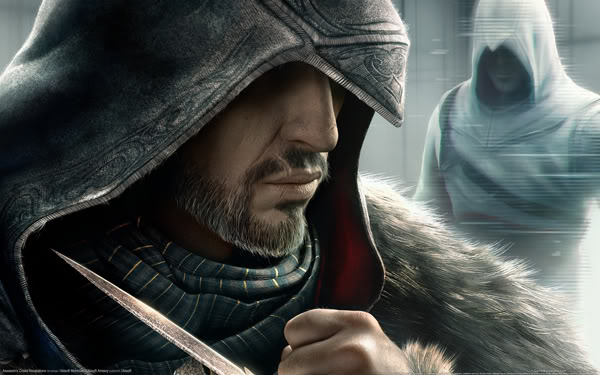
I got these manly scars by shaving with the hidden blade.
And yet, a great many things work. The major set pieces dazzle. Some story missions show real ingenuity behind them. It's a joy to watch ex-lothario Ezio, now in his 50s, finally meet and court a woman who completely floors him. Mere seconds after thinking "Jesus Christ, not another boring tomb crawl," Revelations sucker-punched me with an exhilarating tomb race. I loved that. The entire game should've thrown those curveballs at me in one long, thrilling, seamless ride, and I sense it very much wanted to. But it didn't.
Now, it's true Revelations went forward without nearly all the senior creatives behind the series' first three games, but the replacement team had a much bigger problem: an arbitrary, locked-in deadline. You see, back in 2009, publisher Ubisoft committed to delivering a new Assassin's Creed game every single year.
And nothing drives a franchise into the ground faster.
Honestly, I'm trying to think of a single example where pushing a new franchise entry out the door every November like clockwork turned out to be a good idea. Nope...not one. Some survive better than others, but the end result never varies. Stagnation. Apathy. Death. It's really only a matter of time.
In Tomb Raider's case, six years turned out to be the magic number. Lara Croft went from cultural icon to a warning label in just five games (not counting remastered editions), with Tomb Raider: Angel of Darkness finally nailing the coffin shut. By that point, the development team at Core had been in a continuous state of crunch for nearly seven years, and parent company Eidos just pushed them harder after every artificial deadline. Small wonder cracks started to show long before Core co-founder Jeremy Heath-Smith famously started swearing at a buggy Angel demo on the floor of a buyer's conference just a few months before the game's release.
Sure, Tomb Raider clawed its way back under a new developer, but it will never regain the pop-culture relevance it once commanded. Guitar Hero similarly hit big and then died off after flooding the market with a mind-numbing amount of titles.
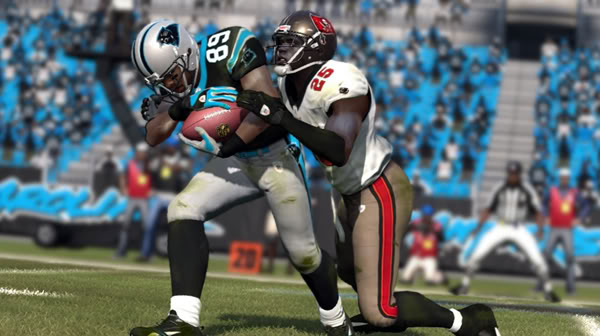
Courtesy of AwkwardFamilyPhotos.com.
Let's not forget the grand marshal of annualized games, Madden NFL. Somebody out there must buy it every year, but damned if I know why. Updated team rosters and half-hearted upgrades just don't merit a new game every 12 months. After so many years of refining, refining, refining, those developers can only move the needles by fractions of millimeters. That's not enough to justify a $60 price tag anymore.
In fact, did anyone actually remember Madden NFL 12 came out last August? I think not, because it's only moved about half the units Madden NFL 11 did...and 11 didn't earn half of Madden NFL 07's haul. Not great news for the biggest sports franchise in gaming. Particularly when you consider nobody's going to buy older versions when a new Madden's on the shelf.
So it's time to stop. Breathe. Think.
Hey, I'm an instant-gratification person. I tend to get early review copies of games long before they're released commercially, and I still want them right now, just like you do. But if it'll make a better game, I'll wait. I'll give Mass Effect 3 an extra six months. I'll hold out for The Last Guardian, even if it does start to feel vaguely vaporware-ish. Better that than a bad game.
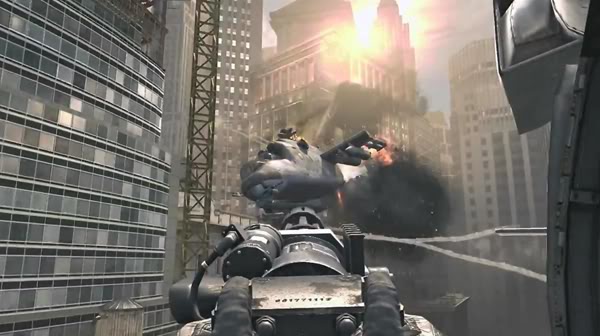
November is helicopter-huntin' season!
More time translates to more thought, more care, more questions, more planning, more good ideas found, more bad ideas sifted out. You get opportunities to identify rough edges and smooth them out. Reasonable deadlines let you experience, assess, and perfect the flow. I won't call it a guarantee of quality, but a smart schedule allows for smart decisions. A pressure cooker demands hasty choices. Sometimes that works. Sometimes expediency requires that mediocre work slides.
And to be completely honest, I just don't get the same sense of anticipation when it comes to annualized games. Remember the intensity leading up to Halo 3's release after Halo 2 left us twisting on a cliffhanger for three years? Didn't feel that for Call of Duty: Modern Warfare 3. I played a COD a year ago. A year from now, I'll play another. It'll be Black Ops 2, then Modern Warfare 4, then whatever. And whatever. And whatever. Meanwhile, I'm salivating for BioShock Infinite.
So it's good news when Alexandre Amancio, the new creative director for Assassin's Creed, says the franchise will likely back away from an annual schedule after Assassin's Creed 3 (which reportedly has enjoyed a much longer development cycle) releases. No, that game hasn't been announced yet, but yeah, we'll see it next November. Hopefully, afterwards, we won't know what to expect. Amancio's team will get the room they need to fully flesh out their vision. We'll be ready to drop back into a Creed game instead of merely feeling obligated to keep up with them.
Others should follow that example, and let things happen at their proper pace.