Home
Home

Daniel offers a counterpoint to Charles Tew's recent article on Ubisoft and PC piracy. Rather than assume the motivations of people who download games instead of buy them, Daniel focuses on things developers and publishers can do and have done to combat the perceived threat of illegal copies.
To me and other people who actually buy PC games, Ubisoft’s recent words and actions have been both alarming and pretty dumb...even compared to their peers' statements.
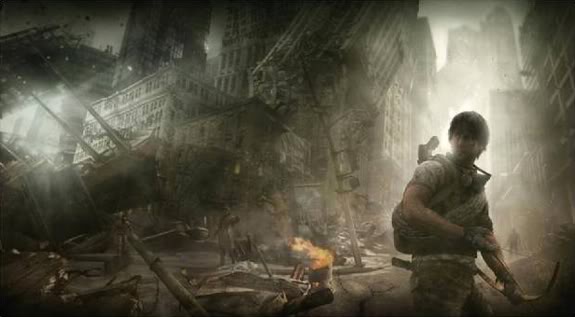
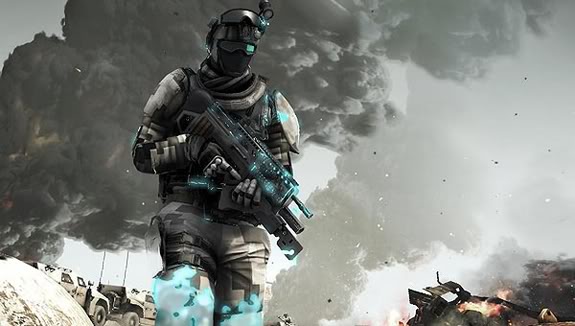
First, the director of I Am Alive said some gloomy things about the future of the PC version -- eventually deciding that it may still happen in the future. Not too bad once that mistranslation about it not ever happening was cleared up, but then Ubisoft had to cancel the PC version of Ghost Recon: Future Soldier outright. Their actions and comments on both games have once again pinned things on piracy.
PC game piracy is a tricky subject that a lot of people are mishandling -- mostly because they’re going in with the wrong mindset from the start. Ubisoft has been far and away the worst case.
First of all, we have no clear idea just how much piracy affects the game industry. The idea that each pirated copy equals a lost sale has been called into question if not completely discredited. There are games that have sold millions of copies and still gotten pirated many times as much. In fact, the most successful games often get pirated the most.
We don’t know how many users each pirated copy equates to. We don’t know if most pirates would ever become legitimate customers -- if they would ever buy the things they pirate or even be able to buy them in the first place. The ArmA guys at Bohemia Interactive might know that for every three people playing ARMA 2 legitimately online there are 10 attempts to get in with a pirated copy, but does that actually mean 10 pirate copies?
That’s the first stage of the problem with how people are dealing with piracy -- a stage to which we honestly don’t have an answer yet. The second bad habit is how companies are dealing with it: digital-rights management (DRM). We’ve been over things about Ubisoft’s draconian PC DRM, but simply not offering their games on PC is just walking away from a problem that others are hard at work solving.
Recent interviews and quotes tell me Valve and CD Projekt are the two companies that have it right. Gave Newell has said at least once or twice already that piracy isn’t a technology problem but a service problem. My experiences with piracy in all kinds of media lead me to agree with this assertion.
A lot of the time you pirate something not just because it’s free but simply because it’s the easiest way to get a hold of a product. Ubisoft doesn’t understand that when it’s more complicated to buy its games legally than it is to pirate them, people start pirating them.
DRM isn’t really what put a damper on music piracy; it was iTunes and Amazon MP3 downloads making it easier for people to buy music. People pirated anime because for a long time it was the only way to get it subtitled in any timely manner, and the industry responded with subtitled streams in lock-step with Japanese broadcasts.
Ubisoft’s DRM has done just the opposite of this, and like a lot of other DRM, the technology has driven people into piracy instead of out of it. Companies like Valve and CD Projekt figured they should try to convince people not to pirate their games instead of trying to force them not to pirate.
In recent interviews, CD Projekt has talked about how they’ve spent over a decade competing against pirates by finally offering a good service with extra content for legal purchases. According to them, more people have found out about GOG through pirate networks than through Google.
With Valve, people make a point to buy games on Steam because they get social features like achievements, stat-tracking, easy installation, and cataloging -- basically, attaching games to a service seems to be the way of the future. Hell, most people buy their games on Xbox 360 nowadays not becuase of the hardware but because of the service the games are attached to.
Ubisoft may argue this is what they’re doing with Ghost Recon in cancelling Future Soldier on the PC and only giving PC gamers Ghost Recon Online, a free-to-play game. A senior producer at Ubisoft claims that’s what PC gamers want. Well, maybe there was no good solution from this (with Tom Clancy games declining in popularity on PC), but now they’re just acting like they don’t even care.
At least the other big publishers like EA actually care. EA at least cares enough to put up Origin -- as much as many may dislike it. At least it shows that they’re trying to offer something to the PC market. At this point, I honestly hope Ubisoft would try to turn UPlay into their own PC distribution channel if they could offer good services with PC purchases.
What’s particularly damning about I Am Alive is that it’s a small, downloadable game -- the kind of thing that recently has actually sold more on PC than on consoles. The developers of Dungeon Defenders revealed that 80 percent of that game’s sales were on PC, one of the last platforms on which it was released. Super Meat Boy seems to have followed a similar path.
I personally would attribute this to that market being more open to and aware of smaller games, which manage to be highly visible on Steam (but even a big title like Portal 2 can sell more on PC than consoles). Even if those copies get pirated more, isn’t selling 500 thousand copies of a game with 5 million pirate downloads still better than selling zero copies with zero piracy?
Given all this, companies that continue to pursue these combative strategies and tactics regarding piracy are just hurting themselves in ignorance. I would say that this is just characteristic of large and inflexible companies, but when even EA, THQ, Take-Two, and Activision all seem to at least be trying, it just speaks even worse for Ubisoft.
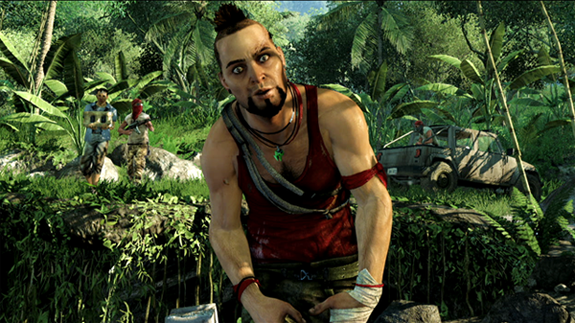
What I especially worry about is Ubisoft’s own PC-centric games. If they go further down this path, what will happen to franchises like Anno, The Settlers, and Silent Hunter? We’ll see how Assassin’s Creed: Revelations fares on PC -- the version of which released just a week or two after the console editions. Thankfully, thus far both Rainbow Six: Patriots and Far Cry 3 also still have that "PC DVD-ROM" logo on their official websites, so I’ll keep my fingers crossed.