Home
Home

I enjoyed last year's District 9 so much I recommended it to everyone I knew, and even made it a point of conversation to people I did not know. But my chief remark, which was not a flippant remark but well-meaning, was always on the spectacular portrayal of violence in the movie, while the story and documentary-style shooting was secondary in my mind.
What induced me to say that the best thing about the movie was it's violence is still beyond me. I have a long history of viewing blood and guts, and perhaps over time I've become more attracted to it, or maybe I can gain a greater appreciation for life and full awareness of my mortality by viewing senseless violence; however, I am not ashamed about my attraction to it, or seeing it as good entertainment, but when I encounter the sensistive person, the one who shakes and turns their face away from the screen, do I experience a sinking feeling.
Gamers are most prepared to face video game legislation mostly because the grounds for which politicians threaten video games are unreasonable. The Video Game Voters Network contains a historical collection of unreasonable arguments struck down by a very reasonable Constitution and not only in the United States, but even in Germany, where gamers proposed a novel idea: educate the public on the ratings system instead of letting the government regulate video games. The Chicago Transit Authority's attempt to remove advertisements for M-rated video games from its vehicles and stations was a failure, especially when they tried to connect video games with acts of actual violence. California is in the same boat, arguing that video games are psychologically damaging to children.
The issue is not whether children should play violent video games. Common sense speaks clearly that M-rated games are not for children, otherwise they would not be Mature rated. The rating E is obviously for Everyone; the T is obviously for Teens. What is still not obvious is that it's the business of the parent to control what happens in their home, what their children are exposed to at home. The government can control many things, but the government cannot control what creative expression a child is exposed to. To ask the government to regulate video games is like telling parents that they are incapable of raising their children.
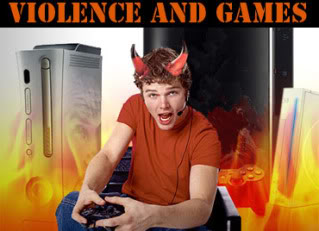
It is the lack of common sense in such cases that spur me on to defend video games in a court. Every argument is the same and that argument is always crushed under the gavel. You can hardly take anything seriously when someone sticks their finger in your face and ramble on about violence in the video games and its influence on minors. The arguments so old no one needs to say anything in their defense: At first it was necessary to debate them; now, it is only necessary to laugh in the face of politicians and the courts and name off a few similar court cases that resulted in the word "unconstitutional".
But I cannot laugh in the face of my aunt. When I watched District 9 with my cousin, my aunt saw it for a few minutes and left the room."I don't think I can take this," she said. After that I could not enjoy the movie as much as I had before. I dreaded the violent scenes coming up and dreaded even more of the reaction from my cousin, who was not as squimish as my aunt, yet my heart went out to her. How was any of the violence in the movie appropriate? Was it even necessary? These are questions that bothered me long after the movie concluded.
I watched Hayao Miyazaki's Ponyo with my four year-old nephew. Harmless, right? No. The scene where Sosuke is returning with his mom during a furious storm made him "a little scared". I offered to turn off the movie, but he told me not to. "Well, it's only a little scary," he replied. No other person could have persuaded me to turn off something I thought most people can handle. But saying "I can't take this" or "I'm scared" shocks me into submission. Calvin is right: we are desensitized to violence, at least most of us, but gamers also have a heart that's aware of the sensitivity of others.
I doubt organizations like the Chicago Transit Authority can persuade courts to regulate video games because "they scare children." The reply to that is, "Don't let them play it." Prohibition had good intentions albeit missing the point, yet people continued drinking. The real solution for drinking is moderation, and the man or woman who can't handle the consumption of a few drinks, especially those with a history of alcoholism in their family, are better off abstaining from alcohol.
If there is anyway to regulate video games, it is through our conscience by those who are sensitive to violence and sex. Sure, we play video games and kill people on screen, but we're not monsters. Unless it is for mischief, we dare not make our games become a stumblingblock for others; if you are afraid or aqueemish about violence, I will turn off the game--but you can be certain that as soon as you leave I may perhaps continue playing it.
What do you do when someone shows that they can't stand to watch the violence seen in video games?