Nintendo literally wrote your holiday wish list for you

Photo-3

How Will You Play 1

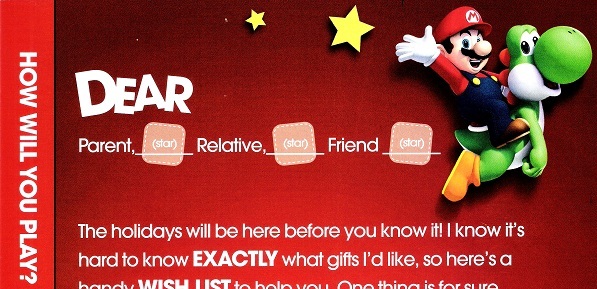
You have no need to come up with a video game wish list this holiday season. Nintendo already did it for you. I found mine in last week’s Sunday edition of the Los Angeles Times. The colorful flier asks “How Will You Play?”

The handout tasks you with taking its included stickers and inserting them into the Mad Libs-style letter on the back side. Then, you're supposed to give this “custom wish list” to a loved one … who’s ready to drop several hundred dollars on a gift for you. The silliest part of this little marketing gimmick, however, is it only really allows for two possible answers.

Read more >>

The Wii U does a poor job distinguishing itself from the Wii

Sexy_beast
EDITOR'S NOTEfrom Jason Lomberg

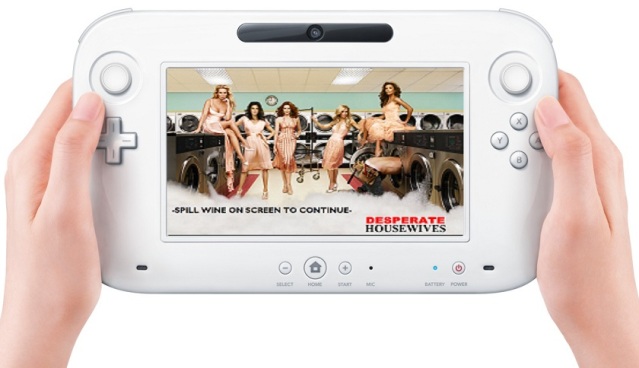
Nintendo's marketing efforts for the Wii U are eerily reminiscent of its previous outreach for the Wii. Unfortunately, the Wii owes much of its success to casual gamers, who might balk at ponying up $300 for another console so soon and -- as Ryan explains -- may not understand the distinction between the two platforms.

Wii U controller

This "blue ocean" that Nintendo is so fond of can't be fished clean. The name exists for a reason: It's that untapped market with a seemingly limitless potential for financial growth. The issue with the ocean, though, is that it's big ... really big. More importantly, fish, much like the blue ocean's consumers, are fleeting little creatures; they seldom stay in a single spot for too long.

It's not farfetched to say that the Wii U aims to mimic the success of its predecessor, right down to the last middle-aged tuna. Even the marketing campaign shares a close resemblance, making this new console less about you the gamer and more about we the family.

My concern, though, is that the very nature of the demographic that made the Wii such a success seems to escape Nintendo's understanding. This is the group of consumers that saw gaming's seminal years as a mere fad and left it to rot when the trend lost steam. This same group similarly regarded the Pet Rock, Tickle Me Elmo, and the RoboSapien ... never to look back.

Read more >>

Conan O'Brien reviews Hitman: Absolution, aka "Necrophilia Hitman"

Mikeminotti-biopic

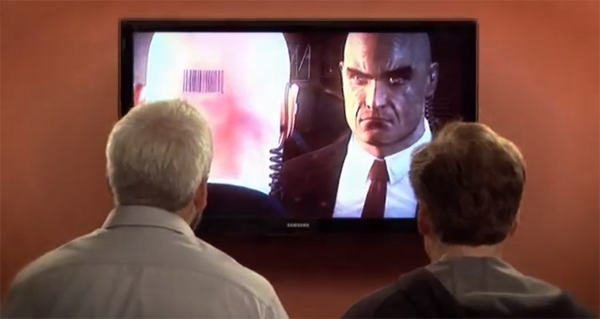
Conan reviews Hitman: Absolution

Conan O'Brien is known as many things. He's a comedian, a host, an actor, a musician, and more. But he is no gamer. Of course, that's what makes his reviews so hilarious.

The newest edition of Clueless Gamer sees the red-headed wonder tackle Hitman: Absolution, the fifth installment in developer IO Interactive's stealthy series. Although, as Conan humorously points out, it's hard for a guy to remain undetected when he has a bar code on the back of his shiny head. He's also a bit put off when someone suggests that he hide in the same dumpster he just dropped a body in. Ew.

You can watch the full review after the break.

Read more >>

Is the tradition of critical games journalism in danger from advertisers?

Captgoodnight_1a
EDITOR'S NOTEfrom Rob Savillo

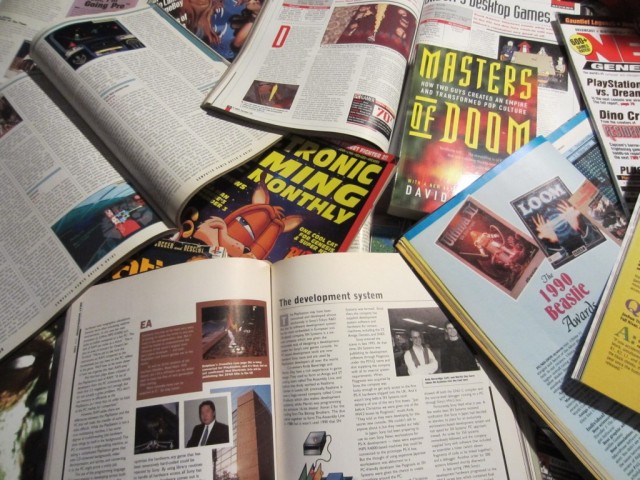
Reggie continues our ongoing conversation on Bitmob about Rob Florence's depature from Eurogamer following his accusations of a corrupt games press. Here, Reggie looks at the creeping influence of flashy console-focused magazines on journalism in the past.

A snapshot of history

I'm frustrated that the tradition of journalistic coverage on video games has now become a sort of joke told with Doritos in one hand and a cup of Mountain Dew in the other.

When I wanted to reply to community writer Nathaniel Dziomba's excellent article, "Games journalism never had any integrity" -- particularly on his point that he had led in with, what I imagined as a short snippet went beyond what I expected it to. His article and those brought together within community manager Layton Shumway's collection of Bitmob's thoughts on games journalism made me wonder: How did things get the way they are? And is there anything we can do about it?

Read more >>

Halo and me: Multiplayer memories and letting go of an addiction

Default_picture
EDITOR'S NOTEfrom Dan "Shoe" Hsu

Raymond extended time in the Halo universe almost sounds like a real drug addiction. Luckily he's out now, but hopefully Halo 4 doesn't pull him back in.

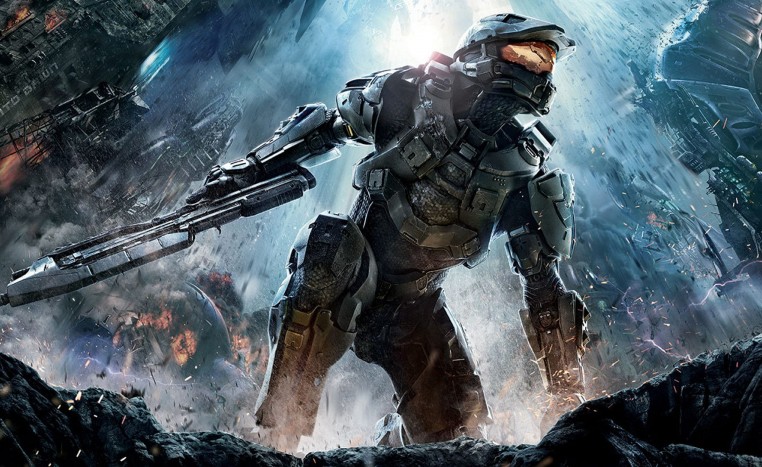
Within seconds of seeing the trailer, I wanted Halo 4. Then the pesky, sensible part of my brain woke up

You won this time, brain! I won't buy Halo 4 (not yet, anyway). But I wondered why I craved the Xbox 360 sci-fi shooter so badly. That the trailer is brilliantly done is one reason. Another is that it made me think of the delightful days spent playing the great multiplayer modes of Halo 3 and Halo: Reach.

Cue flashback effects.

Read more >>

3 neglected properties Telltale Games should pick up

26583_1404714564368_1427496717_31101969_389938_n

The Walking Dead

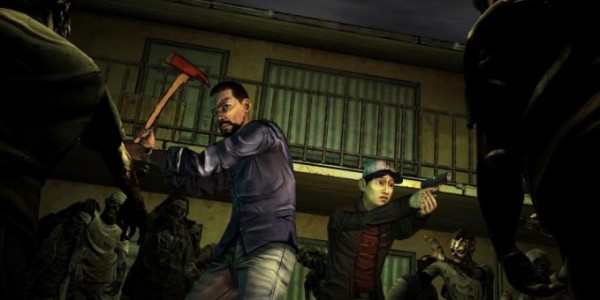
Developer Telltale Games has just wrapped up its five-episode "season" of games based on the mega-popular series of graphic novels, The Walking Dead. The smart money says the team will keep the momentum going and get started on Season 2, but if it wants to keep us all in suspense for a little longer, I can think of a few other properties that could benefit from the sort of faithful and nuanced treatment we got for the zombie-apocalypse drama. I don't expect to see these titles actually come out, but this is the Internet, damn it, and it's made of dreams.


1.) The Thing

In 1982, John Carpenter released his classic film The Thing, a brutal, bleak movie about a shapeshifting alien intent on assimilating and imitating every creature on Earth. It came out against Steven Spielberg's E.T., a cuddly, optimistic film about a sad, friendly alien gardener just trying to get home. Guess which one made more money?

Still, I would argue that Carpenter's film is the better story, and it deftly handles complicated issues of trust, paranoia, and what it really means to be human in the presence of an insidious outside threat.

Telltale could easily apply the skills it honed making The Walking Dead and create an amazing, tense game in which players must make tough decisions to determine who among them is really who they claim to be before the tentacles, weird head-mouths, and spider legs start a-sprouting.

Developer Computer Artworks released a sort-of sequel to The Thing back in 2002, and while it was a perfectly decent third-person shooter, its attempts to capture the trust dynamics of the film fell flat. The Thing is not about guns, although it has plenty of those -- perhaps even more than an isolated Antarctic science station would seem to need. It's about deciding whether the person standing next to you is still who he was this morning, and what you're prepared to do if he's not. It's about the breakdown of polite society and shit getting really real without warning and people you've grown attached to dying very badly, very suddenly.

Does that remind you of anything else?

Read more >>

Why Halo 4's multiplayer can be annoying

Default_picture
EDITOR'S NOTEfrom Eduardo Moutinho

I've always found Halo's pacing to be a little too lackadaisical. While Kermitt appreciates the series' more methodical gameplay, I look forward to checking out what 343 Industries did to mix up the "evolved combat."

Halo 4

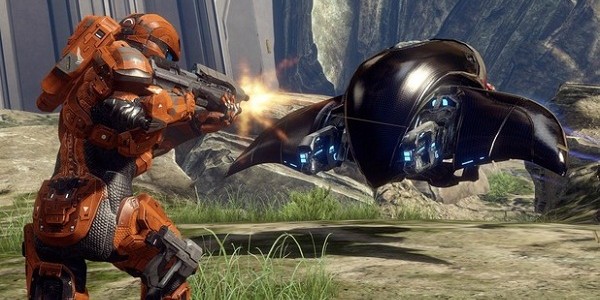
I’ve been a Halo fan for a number of years, and I think Halo 4’s multiplayer is beautifully crafted. My experiences with Halo 3 and Halo: Reach in particular gave me a clear picture on how I believe the franchise's multiplayer should be designed.

With that said, I’ve found several multiplayer changes in Halo 4 that are bothersome.

Issue one centers on the sniper rifle. It is easily my favorite weapon in the series, and it requires an arguable amount of skill and luck to master (at least for one-shot kills). Developer 343 Industries drastically diminished its usefulness in this latest release.

Damage and accuracy remain the same, but weapon bloom, introduced in Reach, has returned. The feature is now more intense, proving to be a bigger annoyance than before. You fire a shot at an enemy, and your reticle blooms, and the hostile runs away.

Read more >>

The Wii U saved my Wii but can't overcome its own content problems

Default_picture

Smash bros

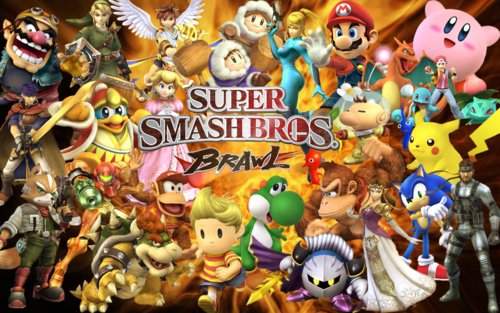
My greatest fear in the rapidly approaching all-digital gaming age is losing content between one generation and the next. Nintendo did a very good (albeit complicated) thing by giving gamers the option to transfar their Wii content over to the Wi U. 

But, if Nintendo really cared about letting gamers keep ahold of their content, this file transfer tool would have been available from Wii to Wii years ago.

I have a very early Wii model. It plays GameCube games and runs a little loudly, but curiously never had a problem loading dual-layer discs like the one Super Smash Bros. Brawl came on. No, its malfunction was much more costly.

Read more >>

How the survival-horror genre lost its way

Default_picture
EDITOR'S NOTEfrom Sam Barsanti

I haven't cared much for survival-horror games lately, and Joe's explanation here gives a good reason why: They've forgotten what used to make them special.

A recent foray into PC gaming has reignited my frustrations with survival-horror and convinced me that stagnation has crept its way into the sub-genre.

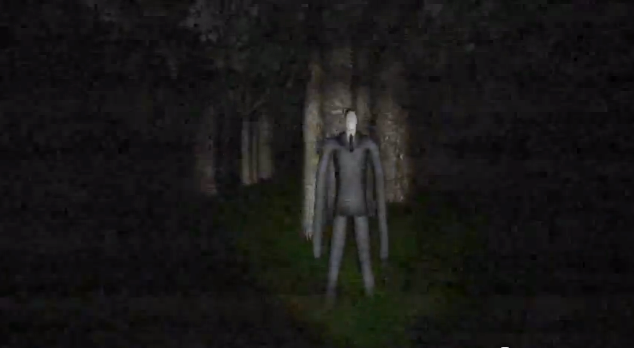
You see, a few weeks back, I came upon the YouTube channel of one MarbleHornets, the creator of a fake reality web series (ignore the oxymoron) based around the Slender Man legend. I have always found the concept of a faceless, malevolent entity stalking mankind since time immemorial to be a genuinely unnerving concept.

After spending far too much time watching and reading about the Slender Man, I learned of Slender: The Eight Pages, a game based around the entity.

Parsec Productions’ indie hit is nothing short of amazing considering the minute budget it was created on. The premise is brilliantly simple: You are placed in a deserted and eerie forest and are tasked with collecting eight randomly placed pages from landmarks scattered throughout the area with nothing but a flashlight. It sounds rather bland until you discover that you are being constantly watched and followed by the game’s titular character (who can literally appear right in front of your eyes or directly behind you at any given moment). With nothing to defend yourself with, the possibility of being caught behind any sharp corner or dimly lit narrow tunnel genuinely creates a tense atmosphere.

Now, it would be too easy for me to say that Slender has singlehandedly restored the survival-horror genre in terms of being able to evoke the emotion of fear and anxiety in the medium of video games, but it has reminded me of how much the genre has changed in recent years.

Read more >>

The dos and don'ts of getting players to care about a game's characters

Default_picture
EDITOR'S NOTEfrom Jason Lomberg

When Ethan Mars experienced anguish over the loss of his son in Heavy Rain, I shared his pain. The developers at Quantic Dream had imbued him with a believable, everyman personality, his motivations were clearly established, and his character arc was expansive and well-developed. I cared for him. Jesse provides a set of guidelines -- dos and don'ts -- for all developers to follow to enable similar connections across gaming.

The characters of a game are perhaps the most crucial element of the story, and whether or not the player feels emotionally attached to them helps determine their level of immersion in the overall narrative.

In other words: If players truly care about the characters, their friends and allies, and the events taking place on screen, then they will undoubtedly care about the outcome of the story; it would be successful in grabbing the player’s full and undivided attention.

However, the story can be held back by flat, one-dimensional, and simply boring characters that the player just cannot bring themselves to feel concern for.

This almost goes without saying: It’s all in the writing.

So how does a game influence players to feel for its characters?

Read more >>

The touching Team Fortress 2 story of an engineer and his sentry

Mikeminotti-biopic

Story of a Sentry

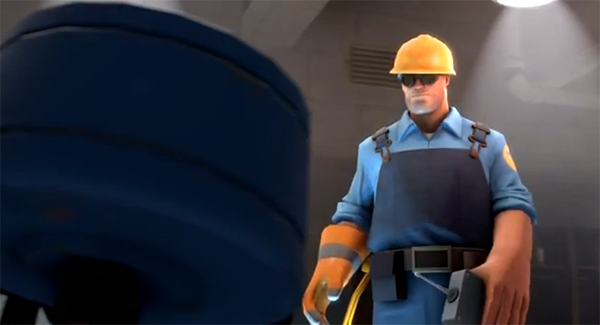
I've seen a lot of Team Fortress 2 movies that made me laugh, but Story of a Sentry is the first to make me feel just tiny bit forlorn. Well, maybe it was more like sad. OK, fine! I cried! I said it! Are you happy now?

What, you think I'm less of a man? Well, watch the video yourself (posted after the break), and let's see how much of tough guy you are.

Read more >>

Role-playing games needed to evolve the "grinding" mechanic

Default_picture
EDITOR'S NOTEfrom Rob Savillo

Grinding ain't what it's cracked up to be, and William explain why he's happy to see it on the outs regarding role-playing games.

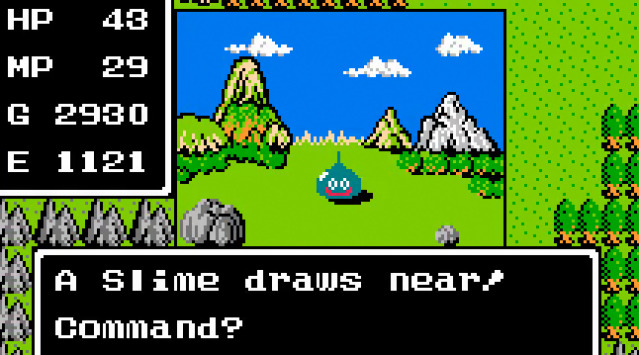
I fear I am getting too old to be getting into arguments in video game stores. When I was 8 years old, a clerk and I engaged in a comical debate about who was better: Link or Gordon Freeman. I hadn't played Half-Life yet, and really, I was probably too young to even enjoy the masterpiece that it is. I also assumed that Gordon was related to Cathy Freeman, a famous Australian athlete and, consequently, could not see the appeal. The whole encounter was actually quite endearing. 

Fast forward 13 years. Location: EB Games, Stone Road Mall. Situation: A gentleman, ironically wearing a faded Call of Duty T-shirt, is complaining about the "lame difficulty" of new-school games and the need for a return to more "classical" role-playing games. Response: complete over-reaction.

Read more >>