Home
Home

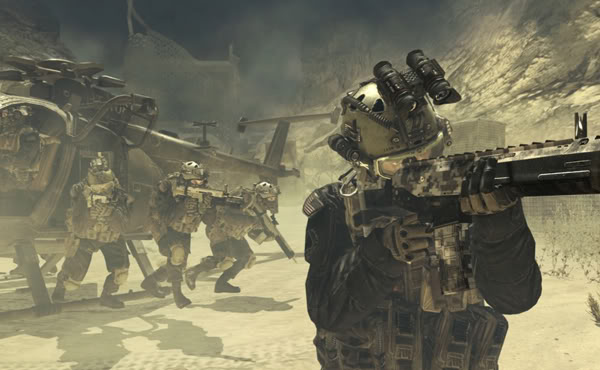
I call it the Asshole Rule, and if you’ve ever played a team multiplayer or online co-op game, you’ve been subjected to it. You’re all there, you’re supposed to work together to bury the opposition, and things just don’t work out that way. One guy runs off alone to Rambo that sucker the moment he spawns in. Odds are the rest of your “team” of lone wolves immediately follows suit.
You can’t blame them. I don’t always care to babysit the weakest link, either. Sadly, things only disintegrate from there. Forget working together. Forget objective-based missions. You’re lucky if everybody keeps the dick moves to a bare minimum. Hell, you're only a team insofar as you can’t damage each other...though if you can, somebody will. The Asshole Rule states that, given the ability to do so, a random group of gamers in a cooperative online mode act like assholes rather than play the game cooperatively.
Enter the unconventional thinkers at publisher/developer Valve. They plan to reward people who respect their fellow gamers with a free version of their upcoming Defense of the Ancients 2.
That’s nice, but I’ve seen far more crafty solutions to the problem. Clever developers subtlety encourage total strangers to pull together as a single unit. And as more games incorporate cooperative online modes, tricks like these will become increasingly vital to keeping games fun for everyone.
The merit-based system
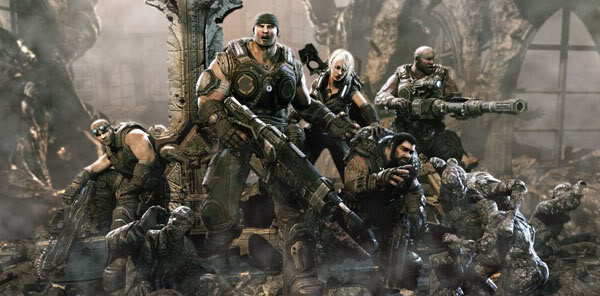
It's increasingly difficult to find a multiplayer game that doesn't reward players with experience points to put towards some unlockable candy. Most, however, issue points for basic meathead stuff you'd do anyway. Gears of War 3 shells out for kills but won't fork over one single point for reviving a fallen teammate. Given the choice between saving a friend and executing a downed enemy, players curb stomp that luckless chump every time. All the motivation points them in that direction. Hell, I single-handedly won a Capture the Leader game, holding the enemy leader for the full 30 seconds, and didn't earn any XP because I'd done it without killing anyone.
Now, take a far less popular option: Homefront. Not a great game, but the multiplayer issued XP for every positive thing you did. Kill an enemy. Help a teammate. Complete an objective. Even better, Homefront let you spend that XP instantly, in-match, positively reinforcing your good behavior with tangible rewards. That's how you emotionally manipulate a gamer.
Mutually assured destruction
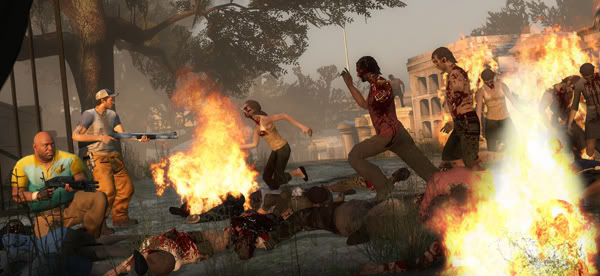
That’s the carrot. Here’s the stick. Anyone who wanders off in the middle of Valve’s co-op zombie apocalypse Left 4 Dead is a goner, period. Special enemies can immobilize you with a one-hit attack that leaves you helpless and dying until somebody rescues you. A small, four-player team and one spiteful A.I. director keeps everyone motivated to watch everyone else’s back. Even one player going down radically alters your chances for success. You might let someone bleed out in Gears, but you’ll go back and revive downed players in L4D almost without fail. Your life depends on their survival.
Seriously. I've seen people self-sacrifice for the greater good in Left 4 Dead 2. I’ve even done it myself without hesitation, holding off the undead hordes while someone ran for the checkpoint. Worked, too.

No pressure
What's the beautiful thing about co-op in Journey? It doesn't demand anything of anyone. You can work together or ignore each other. Either choice is correct. Think of it as the ultimate casual relationship: Two strangers wander into each other's adventure, spend some time together, then wander away again. And that's perfectly fine by everybody.
Of course, Journey benefits from being a largely threat-free experience without too much in the way of collectables. You physically cannot screw anyone over, and communication only happens at the most basic level. That takes a lot of pressure off, but we can still apply a lesson here to the hyper-violent deathfest of your choice. If you remove competition from the equation, everybody chills the hell out. The Syndicate reboot eases that tensions by pooling the XP earned by each player into one pot and issuing that total amount to everyone at the end of the mission. So yeah, you want everyone to do well.
Everybody or nobody
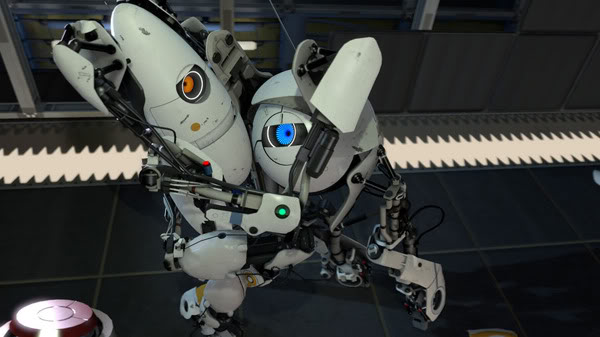
Your problems get worse in Left 4 Dead if you fail to think of others, but other titles structure gameplay so it's impossible to go it alone. You can mercilessly punk your buddy in Portal 2's co-op, but ultimately you must work together, or you're not actually playing the game. One of F.E.A.R. 3’s multiplayer modes fails the entire mission if you leave anyone behind. It's simply not an option.
This might be the most rigid answer, but I give credence to games that force us to act against our better judgment...particularly when it's to someone else's benefit. Anyway, if you want to build a mode around two or more people working cooperatively, commit to that idea. And make them work for it.
Know your role
When did class-based online shooters decide different weapon loadouts constituted different classes? Because I've lost count of all the times I've seen snipers clearing rooms instead of hanging back to headshot baddies from a distance. The differences just don't matter enough to lock a player into a chosen role. Everybody can do everything. So naturally, they do. It's like a football game where everyone plays quarterback...leaving nobody to throw the ball to.
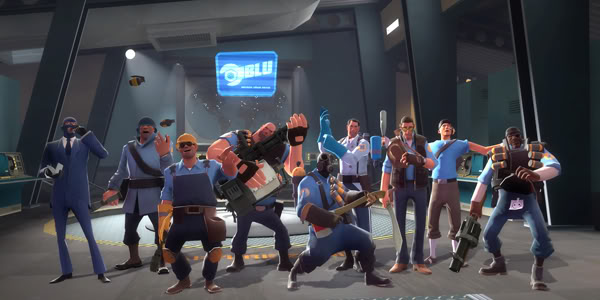
Team Fortress 2 (also by Valve), on the other hand, doesn't mess around. Every class carries radically different weapons, powers, and health levels. More to the point, each role feels so clearly defined that you know exactly what you'll do and how you'll play when you select an Engineer versus a Scout or a Medic. A team of 16 players who've never met before can, minus a recognized leader and without exchanging a single word, mount a coordinated strategy that encompasses offense, defense, and support. Everyone knows their role, plays to their strengths, and does what they want while still helping the team effort...all because the game supports them with clear, distinct choices.