Separator

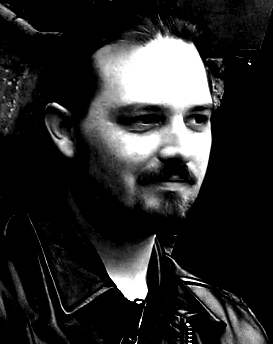
Yet another pronouncement from Quantic Dream's David Cage

Default_picture
Tuesday, April 12, 2011
EDITOR'S NOTEfrom James DeRosa

I wholeheartedly agree with Jason. I thought Heavy Rain was pretty great, but that doesn't mean I want every game to be just like it.

Another day, another rant from David Cage. This time, the venerable head of developer Quantic Dream is urging developers to embrace cinematic storytelling tropes. In other news, the sun rose in the east today.

In a recent interview, Cage said, “I approach video games the same way I approach theatre, filmmaking, poetry, or painting. I wish more people would take that point of view. It would help the industry to move on.”

By Cage’s own admission, he doesn’t make what he would call "video games." But I digress. The medium is still very much in its infancy. The complexity of its storytelling is just shy of a daytime soap opera; its maturity level is that of a prepubescent boy. In that way, Cage is right: His daily sermons hold some truth. But the Parisian developer can’t seem to grasp one simple, fundamental concept: The ascension of one genre needn’t come at the expense of another.

Heavy Rain is a great experience. Its thick canvas, informed by film noir, oozes atmosphere and elicits genuine emotion. Like few titles before it, Heavy Rain drives home the finality of choice and consequence: It has no “game over” screen, and all four main characters can die. Instead of goading you toward a predetermined finish, its elastic narrative stretches to accommodate your decisions. But I’d stop short of calling it revolutionary. In fact, I reject the notion that great games must necessarily “change the world,” to borrow a worn cliché.


Critics often credit Wolfenstein 3D as the original first-person shooter, but it wasn’t until Doom that the genre truly blossomed. Thinking about platformers probably conjures warm and fuzzy memories of Super Mario Bros., though that was hardly the first of its type. We tend to forget that the boldest steps toward innovation are usually awkward and unpolished. Subsequent entries refine the craft, molding and shaping it into something truly great. Rarely is the first title in a franchise the preeminent one. In the gaming world, that honor often goes to the inevitable sequel. (I'm thinking of Mass Effect 2, Mortal Kombat 2, Street Fighter 2, Mega Man 2, Uncharted 2, etc.)

You can say the same for the inception of a genre. Trailblazers usually get off to a rocky start, particularly in a technology-dependent medium like gaming. And Heavy Rain isn’t a trailblazer; by definition, it's not the first “interactive movie.” Dragon’s Lair, Space Ace, and Night Trap all came before it. And of course, we can't forget Indigo Prophecy, which Cage produced. Heavy Rain may have refined the existing template by removing “game over” and adding a nuanced, multilayered narrative, but it’s not breaking new ground.

Why can’t we enjoy Heavy Rain without declaring "viva la revolución"? Why can’t David Cage bask in his admittedly deserved glory without sounding like he has a messiah complex? Gaming’s umbrella has grown wide, indeed: Angry Birds has left as significant a cultural footprint as Black Ops. At the same time that triple-A blockbusters sell upward of 19 million units, independent efforts push the boundaries of artistic expression. The success of Heavy Rain needn’t -- and doesn't -- signal the end of traditional gaming.

 
Problem? Report this post
BITMOB'S SPONSOR
Adsense-placeholder
Comments (18)
Lolface
April 11, 2011

If David Cage actually believes that Heavy Rain created a genre, then he must have completely forgetten about his previous game, Fahrenheit aka Indigo Prophecy. Although it doesn't feature 4 characters that can die at any moment, it plays exactly the same.

Also, I'm not so sure about the "finality of choice and consequence" part. It's been a while since I played it, but I only remember one real choice, and that was whether or not you wanted to hook up with Madison. Beyond that, everything else was either complete the qte or fail. That doesn't seem like much of a choice to me.

Default_picture
April 12, 2011

Off the top of my head, there was the Madison romance option, whether to talk down that religious fanatic (or shoot him), whether to play "good cop" as Jayden, whether to complete all the trials as Ethan (especially the last one), and more.

You really can't "fail" as such--there's just different paths you can follow. For example, on one play through, I got the "worst" ending, which sees Madison, Jayden, and the kid die, Ethan hang himself, and the killer get off scot-free. This isn't neccesarily "failure", though it's probably a rather unpleasant ending for most people, and in fact, required more effort than most "good" endings.

Lolface
April 12, 2011
Hmmm... I never really thought of Ethan's trials as optional. But the only way for characters to die in HR is if you miss one of the qte prompts, so I kind of count not hitting the right button at the right time as failure.
Default_picture
April 12, 2011

Sure they are. You have to at least attempt each one but you could, for example, refuse to kill that drug dealer, or refuse to cut off your finger (which affects a later scene), or refuse to drink the poison. Missing a QTE could be considered "failure", but I usually relate "failure" to "game over." In that sense, most games literally embody the notion that "failure is not an option" (unless you choose to stop playing).

Photo_203
April 12, 2011

There's a difference between saying everything needs to be a certain way and wishing there was more diversity at large in video gaming. 

Default_picture
April 12, 2011

@Parker

Don't let the runaway success of Triple-A shooters fool you into thinking there's little diversity in gaming. Last year's hits--Call of Duty: Black Ops, Madden, New Super Mario Bros. Wii, Red Dead Redemption, Mass Effect 2, Heavy Rain--are all very different experiences. David Cage hasn't just called for a revolution. He's gone out of his way to criticize established gaming tropes and most of what came before Heavy Rain.

Photo_203
April 12, 2011

@ Jason

They're different experiences, sure. Black Ops is about shooting people in the face. Red Dead is about shooting cowboys in the face. Mass Effect 2 is about shooting aliens in the face. Wait... 

I'm kidding, and I realize there's more to those games than that, but you have to admit, the bulk of those games included the same experience of stopping and popping. And yeah, there was Super Mario Bros. Wii, and I found that game delightful, but it was admittedly uniformly "Mario" and a regression from its NES progenitor. Madden was, as always, archaiacally Madden, and I feel fine lumping it into the same list as those shooters above for being mostly the tool of male-empowerment. On a micro level, those games are different, but on a macro the effect is largely the same (Mass Effect 2, even, included in a lot of ways).

I think it's strange to repudiate someone for criticizing the established. I don't follow David Cage but I haven't found any yarn ball of his criticism that could be unthreaded to mean he believes video games ought to be more like Heavy Rain. The only real contentious thing he seems to have said is that we could benefit from reexamining our base assumptions about video games and what they can be, the role they could serve in people's lives, and why that's dangerous or pretentious, I'll never know. 

Default_picture
April 12, 2011

Yes, the nature of games often comprises protagonists and antagonists, which necessarily involves confrontation, shootings, and killing. So yes, many games share that in common. But the mechanics, setting, stories, and atmosphere of many top-tier games are radically different. Video games would be very boring if they all consisted of idiosyncratic musings on the human condition, fostered by QTE. Heavy Rain did it particularly well, but not all games can be identical.

Don't think Cage is encourage developers to emulate Heavy Rain?

"Forget video-game rules. Mechanics, levels, bosses, ramping, points, inventory, ammo, platforms, missions, game over, [and] cut-scenes are things from the past."

"We need to forget about video game rules -- bosses, missions, game over, etcetera ... are very old words of a very old language."

This is just a small sampling from Cage's endless sermons. He's been on a whirlwind tour, tearing down every established gaming archetype.

Photo_203
April 12, 2011

@ jason:

But confrontation always comes down to killing in games, which feels dishonest. I think of violence as the last result of an impasse between parties: jumping straight to violence makes me feel cheated out of the conflict resolution leading up to it. Conflict is more than violence, though it is a part of it. 

I recognize that the mechanics (at least in their minutia), setting, stories, and atmosphere of top-tier (whatever that means) games are different, and I'd even say radically, but they are, simultaneously, all cut from the same cloth, one of empowerment and reward. Yes, the way you shoot in Red Dead is different from Black Ops, but you still shoot people, and the mentality there is the same. The story between those two may be different as well, but mucked up amongst it is a slew of game tropes that undercut the ability to tell a story, to communicate some idea: what place does "game over" have in telling a story? What hope will that story ever have of profundity with "game over"? 

And so I feel like you're missing David Cage's point. Again, none of those quotes convince me David Cage would like to see a games' industry full of Heavy Rain-esque games. It's true that Heavy Rain probably grew out of that line of thinking - forgetting about "video game" rules, redefining what a video game is - but that doesn't convince me he wants games full of QTEs and pretty piano music. 

What it does convince me of is what I said: there's value in reexamining our base assumption of what constitutes a "video game": looking at what we call "traditional" games, "casual" games, "mainstream" and "indie" games, and wondering whether there's more value in building up those walls of separation or in tearing them down. 

And so "game over" may well have a place in storytelling, but let's figure out where that is instead of insisting it stay put. 

Wile-e-coyote-5000806
April 12, 2011

I normally find myself agreeing with what Jason writes, so I hope he doesn't take this the wrong way,  but saying that there is a lot of variety in video games based on those examples is like saying "Look at all the variety in movies.  We have Die Hard, Indiana Jones, Pirates of the Caribbean, and Black Hawk Down."  Sure there is a lot of variety there, but if you really step back, there could be a lot more.

David Cage is not saying "All follow the example I have set before you, for that is The Way It Shall Be."  He is saying that game developers should take a look at where they are, notice the boundaries that they have unwittingly set up for themselves, and challenge them.  Nobody is saying that all games should be like Heavy Rain, just that more games should experiment with new ideas.  Maybe he uses strong wording, but sometimes you've got to kick people in the ass to get them out of their chairs.

It just really bothers and frightens me when people take "We need to forget about video game rules -- bosses, missions, game over, etcetera ... are very old words of a very old language", and turn it into "Hey, everybody, your way sucks, be like me!"  It strikes me as talk to put down new thinking.  I think of him like the early filmmakers who first thought "Why do we keep the camera in one place like people are watching a play?  We could do more than that."

Or, in short, I agree with Parker's well stated posts.

Default_picture
April 12, 2011

Parker, I'd rather not get drawn into a political discussion, but whereas war and conflict should be the last resort in real life, in gaming, it'd make for rather dull outings. Heavy Rain did it right, but few games can get away with such a light touch. If you're looking for a nuanced exploration of conflict resolution, gaming might be the wrong medium for you. We mustn't forget that gaming is, by nature, interactive. And most people like to interact with their games. A passive medium like film can take its time with measured, nuanced narratives--there's a reason why gaming hasn't attempted romantic comedies or other genres free of "conflict resolution".

I enjoyed Heavy Rain as much as anyone, but not all gamers want to play something with such a limited degree of player control. And I don't think games *should* abandon traditional mechanics in favor of QTE or some derivative. It works for some games, but not for all.

Every gaming trope that Cage runs down is noticeably absent from Heavy Rain. In fact, Heavy Rain is one of the few games without traditional gaming archetypes. It logically follows that Cage would like more games to emulate Heavy Rain. Why else would Cage say "Forget video game rules"? Why else would he run down every characteristic of "normal" video games? I don't see why Cage needs to run down all which came before him in order to promote his vision for "interactive entertainment." There’s room for Cage’s brand of entertainment alongside mainstream faire like Modern Warfare.

If David Cage doesn't want to make video games, then he shouldn't. He should channel his talents into film or some other passive medium.

Photo_203
April 12, 2011


@ Jim

" I think of him like the early filmmakers who first thought 'Why do we keep the camera in one place like people are watching a play?  We could do more than that.' "

I agree, and that's not to imbue Cage with vision, but to say his view takes no basic assumptions about the way things should be, which is never inherently wrong or even misguided. Why stop people from asking basic questions? 

And saying that "we could do more than that" recognizes that "doing more" doesn't have to sacrifice "that". We can expand our idea of video games while keeping our former ideas, unless, of course, those ideas prove to then be anachronistic. 

Default_picture
April 12, 2011

@ Jim

You're more than welcome to disagree with me (I welcome it, in fact)--as long as we remain civil, I'll never be offended. You may have noticed that I enjoy a good debate.

Without some degree of interactivity, games are little more than expensive (very expensive) movies. And interactivity usually involves some level of action. I think we need to rethink what we expect from video games. Are they a hobby? An escape from reality? Some higher form of entertainment? Most gamers (read: mainstream gamers) consider them a fun distraction. And the simple fact remains that Joe Gamer doesn't like nuanced, arthouse faire--the overwhelming commercial success of Black Ops attests to that.

Lest we forget, Heavy Rain "only" sold 2 million units--no small number, but a drop in the bucket compared to 2010's top sellers. If Heavy Rain had achieved even half the sales as Black Ops, I'd be signing on to the "revolution" right now. I reiterate that there's room for all type and manner of video game. When a Triple-A shooter can sell 19 million units, what incentive does Activision have to "innovate" along the lines suggested by Cage? There's no reason for big-name publishers to "forget" traditional gaming rules.

I'm not saying that Cage's vision is inherently wrong--please don't misunderstand me. I'm not putting down any new method. What I'm saying is that there's room for "traditional" gaming alongside Cage's brand. Cage is calling for the entire industry to evolve, which is ludicrous. There's clearly a market for more than one type of gaming. Independent games and nuanced titles like Heavy Rain may not top the charts like Black Ops, but there's a market for all of them.

Photo_203
April 12, 2011

@ Jason

If what you're saying is that you only want to adventure through the action-packed, that's fine, because I have no problem with you wanting that. I don't want that, though, and what I object to is you telling me that gaming may not be the right medium for me. I want measured, nuanced narratives, and I want them from video games because I believe there's something special there, something untapped, some story to be told through a medium of interaction. If you get to tell me that not all players want an experience with the mentality of Heavy Rain, that's fine, I believe you. But then I get to tell you not everyone wants to play Call of Duty and Elder Scrolls over and over again. 

I really have no issue with what pleasure you take in gaming, because it's like you say, we shouldn't homogenize everything. The more alarming thing is the tone of your argument, which I see a lot (but is rarely articulated well). In short, it's a narrow perception of what video games can be and clinging on to what we know rather than expanding our palette. Ironically, you say it's wrong for Cage to prognosticate any definition of gaming's future, but you find it perfectly acceptable to tell me that games can't and will not offer me nuanced narratives, romantic comedies, genres free of conflict resolution, or perhaps something else. I imagine that if there were something like that you'd strip the definition of "game" from it in an effort to invalidate it. Maybe you personally wouldn't, but your argument follows in line with that kind of thinking. 

And this is why we dismiss things like Wii Fit, Nintendogs, Dance Central, the Sims, and Harvest Moon as not "real" games. They're toys to be played with in a harmless corner, certainly not valid experiences. 

When you tell me I can't have a game where I learn to love someone, a game where I self-destruct bit by bit, a game where I just talk to people and never kill anyone, or a game where I explore simply to explore, you're confining me more than anyone ever could by saying we should forget video game rules.

Photo_203
April 12, 2011


"Without some degree of interactivity, games are little more than expensive (very expensive) movies. And interactivity usually involves some level of action. I think we need to rethink what we expect from video games. Are they a hobby? An escape from reality? Some higher form of entertainment? Most gamers (read: mainstream gamers) consider them a fun distraction. And the simple fact remains that Joe Gamer doesn't like nuanced, arthouse faire--the overwhelming commercial success of Black Ops attests to that."

I find this bit intriguing. I feel like we're assuming that you have two sides of the spectrum, where never the twain shall meet. You've got Black Ops over here and you've got Heavy Rain over here, and never the twain shall meet. But they meet everyday: FarCry 2 is a shooter that's got what you call "traditional" elements but also has some more interesting design choices that make it stand-out, straddling the spectrum and offering a little to all parties. The Sims is a game that is hugely appreciated and thought of as "fun" but is also built on expression, a tenet of art. 

You get that in film a lot more than you do in games. I think of the Dark Knight: a movie that was widely appreciated by mainstream audiences but could also be appreciated by cinephiles who can pick apart its innards. Inception, too: action and thrilling but also mind-bending and ambiguously artistic. Even Toy Story 3: great for kids, great for parents, great on an emotional level as well as a visually and comedically-minded one.

Default_picture
April 12, 2011

@Parker

With respect, I think you may have missed the part where I called Heavy Rain a "great game" (multiple times, in fact). You've stated your predilection for nuanced narratives, and that's great--Heavy Rain and those of its ilk service that market segment. But there's also a crowd that prefers big, loud shooters, and a number of Triple-A titles service that particular segment. I'm somewhere in the middle. I like everything from Modern Warfare to Heavy Rain, with a little Fruit Ninja thrown in for good measure. I recognize the fact that not all gamers yearn for an Uncharted or a Modern Warfare. They may prefer independent games or something from Quantic Dream. But numbers don't lie, and more people prefer the gaming tropes that Cage knocks down. Does this make Black Ops inherently better than Heavy Rain? No, and I want to make that abundantly clear. But if there's a bigger demand for FPS's than "interactive movies", why would developers wholeheartedly drop everything they know?

What bothers most people about David Cage is not his vision, as presented, in Heavy Rain. It's his wholesale denunciation of all which came before him. It's his arrogant pronunciations, which even he recognizes are becoming annoying.

Nintendo took a measured risk with the Wii by appealing to a previously untapped market (the "casual" gamer). But this portends a wider audience, not a narrower one. If Nintendogs and WiiFit targeted the same market segment as Heavy Rain, the former wouldn’t have been runaway best-sellers. David Cage is asking developers to appeal to a more nuanced, sophisticated crowd, which means they'd be targeting a smaller audience. I enjoy idiosyncratic games and movies, but most people don't. Most gamers could care less about the "games as art" debate. They just want to play entertaining games.

FarCry 2 may straddle the spectrum, but with its traditional gaming elements, it's still archaic by Cage's definition. Cage has effectively polarized the market, with nothing in the middle. Few games apart from Heavy Rain have "forgotten" traditional video game rules. Thus you've got Heavy Rain on one end, and everything else on the other. It needn't be like that. Black Ops may be emblematic of everything Cage detests about "traditional" gaming, but his own definition leaves little leeway.

Gaming does have a long way to go--its maturity and the complexity of its storytelling are still growing. But traditional gaming tropes work for a reason. There's no reason to throw it all away in service to David Cage's vision for "interactive entertainment."

Photo_203
April 12, 2011

@ jason

I suppose what it comes down to is that I fear the maturity and complexity of gaming aren't going to grow meaningfully unless we spend some time examining our basic assumptions about video games - and, maybe I haven't made this clear either, but "traditional" gaming tropes don't have to suffer for this experimentation to happen. It's my opinion that the way we do story in video games is structurally flawed, and so I'd like to see some progress made in the way we approach storytelling. I believe Cage is absolutely right in pretty much everything he says - probably why it doesn't bug me like it does you. 

I still don't think Cage wants everything to be like Heavy Rain, and I think he recognizes how far flung his work is from mainstream tastes. More simply, I think that he'd liked to see the same "revolutionary" approach to game design and a new emphasis on narrative, ideas from which Heavy Rain was born, but not necessarily the prognostication to which all games should look for future reference. I think Cage realizes that Heavy Rain was an attempt that grew out of his ideals, and that he'd like to see others attempts as well. Is he so wrong for operating on a philosophy? 

Anyway, I mean no spite. Like I said, I think it comes down to whether or not you think Cage is on to something, and I absolutely believe he is. You don't have to. 

Default_picture
April 13, 2011

@Parker

I'm still not sure why Cage is upset. If he wants to create nuanced, multilayered experiences, then all power to him. The public is obviously biting (to the tune of 2 million units sold). Other developers will surely follow. But people don't like to be dictated to, and that's what Cage has been doing for some time now. The developers who don't share Cage's view of "interactive entertainment" need to mature in their own way. Unless we're willing to round file FPS's and other traditional gaming genres, such change must be organic.

We can agree to disagree, but I don't think Cage is content to represent the obscure. He clearly wants games to evolve according to his design. That doesn't mean he wants games to be *exactly* like Heavy Rain (even his next game will apparently be very different), but he clearly wishes for developers to follow *his* prescription for success. If he wasn't aiming for broad, evolutionary changes across the entire industry, he wouldn't be criticizing traditional gaming tropes (which, in his opinion, are retarding gaming's true potential). In his mind, everything B-HR (Before Heavy Rain) is outdated and archaic. I'd argue that gaming's pervasive immaturity has little to do with gameplay mechanics, and more a conscious, self-imposed limitation on the part of developers.

Hoping for spiritual successors is fine, but Cage seems to be calling for a massive, industry-wide revolution.

No offense taken.

You must log in to post a comment. Please register if you do not have an account yet.