Separator

Bitmob Roundtable: Dialogue, dissonance, and narrative in video games

230340423
Monday, July 25, 2011

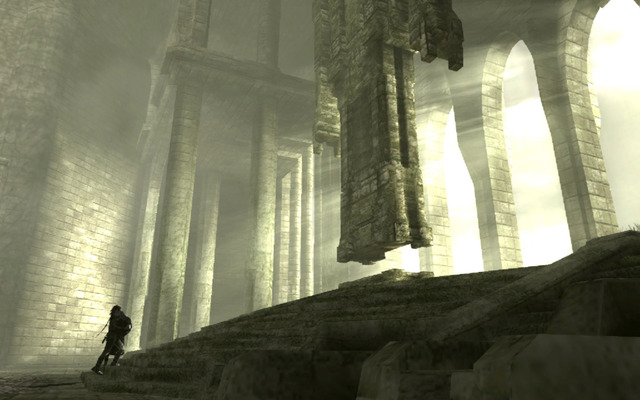
Shadow of the Colossus

Welcome to the second in our series of Bitmob Roundtable conversations, where we grab five members of the Bitmob community and discuss a gaming topic. This week's subject: the techniques and trials of video-game storytelling.

Our noble participants are Michael Rousseau, Kate Cox, Jeffrey Sandlin, Lasse Lund, and Paul Alexander. I highly recommend checking out their respective profile pages, as they've all written great stuff on Bitmob in the past.

Take a look at our discussion below, and feel free to add your own thoughts in the comments.


Bitmob: Let's start off with this question: What makes a good video-game narrative? Identify some games that you think tell a good story, and explain what techniques they use to do it.

Jeffrey: I don't know if any one thing makes a good video-game narrative. Metal Gear Solid, for example, is an absolute mess in some places and in severe need of editing down in others. Still, it is consistently remembered for some very strong characterization, plot, story interaction, and narrative tricks.

Michael: A good narrative gives you just enough information about the game world to play in it effectively without bogging you down in details. It tells you how to play the game, how to get by, and leaves some flavor behind to keep you interested.


It may sound weird, but World of Goo had one of the best organic narrative structures I've yet seen. The mysterious sign board writer leaves you hints in the background; optional bits of info that either give you an idea of how to proceed or give you a brief explanation of why you're doing what you're doing. Too many games beat you over the head with their tales, so this was a refreshing change of pace.
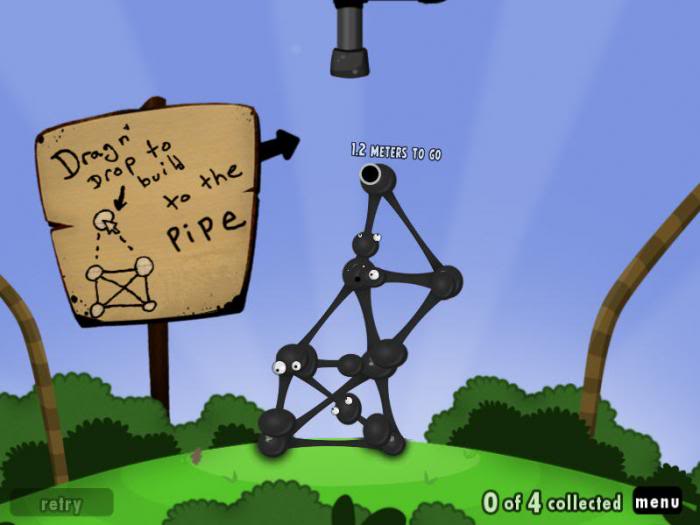
World of Goo

Kate: When I think of modern-era video-game narrative, I think of BioShock. The developers used every element at their disposal to help the player carry the story along. The ruined city was full of signs, and the recordings left behind were dialogue pieces to the puzzle. Environment and level design -- use of elements, lighting, framing, everything -- and even the very concept of player control were storytelling tools. And that's where I see the difference between games and, say, movies -- there's no concept of viewer control in HBO's Game of Thrones, no matter how much fun I may have watching it.

Paul: I feel like there are two schools of thought on video-game stories: You can either emulate the pacing and structure of a film or TV show, filling in the gaps with gameplay, or you can use the pacing and structure of the gameplay itself to act as the vessel of narrative delivery. There are games that do both well -- MGS, Uncharted, and Alan Wake are some examples of the former; Half-Life, Portal and Limbo are examples of the latter. And some games borrow a little from both columns -- Mass Effect, Grand Theft Auto, Fallout.

Lasse: I think that there are several elements necessary to a solid video-game narrative. First, I want to be taken on a journey. Second, I want to feel connected to the protagonist. One of my favorite video-game characters of all time has to be John Marston from Red Dead Redemption. I don't think there has ever been a more human video-game character ever created. Finally, a good narrative teaches you something. Whether it was BioShock's commentary on the nature of the first-person-shooter genre or Mass Effect dealing with the topic of racism, you walked away being more than simply entertained.
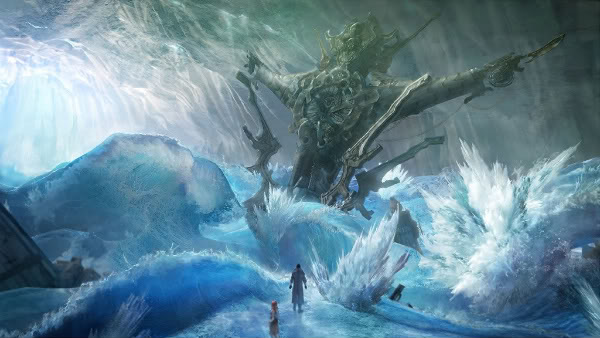
Final Fantasy 13

Bitmob: Cut-scenes are something I wanted to tackle. It's funny to see how they have progressed from, say, the first Ninja Gaiden on NES, where they really felt unique and groundbreaking, to games like Metal Gear Solid 4 or Final Fantasy 13, where you feel like all you're doing is watching. Do cut-scenes have a place in modern game narratives? Or are there better ways to communicate the story?

Jeffrey: I will defend cut-scenes 'til the day I die. I just don't see what has become so taboo about watching! The only difference between Final Fantasy 13 and older Final Fantasy games is that you’re watching instead of reading. Some people just have no patience for non-interactive storytelling when they boot up a game anymore. That usually coincides with their tolerance for Japanese games and Japanese storytelling, so it may be a cultural thing as well.

Michael: There are better ways to communicate story and narrative than taking control away from the player. I'm inclined to cite quick-time events, especially Resident Evil 4's, as I felt that revitalized the trope and made them more exciting for the player.

As a writer, I want people to read my words, but the best narrative in games is often silent. While it's still extremely new, I started playing Bastion before we started this conversation, and I'm already wowed by the way it uses voiceovers to give me information about what's going on around me. A few minutes ago, the narrator told me that the kid had done everything that needed to be doing in this area, so it's time to get going. Three seconds of audio did what 15 seconds of video would have traditionally done.
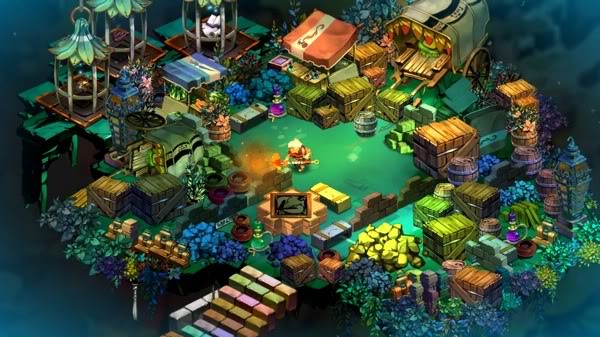
Bastion

Paul: Couldn't agree more, Michael. There's room for traditional cinematics in games, and I don't really mind them. But taken alongside other methods, it's no contest. For example, I felt Mass Effect was so cinematic that the actual cinemas added nothing, even though they were extremely well done.

Kate: Honestly, I think the efficacy of cut-scenes depends on too many things to issue a blanket endorsement or condemnation. The trick is that they need to be deployed smartly. Too much straight-up watching time and the player detaches from the sequences she can control.

Paul: I'm also aware that there are people who want to consume games the same way they consume television, movies, or books, but with an added interactive element. Narrative dissonance -- for example, the fact that Nathan Drake is supposed to be a "regular joe" but slaughters thousands of people over the course of two games -- isn't distracting for them at all.

Lasse: I'm definitely in the camp that is glad to watch video-game cut-scenes go extinct. They used to serve a purpose as video games tried to find ways to tell more compelling and epic narratives. But ultimately, they just became a gameplay incentive. I can remember playing Command and Conquer: Red Alert and wanting to beat a level so badly just so I could watch the next cut-scene. I wanted to forgo gameplay to watch a terribly acted short video.

If games want to truly evolve and unlock their narrative potential, they should focus on finding ways to deliver story without taking control from the player.


Next: The panel discusses ludonarrative dissonance and the use of dialogue in games.

 
1 2 Nextarrow
Problem? Report this post
LAYTON SHUMWAY'S SPONSOR
Comments (13)
Photo3-web
July 25, 2011

Dang I missed the cut! Ah well, interesting read. I loved the dialogue discussion.

"On the other hand, well-written dialogue has a way of immersing me deeper into the overall experience. If video games are to evolve as a storytelling medium, developers need to be investing in top writing talent, especially as they face the challenge of increased player participation in the narrative."

My thoughts, exactly.

Default_picture
July 25, 2011

awesome discussion!!!

the "ludonarritive dissonence" as you put it is definitely something that, as a more casual gamer, will take me out of a game and keep me from playing.  god of war for one, i just can't do.  but brutal legend pulled me in and kept me there because of the character.

there's a lot of talk about freedom of, or rather, from[?] narritive in this discussion.  do you see the alternate endings type scenerio to be a suitable form of in game choice?  or are you looking for a more virtual reality experience where every character's reaction in game is gauged by your own?

i sort of look at gaming as "quantum leaping" into a character and taking on goals to forward their best [or worst] agenda, so having a guided story isn't a bother.

i have a few thoughts on cutscenes and in game storytelling too [from the pov of an animator] but i need to collect my thoughts a bit more on that before i fill up your comments.  either way great read!

Default_picture
July 26, 2011

I actually didn't have a problem with God of War, because Kratos was just a nasty SOB right from the go.  His job is to kill everything, preferably horribly.  And over the course of the three games, he just keeps upping the stakes on that "kill everything" philosophy until he's destroyed the whole world.  He's not a -pleasant- character by any means, but he sure is a consistent one, hehe.

There was a side discussion that didn't make the final cut but we talked for a while about narratives on rails vs narratives with choice.  Personally, I like both -- I've put nearly as many hours into the five Ace Attorney games on my DS as I have into Fallout 3 / New Vegas on my PC.  But I think where players are getting frustrated is that games are teasing that "virtual reality experience" where player input really matters, but the reality of the tech, writing, and design doesn't actually support that yet.  So the industry is pushing expectations it knows it can't meet.  Which ticks off some people.

37893_1338936035999_1309080061_30825631_6290042_n
July 25, 2011

This is a great series in both the content it produces and the way it involves the community. It's nice to see Bitmob taking a step toward their motto of community meeting press.

Pict0079-web
July 25, 2011

Noooo! I missed out. Oh well. Maybe I'll get into the next roundtable.

I wouldn't mind if the cutscenes went extinct, but the ludonarrative dissonance is still something that I can't quite wrap my hands around. Bioshock has a limited amount of ludonarrative dissonance, but it still really impressed me with its simplistic concept of the fate of the girls to alter the ending of the game. However, I guess I can't really accept the concept of choosing a main character's fate.

I really miss the visual and emotional tensions based on a linear storyline, where the options are limited to a certain path. If FF13 gave me the option to choose the dialogue, I could never witness the dramatic, multi-faceted conflict between Snow and Hope in the same way. I wouldn't want to decide how Snow would act, because he would turn out a much nicer guy and the story would look boring.

There's just so many things possible with a single narrative that I just can't see in a "choose your own adventure" style of storytelling. On the other hand, even Japanese import games like Steins;Gate are still playing around with the idea of changing the future outcome with different choices. I guess as long as the developer makes the narrative entertaining to enough people, it will look very impressive. If Dead or Alive: Xtreme Volleyball is the worst example, then every other narrative will probably turn out more impressive.

230340423
July 25, 2011

Great comments! You guys are awesome. I wish I had had room to post the full Roundtable conversation, too, but it was 7,000 words long, so a lot had to be left out. Hopefully I'll have time to post the whole thing.

And never fear, another Roundtable will arrive shortly!

Robsavillo
July 26, 2011

I want more games to do what Demon's Souls does: use game mechanics to tell narrative. In Demon's Souls, devices like world and character tendencies, rare item upgrades, soul and body forms, victory rewards, and a final choice create a very specific character arc. And developer From Software used awesomely cryptic, sparse dialogue to nudge players in that direction.

Ludonarrative dissonance, though, is a problem. That games insist on telling linear narratives is the issue. Games should embrace what makes them unique -- their interactivity -- and wield that to allow players to shape narrative through action and choice. Heavy Rain comes a little closer, but it's still limited in what it can say. I'd like to see more games model systems and watch narrative organically form from the interaction of those systems with the player's inputs.

And cut-scenes need reformation. We need some standards, like DVD playback. Too many games don't let you pause during a scene, and too many will skip a scene if you push the long-accepted pause button! What the hell? I can't let a game hold me captive to watch a cut-scene -- I need the game to succumb to my schedule. If I need to get up to attend to something else, then I should be able to do so without worry.

(P.S. I hate quick-time events.)

Img950653
July 26, 2011

What what WHAT?! Our drawn out back and forth on Limbo and Metal Gear Solid didn't make the cut??? :)

Props to Layton for his creative use of the Delete key. Way to make us sound smart, dude.

Redeye
July 26, 2011

The back and forths on Metal Gear, Limbo, and other argumentative stuff is the only places I sounded smart at all! Now I just sound like I had nothing to say LMAO.

The long and short of my opinion for those interested was that I think any attempt to eliminate cut scenes or liniar storytelling from games is just a short sighted and selfish push from people who want to see their personal favorite type of storytelling dominate. What the industry really needs is a wide variety of games telling stories in a wide variety of ways. I don't want to see solid interesting games like Metal Gear Solid and Phoenix wright fall by the way side just because some people think minimalism and player freedom is the only true future and the master race of game storytelling. *rolls eyes*

Img950653
July 26, 2011

@Rob I totally agree that there needs to be a universal standard on cutscenes. If you're going to make me sit and and watch those, and essentially surrender control, I deserve to decide when it's okay to go make a sandwich.

I think QTEs could be great ways to translate abstract ideas to the player - but I don't think developers have gotten it right yet. It boils down to a Simon game in most instances (womp womp.)

Mikeshadesbitmob0611
July 26, 2011

What is it with people leaving to go make sandwiches during cutscenes! Arrive having eaten! :)
 

Shoe_headshot_-_square
July 26, 2011

Good stuff! Thanks to everyone who participated.

Default_picture
July 26, 2011

I totally agree about the mysterious sign painter being great narrative... he even leaves a note for anyone messing around in the config files of the PC version.

"<!-- IMPORTANT WARNING: If you edit this file, your computer will probably explode. Your friend, the High Resolution Sign Painter -->"

You must log in to post a comment. Please register if you do not have an account yet.