Separator

Shadow of the Colossus isn't the game it used to be

Rm_headshot
Thursday, October 06, 2011

Never trust memory.

I remember Shadow of the Colossus as a brilliant video game that, in many ways, changed my perception of what video games can do. I held it as a standard-bearer for how an interactive narrative can go beyond normal storytelling, and I loved playing it. But that was five years ago and time makes a big difference on such things. Particularly since Sony's remastered it as one-half of the Ico/Shadow of the Colossus collection. Now everybody who's heard about "that game" finally gets a chance to play it...and I get to see where my memory lied to me.
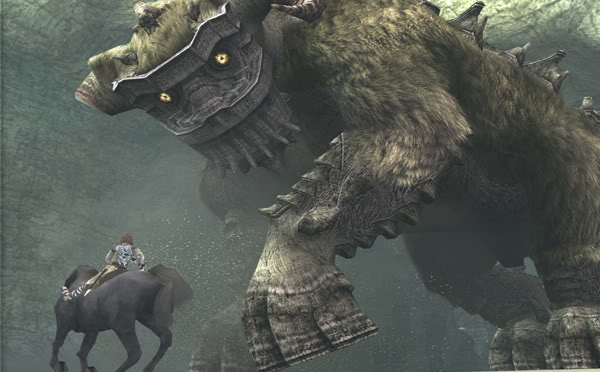
Shadow of the Colossus
You're gonna make an interesting stain, tiny mammal.

The camera sucks. No way around that one, I'm afraid. It's a bonehead. Main protagonist Wander comically runs like a girl. His horse, Argo, controls very badly indeed. I can't even fully rely on the exact same themes and emotions I felt the first time I played it, but that's fine. It's the same game. I'm different.

That's why, despite the now-apparent flaws, Colossus impresses me far more than it originally did. It's not the same experience.


If you're unfamiliar, I'll sum the game up: A young man named Wander makes a devil’s bargain with a disembodied spirit to save the life of a young girl. All he's got to do is hunt down and kill 16 gigantic creatures. It's 24/7 boss battles...no minions, no mini-bosses, no puzzles. Find 'em. Ace 'em. That’s it.

Only midway through, you start to realize something’s horribly wrong here. The colossi aren't evil or overtly destructive; a few ignore you completely until you pick a fight with them. Yet here you are, killing them. Each victory corrupts Wander's body a bit more, reflecting the true nature of the work he’s doing. And you, the player, actively push this tragedy forward. You make things worse. To save one girl, Wander murders 16 innocent creatures...and you're helping him.


Aw, man...that's the last time I go drinking with Tom Cruise.

I’d annihilated terrorists, torn beating hearts out of kombatants, ran down thousands of pedestrians (accidentally), and genocided at least a dozen alien races, but Shadow of the Colossus made me question what I was doing and why. And back in 2005, that made for a fascinating, almost Hamlet-esque spiral of selfishness, corruption, and self-destruction for a maybe-good cause. Too horrible to condone, too engaging to look away.

Now? I’ve got a wife and kids, and it occurs to me that if circumstances forced my hand, I’d go to the lengths Wander does. Hell, I'd go further. That adds a very different flavor to the proceedings. I find creeping dread replaced by iron-willed resolution, tragedy supplanted by hope. Where I didn't necessarily want Wander to complete his quest before, now the consequences can be justified, if not exactly forgiven.

I’m not alone, either. Bitmob community member Sumo Attuquayefio turned to Colossus as a coping mechanism to help him deal with his daughter’s cancer diagnosis. He wasn’t saving Wander’s girl, but his own. Eternal damnation? Small price to pay. Pennies on the dollar, friend.
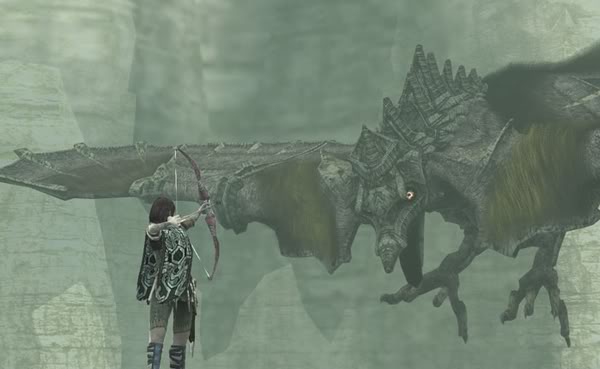
Shadow of the Colossus
Gonna need a bigger boat. Plane. Whatever.

But here's the thing. Colossus never stood a chance of changing my perception of what video games can be again. It did change my perception of Colossus.

If I went back and charged through Call of Duty 4: Modern Warfare -- another personal benchmark for design and flow -- I'd have fun, but I wouldn't get anything new out of it. Shadow of the Colossus reached deeper thematically and left plenty of room for interpretation and exploration. Which is ironic for a such a stark game, but there you are. I suspect that when I pick it up again in another five, six years for another fresh play-through, I'll see something new and unexpected out of it again.

And I plan to do exactly that...leave it alone for a good long while, then return to Wander and the Colossi to see what else they can show me. I won't be the same person. It won't be the same game. That's an amazing thing.

 
Problem? Report this post
RUS MCLAUGHLIN'S SPONSOR
Comments (7)
Default_picture
October 06, 2011

Really nice write-up and some excellent insights to boot. I remember when I played Colossus originally, I was sympathizing with Wander. It felt okay to kill the beasts because he was almost being forced to do it. Looking back, I realize that I was the one forcing him, in a way. The game does an excellent job of marrying game design with storytelling.

That said, I'm curious as to what other perspectives there are to be offered? Siding with Wander or siding with the Colossi seem to be the only two. Did anybody else see it in a different way?

Pict0079-web
October 06, 2011
It's strange. I finished Colossus about a year ago. I remember really hating that ending, because it seemed like a weird attempt to resemble Akira. But now I remember it thematically as something greater than just a boy saving a girl.

I sold the game half a year ago. But I just had to buy it again. Heck, I even kept the saved games on my memory card. It was one of those games that was about more than simply a boy trying to save a girl. It was open to so much interpretation that I missed from my previous venture.

The ending sucker-punched me, but it wasn't as if it was all for naught. Rather, it felt like how a bank would end up stealing all my money, or like a best friend betraying me in spite of how friendly I was. It's very universal in how it presents big promises that are never fulfilled completely. I think that's what keeps me playing the darned thing after all these years.

Default_picture
October 07, 2011

I thought you were going to bad mouth SOTC for a second there. How I would have cried. 

Some very interesting points on experiencing a game from different perspectives. For me, SOTC really triumphs in the fact that it tells its tale mostly through you're own actions. All the build up and tension ratcheting is done in you're own head. No need for apeing Hollywood here. Thats the power of interactivity. Too many games are obsessed with recreating a story in the same way films do and having the gameplay as almost a seprate issue.

This understated game caused me more tormented feelings than any other game due to its stark nature. The triumphant prode at felling these massive beasts is tempered by the sight of watching them die.

Bloody brilliant.  

Default_picture
October 08, 2011

To answer Zachary's question, I think you could also "side" with the Lord Emon and his entourage - viewing Wander's escapades as selfishly reckless, and Dormin as malevolent.  I think it's also possible to construe the Colossi as little more than automatons, or golems.  Despite their characterization, my initial impression of them was little more than an aspect  of Dormin's imprisonment.  To me (circa first playthrough), perhaps it was wrong to ultimately free Dormin, but I had no qualms about defeating the Colossi.

Even apparently-malevolent Dormin has a couple of things going for him.  He doesn't break his promise to Wander; Mono is indeed restored at the end.  And perhaps he has a right to be angry - Lord Emon (or his predecessors) didn't exactly treat him with the utmost respect.

Rus describes it as ironic that there's so much room for interpretation in "such a stark game", but to me that's exactly the point.  The stark presentation in the world and the story is precisely what leaves everything open to interpretation.  We're not spoon-fed the plot and beaten over the head with the moral of the story.

That kind of subtlety and ambiguity is missing from a lot of modern storytelling, be it in games, or movies, or books.  There must always be a good side and an evil side.  Good guys and bad guys.  There's almost never simply a group of individuals with conflicting motivations.  What if the other side isn't evil - what if they just disagree with you on a couple of fundamental (and heaven forbid subjective) points?

To touch on another couple of things Rus mentioned, the camera was always the 17th colossus, and the way Wander ambles and stumbles adds a tremendous amount of characterization.

Pict0079-web
October 08, 2011

Man, that camera sucks. I think it played an interesting role in some of those battles, though. I still love the fight where I had to duck into the underground tunnel while the colossus was crashing down upon it.

Default_picture
October 09, 2011

Thanks for the response! After reading this it's more than apparent that I need another playthrough (I had to refer to the wiki page to get my bearings on the characters).

And to comment on the general.. commentship of this story: Colossus is definitely one of the standards of excellence with regards to interactive storytelling. I think the power of games to conflict the user (in the head) with multiple perspectives is still incredibly understated. There's a wide range of capabilites, be it for learning about a topic, understanding a complex issue, or in this case just telling a great story.

What's amazing is that Colossus was released more than five years ago, and the vast majority of games still don't take advantage of what makes this medium different than others.
 

Default_picture
October 10, 2011

Loved the article, I never much liked Shadow of the Colossus.  But I was really considering picking up the collection for the sake of seeing if my inital impression all those years ago was true.  I guess I will have to pick it up now...

You must log in to post a comment. Please register if you do not have an account yet.