Home
Home

I don't know that I'm completely ready for the digital-only revolution, and I can't be the only one. Sony's PSP Go flopped, and promised price cuts for digital releases haven't materialized (downloadable verisons of popular titles on consoles routinely appear at the full $60 price -- even when released months after the retail, disc-based copy).
We also have to mull over the trade between consumer ownership (thus enabling gamers to participate actively in their culture through things like mods) and the content producer's tendency toward security (through digital-rights management). Justin's penetration of this topic explores several of the key issues at the center stage.
How do you feel about a digital-only (or even a cloud-only) future?
Peter Moore, Electronic Art's chief operating officer, sees a change coming on the horizon.
 The talk of what comes next for video-game distribution has been looming for quite some time now. When console titles moved the way of the PC game -- leaving clunky plastic cartridges behind in exchange for CDs, DVDs, and Blu-ray discs -- everyone sort of assumed that there would never be a better system.
The advent of high-quality online gaming eventually changed all that when players started downloading demos and "arcade" titles directly to their home systems.
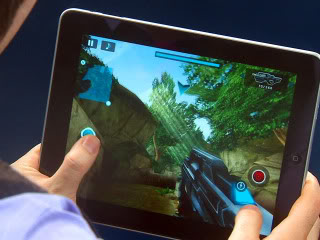
Now with the popularity of digital distribution rising courtesy of companies like OnLive, Apple's App Store, Android's Marketplace, Microsoft's XBox Live, Sony's PlayStation Network, and Nintendo's WiiWare and Virtual Console all offering popular titles for digital download, it really shouldn't come as a surprise that a new generation is rising.
And, in Mr. Moore's opinion, not all the game companies we know and love today are going to make it through when that generation comes to fruition.
"Companies that continue to rely on the old model as the model changes before our eyes -- unless they change their ways and invest in the future, those companies eventually will die off. No two ways about it," Moore said in a December 8 interview with Industry Gamers.
"The companies that have prepared themselves and have diversified their offerings to chase the consumer wherever they want to play games are the companies that will succeed and thrive and flourish."
The idea of chasing the customer wherever they want to play has largely become a focus of the industry thanks to devices like iPhones, iPads, and Android devices seemingly taking over the mobile gaming market, which offer major companies like THQ, Ubisoft and EA opportunities to release full, console-like gaming experiences that even the PlayStaion Portable and Nintendo DS -- in all their iterations -- have yet to fully achieve.
Interestingly, it isn't just Moore who sees the trend coming. UK Interactive Entertainment chairman Andy Payne called for Sony and Nintendo to leave the physical-hardware market behind and instead focus strictly on digital content releases for mobile devices in a recent interview.
|
Pictured: Andy Payne |
"I think it would be a massive relief to both Sony and Nintendo to become content-only. Right now, they might not even know it. You know that thing where you take drugs and you think it's the best thing in the world? Then you get off them and go, 'What was I doing?'" Payne said.
He continued, "Imagine any Mario or Zelda property being on the iPhone or an Android phone. They'd get £10 or £15 for it because people would want to pay to have it on their phone. They would. And that would be amazing...and when we kind of get that bit over, wouldn't it be refreshing to have Nintendo really making stuff for the iPhone, Android, and all the other stuff that's around?"
It remains to be seen, however, if people really would rather play the next Mario, Zelda or Uncharted game on a smaller, more mobile device. In fact, with the recent announcement of the Wii U at this year's Electronic Entertainment Expo (a console designed around the TV-to-mobile seamless transition -- the likes of which have never been seen to date) came a decent amount of criticism and a surprising lack of excitement.
Payne, however, believes it is better not just for the player but for the industry as well.
"Sony, Nintendo, and Microsoft [are] dinosaurs," he said, "because they're using these old-fashioned business models where you have to pay a royalty, tribute, tax -- whatever you want to call it, it's quite a lot of Euros per unit, fixed, [based on] what you order as a publisher, not what you sell. If that was to come down...to something more acceptable -- let's say it's €1 to manufacture it, where the real cost is €0.20 -- then that would put games into the hands of consumers, at retail, at circa £20. You'd have more people buying games, less of a second-hand market, probably a bit less piracy, and that market might carry on for a bit longer."
Moore seems to agree on this end, believing that the cloud really is where gaming is heading next.
"The packaged goods business, while still flourishing and strong, eventually [...] will go to the cloud. It will go digital and we'll be delivering games from the cloud and delivering games directly to hard drives, and we're still going to sell a lot of discs for the foreseeable future. But eventually, physical media will diminish as the core part of how gamers get their content," he said.
In fact, cloud gaming is already creeping its way to the console crowd. The recent Xbox Live Dashboard update features a built in cloud save feature allowing gamers to take their game saves with them (up to 512 MB) anywhere they go. It seems almost logical that the next step would be to put games on there too.
While I'm not certain how going digital will reduce piracy (which is largely a digital phenomenon as it currently stands), another question is raised by all this. One that I am almost certain major publishing houses like EA are curious to see the results of, and that is what this will mean for stores like GameStop, Best Buy, and Toys R' Us.
While the latter two are largely distributors of only new games, with Best Buy slowly joining the used games market, GameStop is one of the largest companies that sells games that the publishers and designers never see a penny from after the first sale.
The used-game market is a tricky thing in this regard. From one perspective, you have the company, the employees and their families, who rely on that single, new copy of Uncharted 3 or Batman: Arkham City to sell to a consumer because that is how they get their royalties and can pay their employees. On the other hand, you have players, who only play as many games as they do because they can buy used and don't have to come up with $59.99 plus tax for each new-game release.
So then the designers have to ask themselves, "What is more important?" Would they rather get a used copy of the first Gears of War into a gamers' hands to encourage them to then seek out their future titles and even buy them new? Or, is it more important to get the profit anywhere and anyway they can -- in this case go digital, essentially making the used-game market moot, where stores like GameStop would have to completely revise their entire business model to survive?
Clearly there is a lot more to the next major gaming transition than just a matter of format distribution.
Are plastic discs really the glass ceiling holding the current generation back from its next natural progression (the cloud)? Or will the gaming community stand up for more affordable used-gaming experiences, shocking the industry into staying put?
Only time will tell.
Justin Brenis is editor-in-chief at Pixel Perfect. You can find the site online at www.pixelperfectmag.com or on Twitter @ThePixelPerfect.