Home
Home

As long as you have a tried-and-true formula out there when it comes to designing a best seller, people will follow it. Right now, the standards du jour are Call of Duty and Gears of War. Soon enough, we’ll see a new why-didn’t-we-think-of-that experience hitting the scene -- along with a slew of copycat releases following suit. It’s the circle of game development.
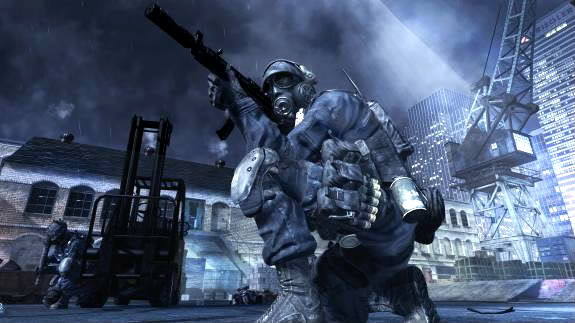
It's no secret that businesses love making money. It's the only way they can survive. And video games are, of course, a business. So when game companies see Activision's multibillion-dollar Call of Duty gorilla dominating sales charts year after year, they naturally want their own slice of that pie.
Developers make titles. Publishers market the hell out of them. And gamers buy them up by the millions. It’s a win-win situation for everyone involved, right?
Not necessarily.
Take Capcom UK’s Head of Marketing Dave Turner, who, when speaking about Resident Evil: Operation Raccoon City, said the “dream would be that the millions of Call of Duty fans that are enjoying these fast-paced online games are attracted to this Resident Evil.” Since the action-heavy Resident Evil 5 is also the best seller in the series, this seems to apply to future games in the franchise as well. Turner says it “makes sense for us to follow this action area more fully.”
Regardless of how you might feel about the direction that the RE games are taking, his candid statements are part of a growing problem in the industry as triple-A development costs rise higher and higher. Companies don’t only want COD numbers, but sometimes they need those sales just to break even. As an industry that’s now driven by annualized blockbuster hits like COD, Halo, and Madden, it has become difficult for developers and publishers to make money on games that don’t quite fit that type of billing.
While I firmly believe that video games are more innovative than any other medium, the risks of high development costs mean seeing more sequels in the market than new properties. Last year alone was practically dominated by franchises in their third iteration of a trilogy. And when mid-tier releases “fail” to reach the millions of sales publishers hope to achieve, studios are closed down and people are laid off. It just doesn’t seem like a sustainable business model anymore.
As consumers, we love to see developers who try to push the boundaries of technology, especially when it comes to producing high visual fidelity, lighting, and other things that make polygons on screen look nice and pretty. Combine guns and explosions and you have the Hollywood equivalent of big-budget action films that are similarly expected to perform well at the box office. Games like these have a place, and I love most of them, but not every title needs to be like that.
Look at Draw Something -- a free-to-play mobile game that has not only attracted millions of users, but the developers at OMGPOP were almost instantly bought out by Zynga for $180 million. Chump change compared to COD’s billions, sure, but the studio turned up a healthy profit nonetheless. And I’m willing to guess it didn’t cost anywhere near that amount of money to make Draw Something in the first place.
Or look at Chair Entertainment, who’ve found a successful way of putting high-quality experiences on iOS devices with their Infinity Blade series. And some of the more publicized indie games, like Bastion and Super Meat Boy, haven’t been doing so badly either. They’ve attracted legions of fans while having smaller development teams and smaller budgets, but they still managed to provide stellar gameplay experiences all the same.
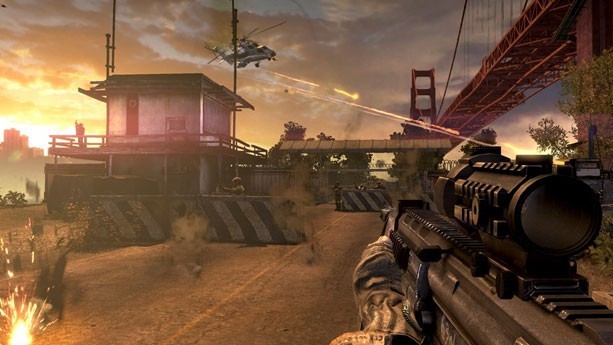
The issue might not even be quality, but cost. Games have always been an expensive hobby, but not all offerings have deserved the full $60 price tag, despite what some publishers try to tell us. They cite piracy and used games as the two mortal enemies to the industry, and while I don’t entirely disagree with them, I think they are far from the only factors contributing to the higher costs of development.
Some like to throw around the argument that games were more expensive 15-to-20 years ago than they are now, but the fact is, we have significantly more entertainment choices today than were available in the ‘80s or ‘90s. If, for instance, I don’t find the latest Resident Evil game to be worth full price, I can turn my attention to a plethora of great indie and mobile releases, not to mention older discounted console and PC titles.
Developers and publishers are competing against a wide variety of entertainment options for our time and hard-earned dollars, and that’s always going to be an uphill battle. But an arms race centered on better graphics and multiplayer modes is not the answer, and for those who have been laid off as a result of the “poor” performance of such games, it’s an inherently destructive route to take as well.
Is there even room for another mega-franchise like Call of Duty? Maybe. Millions of people buy COD, but millions of people also play and spend money on Zynga’s Farmville. And Madden. And Halo. And Assassin’s Creed.
Success, however, has to be earned. I don’t think Activision or Infinity Ward expected the first Modern Warfare to reach such mainstream popularity when it debuted in 2007. Neither could have Markus “Notch” Persson have dreamt that his one-man Minecraft project would explode into more than a million sales while still in beta. But they received this success because they designed great games, not because of solely aiming for some pie-in-the-sky magical sales figure.
Unfortunately, not all great games receive their commercial due. I still pour one out for Beyond Good and Evil from time to time, but the best thing companies can do is to focus on delivering genuinely engaging experiences in their games. If they can achieve that, then they’ve done their job.
So to all the developers and publishers out there, please stop chasing Call of Duty.