Home
Home


So there I was, playing the newly downloadable Jet Set Radio -- the classic cell-shaded skatepunk adventure -- on my PlayStation 3 and absolutely hating it. That's quite an unfamiliar sensation to me. When the original disc-bound version released on the Dreamcast back in 2000, I loved every last morsel of it. The design, the popping colors, the sound, the challenges ... all awesomeness defined.
Now? The controls respond like I've submerged in extra-chunky mud. The camera feels deliberately designed to make me hate all life on Earth. A lot of the avatars look like somebody recycled code from an 8-bit version of Boom Blox. And I really want to destroy the guy who thought this thing was ready for prime time, because I've played pre-alpha indie games with zero budgets that handled better than this trash.
But here's the thing: Minus some anti-aliasing, it's the exact same game I played 12 years ago.
My new experience with Jet Set Radio makes me question my original experience back in 2000. I'm even a bit wary about pulling out other cherished favorites like 2005's surreal and superlative platformer Psychonauts for fear a new reality might crush my fond memories. I have to wonder ... do all those classic video games truly deserve such reverence? Were we wearing rose-tinted glasses for the last few decades? Or have we just grown too much as gamers?
I've actually experienced this sort of thing before when revisiting the TV shows of my youth. I consumed endless reruns of Adam West's '60s Batman as a kid, but now just five minutes of that super-campy sugar gives me full-body cringes ... and I always thought I was rather discerning, too. That example aside, old films and television shows tend to hold up well even after a few decades -- Shakespeare's doing pretty well 400 years later -- in part because the basic technology used to create them hasn't changed much. Hieroglyphs? Not so much in demand these days.
But few things change faster than the technology that powers video games.
Hey, even some top-tier games released at the beginning of this console generation look a little dated now. That's not to say they are dated, but you can definitely see the difference.
Push the timeline back even further. I once wrote a "Top 100 Games of All Time" entry on the original 1992 Alone in the Dark, and it certainly earned a place in history as a seminal entry in the survival-horror genre ... but try playing it now. Here, in its 20th anniversary year, it feels more like a parody. Your enemies include bouncing purple blobs that look more like vague attempts at humor than Lovecraftian horrors.
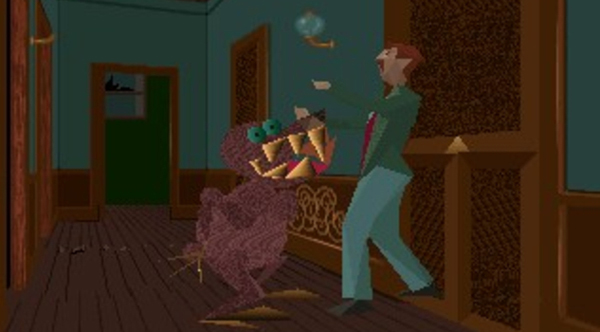
This might be a good time to mention that I'm completely over Pong, too.
It's not just a matter of pretty graphics. Entire philosophies have changed. Back in 1992, video game design came with hard technological limits, and developers worked around them to make the games they could make. Today's limits aren't quite so restrictive. Anyone can license the Unreal engine for little-to-no money and start building. That's led to a glorious age of experimentation, where more and more developers challenge the idea of what a video game can do.
Compare Alone In the Dark's (frequently silly) jump-scare monsters to the very real anxiety a game like Slender creates without a single creature in sight. In fact, that's the most unnerving thing about it ... because you know the Slender Man's there, stalking you, waiting for the second you accidentally see him. Then he takes you.
Or put it against Telltale's The Walking Dead series, which draws incredible tension not only from zombie threats but from forcing players to make impossible choices.
That's what what we're used to now. What could possibly drag us back aside from a nagging sense of nostalgia?
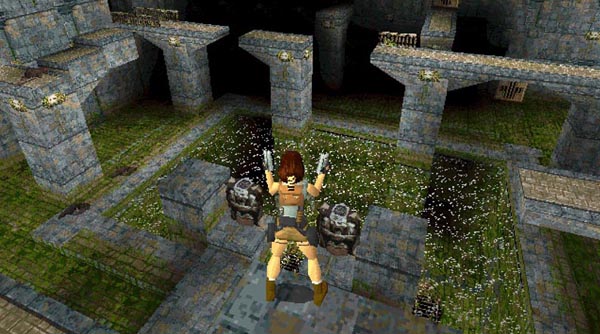
No lie, some games simply don't age well. They were products of their time, and time moved on. The very first Tomb Raider revolutionized video games in several ways, and its rigid, on-the-grid puzzles and auto-aim gunfights were fun at the time. But when developer Crystal Dynamics remade it a decade later as Tomb Raider Anniversary, they upgraded the gameplay to reflect how I game now; modern designs, greater flexibility, more control. I loved playing Tomb Raider in 1997, but I couldn't go back to it now. I'd play the 2007 version instead.
So maybe we have grown up a bit -- Alone in the Dark's terrors don't rate against Dead Space's -- and left Plato's cave. Maybe we go back at our own risk. Games are snapshots of progress, of what the cutting edge was at a particular moment. Not for nothing does gaming culture always fixate on what's next.
But it does require some grounding in the fundamentals, too.
Writing off older games completely would be like deciding black-and-white movies have nothing to offer solely because they aren't in 3D. Plenty of classics withstand the test of time -- you can find an endless number of them on download services like Good Old Games. That said, there's a reason we've gotten so many HD remakes, remasters, and reimaginings in recent years (and some fans have lobbied hard to get their favorites upgraded, like Final Fantasy VII). 1994's X-COM: Enemy Unknown still packs plenty of bite, but Firaxis' 2012 remake, XCOM: Enemy Unknown, updates the presentation to what audiences expect today from a strategy game. Cutscenes. Cover systems. Special units and sub-missions. Multiplayer.
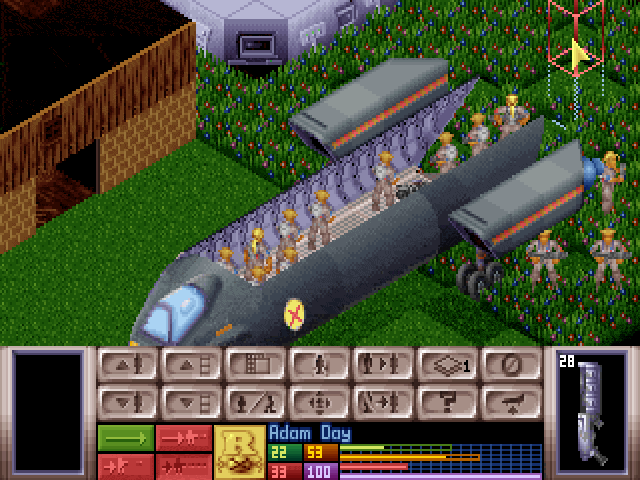
And a new audience will discover XCOM and love it in ways they never would if the franchise remained buried in the past. Jet Set Radio's big crime? It's come far enough forward. It still feels like yesterday's game.
I believe it's important for gamers to go back and see the industry's learning process first-hand, to find out why Pac-Man, Mario, and Lara Croft became cultural phenomenons. They all broke ground ... even if we've reached new ground since. It's important to approach old favorites accordingly and realistically. Psychonauts had a horrible camera at times. It still rates high on my list of the all-time best. Absolutely worth frequent revisits. It showed me something new and incredible ... then.
But games are about now. For better or worse.