Home
Home

A few hours into Alan Wake, Remedy Entertainment's amusing, long-in-development spin on Stephen King horror yarns, I realized what the developer did wrong. They wasted five years making one product. Alan Wake should've been released as a series of downloadable episodic games.
It's hardly a stretch. Wake presents levels as serialized television episodes, opening with a story recap and ending on a cliffhanger. Y'know, to make sure you tune in next week.
That narrative structure ranks among the best I've seen lately, continually driving the story forward while twisting it at decent intervals. If each episode arrived on a monthly or even semi-monthly basis, I'd constantly look forward to the next chapter with an urgency I don't always feel waiting for new, complete games.
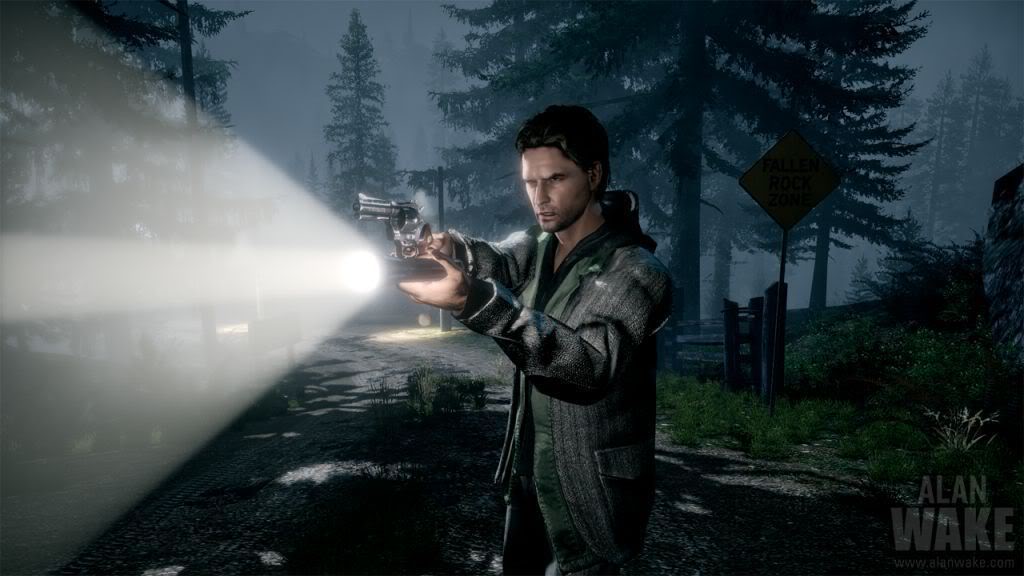
One man-purse away from being Jack Bauer.
Yeah, I'll say it: Episodic gaming -- serialized games released in steady installments -- remains the best unexplored idea in the industry, unfairly relegated to the point-and-click adventure ghetto. I'm here to tell you that's going to drastically change. In some ways, it already has.
Narrative-driven games increasingly use downloadable content to continue their narratives. DLC for Alan Wake, Mass Effect 2, Fallout 3, Assassin’s Creed 2, and Red Dead Redemption all introduce new chapters in their ongoing sagas, tie up loose ends, or tell non-canon Twilight Zone side-stories. And fans turned out in droves to play the latest entries in their favorite titles.
Moving from downloadable add-ons to a fully episodic, top-tier game -- a God of War 3 or a Halo: Reach -- might sound like too big a leap, but it will happen eventually. Here’s why:
Money (them): The second a game goes into production, its developer starts losing money. They don’t make it back until the finished product ships. What if they don’t wait so long? Releasing a game in stages can help recoup costs immediately or even finance the entire project. And digitally distribution saves a ton on production budgets.
Money (you): Every gamer moans about titles they want but can’t afford. Episodics lower the entry barrier significantly and might lead more people to buy more games. Paying on the installment plan likely means spending more for a complete work, but if it’s not worth the cash, stop buying it and be satisfied you blew $15 on crap and not $60.
"I'm sorry. There's a hot Asian thief on the team now, and I'm totally Captain Kirking that."
Time (them): Episodics allow fast turnarounds and faster course corrections, from rapidly cancelling failures to fixing customer complaints. Dark Energy Digital recently updated their poorly reviewed Hydrophobia (a retail release downgraded to an episodic series), changing the controls, physics, and dialogue. It's still fairly dismal, but they listened and actively tried to do better. That’s worth some consideration when Part Two hits.
Time (you): Sick of waiting two years for new Uncharted? How about a three-hour romp with Nathan Drake every six months to tide you over? 343 Industries reportedly wants less downtime between Halos. I say give us a three-part series covering the Master Chief during the fall of Reach. Pick a franchise...episodic entries let you scratch your favorite gaming itch more often.
Interest (them): Money and time sells the corporate suits. For creative types, smaller projects offer room for experimentation and risk-taking. Halo episodics could drop us in a Grunt’s shoes one month and a gunship the next. Or if you want to test interest in reviving a beloved classic like No One Lives Forever, make a few two-hour games for two bucks and see what happens.
Interest (you): Say Mass Effect 3’s been pushed to 2013, but you can download the first four hours tomorrow for $15. Oh yeah. Done deal. Gamers are instant-gratification people who want cool thing snow. Like it or not, we’re pre-wired for episodic gameplay and what it offers us.
When there's no more room in Hell, you just gotta MAKE some room.
Don’t get me wrong...episodic games will never replace complete releases in the same way television never replaced movies, but similarly, both will occupy an important place on the landscape.
Yes, big technological hurdles remain, tight release schedules are tough (just ask Valve when Half-Life 2: Episode 3 might see daylight), and cancelling a series before the finale just makes for bad blood all around. But it’s a mistake to judge this genre based on what’s out there now. Episodic games have yet to fully stake their claim. When they do, it'll be a true game-changer...in every sense of the words.