Home
Home
A few weeks ago, Nintendo pitched me an interview for their recently released Glory of Heracles. I was initially going to pass -- my "to do" lists were piling high, and most DS role-playing games (even those inspired by Greek mythology, which I'm fond of) don't register a blip on my busy radar.
But when Nintendo told me 8-4 was in charge of the game's translation from Japanese to English, and they'd be the ones I'd be interviewing, I took the bait.
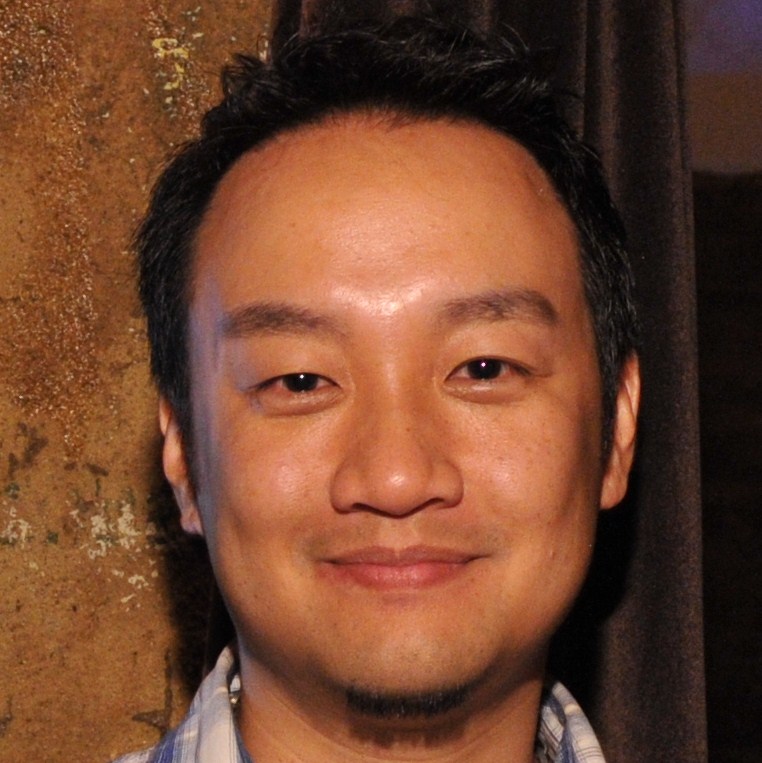
You see, John Ricciardi and Mark MacDonald run 8-4, a game localization and consulting group based out of Tokyo, Japan. I used to work with these guys back at EGM...for years and years. I've seen them at their best, and I've certainly seen them at their worst. (I'll do them a professional favor here and save the alcohol-fueled tales for another day.)
So I couldn't pass this opportunity up -- a journalist interviewing his former co-workers who got out of the press biz a long time ago. I wanted to give my friends some crap via this email Q&A, but I didn't get around to it because, admittedly, I rushed in my questions last-minute (to-do lists and busy radar, remember?). So I didn't do a good job on my end...which Mark, 8-4's executive director, quickly jumped on and exploited at my expense....
Below is the interview: funny, straight from email, and mostly unedited (it seems Mark forgot some of his punctuation rules -- I fixed that for him), so you can see what transpired. It's slightly embarrassing for me, but I'll get him back someday. Or maybe I just did.
(Also responding is Rich Amtower, producer and localization manager for Nintendo of America.)
Bitmob: How much input do you have on the game’s title for the U.S.?
Mark MacDonald (8-4): You mean in general? It depends on the project, really -- anywhere from “none at all” to “no, there should be two z’s and no colon in Super Baby Hamsterz Partiez.”
For Heracles we talked about the name with Nintendo, but it was their decision.
Rich Amtower (NOA): With regards to Glory of Heracles, we certainly talked to 8-4 about the title, but we also had some discussions internally about what was right for the game. We looked at the original title, discussed what it was trying to convey, and found a title that hit those same notes.
Bitmob: More specifically, take us through the process surrounding how it ended up “Heracles” and not “Hercules” or even “Herakles.”
MM: Nintendo made the final call, so you’d probably have to ask them for details on the process. But for our part, we basically wanted to empower that guy at Gamestop who corrects you when he overhears you call the game “Hercules”: “Um, hello? Yes, it’s actually ‘Hair-uh-klees,’ in accordance with the original Greek pronunciation. Hmm.” You know, toss him a bone until Ninja Gaiden 3 comes out.
A side benefit, to me personally anyway, is it might minimize some of the baggage people associate with the character from bad '90s TV or the even-worse '80s movies. Two words: Lou Ferrigno. (Shudder)
And yes, the Gamestop guy does have a point -- it establishes a bit of the Greek flavor that underlies the whole game.
As for “Herakles," well that’s just crazy talk.
RA: There wasn't much process involved, to be honest. The game is set in Greece, and it uses Greek mythology. Sure, "Hercules" is more familiar, but how jarring would it be to see the Roman spelling jumping out at you all the time? (Honestly? Maybe not all that jarring for most people, but I'm a mythology nerd.)
Anyway, like Mark says, the Roman spelling comes with lots of baggage, but if this were a game set in Rome, we'd have used "Hercules" instead of "Heracles."
Interesting that you mention "Herakles," though. We did discuss that spelling as well. We didn't want the name to be too unfamiliar, so we went with the "c" instead of the "k." However, this opened up some interesting discussions about the different ways Greek names are modernized. Would we use "Olympos" or "Olympus"? "Cnossos " or "Cnossus" (or "Knossos")?
We wound up opting for the most familiar version of each name rather than the most internally consistent version. Because you're already in an unfamiliar take on familiar myths, we wanted gamers to recognize the references the game was making.
Bitmob: Is working on a game like Glory of Heracles more difficult than normal, with you have to translate Japanese text of Greek references?
MM: OK, I gave you the benefit of the doubt on the typo in question 1, but now I can tell you are just rushing these questions, probably while refreshing some Mighty Muggs eBay auction countdown in another window or something. Rest assured that any and all typos in my answers are here to test you after these embarrassing gaffes.
Anyway, yes, there was sometimes extra work “with we have to” figure out if the Japanese was referencing some actual mythological whatever, or just making up something new. So a bit more research here and there on that, especially about how Greek names work and such.
Bitmob: Of all long-running game series found only Japan, do you find it odd that this one was picked for a stateside release?
RA: I didn't expect it, but I don't find it odd, no. I love RPGs, and I'm always looking for ones that try something different. I've seen my share of stock fantasy settings, and I love that this title breaks away and takes its inspiration from Greek mythology instead of medieval fantasy.
If I might slip on my PR pants for a moment, it's one of the things I love about Nintendo -- we continue to release unusual and unexpected games alongside the familiar franchises, and that gives gamers an opportunity to experience something they might never have seen otherwise.
Bitmob: What’s the strangest thing you’ve ever had to translate (for any game)?
MM: Good question. Hmm…well, I helped edit Petz Hamsterz Bunch with Internet celebrity and friend-of-Bitmob Robert Ashley. (Seriously. I’m not making that up.) Basically, it was writing the internal monologue for all these different hamster personalities. We actually had a lot of fun with that...or at least I did. Did I mention the text is much better than the Japanese version? (Again, seriously!)
What else…I edited the text in Castlevania: Judgment where Maria envies the other female characters’ breasts. I enjoyed watching the Internet get a hold of that….
And we’ve done some work for developer Grasshopper Manufacture which, as any fan of Suda 51’s could probably imagine, was strange in the most profound and awesomest sense of the word.
Bitmob: Do you encounter lines you just can’t translate and have to make something up in its place?
MM: Sure. The easy examples are puns, idioms, cultural references...that sort of thing. But often, with names, humor, and other aspects, you can completely lose the point (not to mention the flavor and fun) of the text by sticking too close to the original.
You need to be super careful about why and how you change things, but sometimes you’re better off finding something different that comes closer to the original intent.
Bitmob: Does your previous experience in gaming journalism help you with translation work?
MM: Absolutely.
At the most basic level, writing improves with practice; perhaps you can tell by my answers that I do more editing and managing than writing these days? But also, playing so many games, good and bad, for so many years, not just for fun but coming from a critical mindset about what works and doesn’t and why, in terms of character and story and dialogue -- all that prepares you for when it’s your turn to say what should and shouldn’t go into a game.
To bring it back to Heracles, the main editor was fellow ex-EGMer Crispin Boyer, overseen by ex-EGMer John Ricciardi, and it’s already getting lots of kudos for the writing (if we do say so ourselves!).
Bitmob: What’s less of a headache? Translating games for game publishers or writing about those publishers and their games for the old EGM?
MM: Writing for the old EGM was less of a headache, no question.
Don’t get me wrong, it’s not like it was ever easy working on a game magazine. But we always had a set schedule, usually had a template to work with, knew more or less what to expect -- even if the amount of time and work required was crazy, there were only so many variables outside of our control.
In game localization, pretty much every project is different, and you’re totally dependent on a publisher and a developer, both of which are filled with people who have their own crazy schedules and fires to put out. Throw in working in multiple languages and time zones, and I’d say it’s definitely more of a challenge.
But then, I wouldn’t be doing it if I didn’t feel the rewards were just as great. Having other gamers play and enjoy something you had even a small part in creating is pretty kick ass.
Bitmob: Do you guys miss gaming journalism at all?
MM: Definitely. Mostly we miss the amount and variety of games you have access to in the press, especially before the games are available at retail. On this side of things a single game might be your life for six months or even a year (which is still far less commitment than almost all proper development jobs). Sure, you get to play a direct role in actually helping shape that game, but it comes with a price.