Home
Home

I recently re-visited Team Bondi's masterpiece, and this oldie but goodie popped up on my radar. Chris succinctly describes one of L.A. Noire's greatest, groundbreaking achievements -- believable "acting" in a video game. This, alone, could elevate gaming as an art form.
It’s been a long time coming. That breath of fresh, mountain air on a beautiful spring morning. We finally have an experience that transcends today’s current standards of gaming. Though the title reflects on the dark, grimy scum encountered in the City of Angels, the ideology and evolution that L.A. Noire brings to the table is as white and pure as everyone’s favorite nose candy.
My recent gaming habits have consisted of starting a new game, playing it for a few hours, and ... never picking it up again. I haven’t felt compelled to continue a journey in quite some time. The narratives seemed creatively stagnant, the investment of time did not seem justifiable, and the methodical inputs that developers expected from gamers never differed from one title to another.
Developers were not taking chances, and publishers refused to put big money behind uncertain risks. This practice is both common and understandable from a business perspective, but it has put my gaming habits in mortal jeopardy.
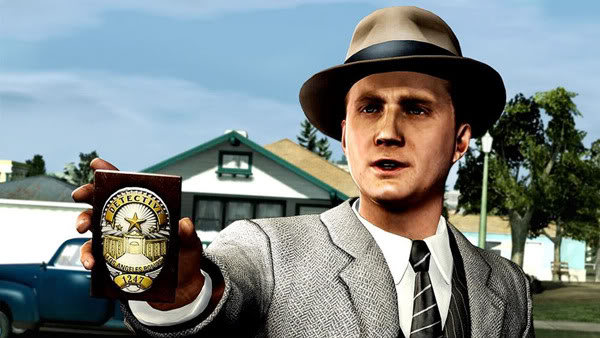
The most noteworthy feature of L.A. Noire was, unsurprisingly, the facial features of the characters. The technical aspects of what Team Bondi accomplished are breathtaking in their own right; yet it’s the technology -- which represents the future of gaming -- that has me excited beyond words. L.A. Noire was the first game that I looked at on my television and said “Fuck ... I know that guy!” Excuse the profanity, but it’s the only way to describe the impact of what that really means to me.
Beyond personal meaning, however, lies the mountain of potential that L.A. Noire has built for the industry. Imagine a scenario where real-life actors are auditioning for the roles of our favorite gaming characters. All of a sudden, the quality of the experience resonates with new creative depths and mainstream appeal that we can’t even begin to imagine was ever possible.
Inserting a known commodity, such as a recognizable actor, into a game directly facilitates the bridging of emotional connections between media and audience. Just think what a big-name star can do for a Hollywood movie; now apply that algorithm to a video game.
Technology is always improving every facet of gaming, and maybe this is no different. However, gaming needs to evolve in order to join its media brethren in terms of accessibility and prominence. Having Liam Neeson starring as Captain Badass in the video game sequel to Taken just screams success to me.
L.A. Noire’s technology enables Captain Badass to match the visual fidelity and facial cues that make Liam Neeson a superb actor. Creating that relatable, emotional, and real-world connection between game and audience strengthens the narrative for hardcore gamers, while bringing a sense of familiarity and curiosity to the casual gamer.
It is my hope that L.A. Noire has created a new entity in the gaming industry -- an entity that relies on the abilities of its actors as much as any gameplay or story mechanic. That concept might have always existed, but it was just too hard to buy into when dealing with the limitations of previous technology. L.A. Noire has, at the very least, re-kindled my passion for gaming and showed me that the medium has a bright future.