Let’s be clear: Just because it’s a video game doesn’t mean it’s art

Default_picture
Friday, May 04, 2012
EDITOR'S NOTEfrom Sam Barsanti

As quick as we all are to argue that video games deserve to be recognized on the same level as more traditional works of art, Ethan's piece is a well-written reminder that perhaps only some rightfully earn that praise.
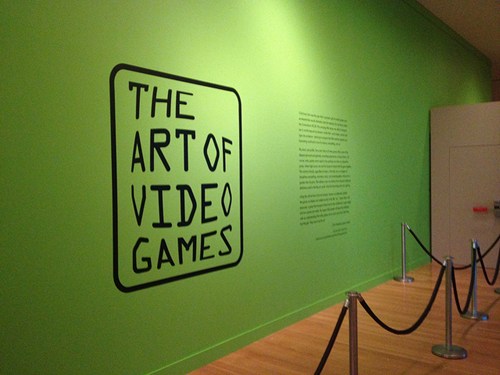
Videogame art exhibit at the Smithsonian

Between the time when Roger Ebert initially claimed that video games could not be art and now, something happened. I’ll begin this essay by briefly retracing the trajectory of “video games as art” as I see it. Once upon a time, only a fringe group of sophisticates in the video game community were interested in this question. They wanted to do something more with the medium than just produce another Pac-Man, Zelda, or Doom. As a medium, like cinema, print, or any other, these people believed that video games could be created that were indeed “art.”

However, during those years, most who video game fans didn’t share this aspiration. They were purely games. They were fun like Super Mario Bros. and edgy like Mortal Kombat. As the sub-cultural sanctuary of an entire generation, the last thing these players wanted was for their raison d'être to be co-opted by the establishmentarian elites; the very people they had gone into the arcades and basements to avoid. The last place anyone wanted to see Grand Theft Auto was in a museum.

Then came games like Shadow of the Colossus and articles like Ebert’s, and things began to change. The median age of the “hardcore gamer” changed, the sub-culture grew older, and all of a sudden the possibility of more complex, nuanced, and mature video games had a new appeal. And so like the great Scottish unwashed who rallied to Mel Gibson’s side in Braveheart, a center formed in the gaming community wherein players began working to establish video games as a potentially artful medium. The dream once held only by a marginal group of older designers and PC gamers became a mainstream ideal.

At some point after that, the matter was considered closed. The discussion was over. Everyone was tired for some reason. But, like our 43rd President standing aboard the U.S.S Abraham Lincoln, victory was premature.


It’s as if, after several good-faith attempts to explain why titles such as Shadow of the Colossus or Braid might be art, we had somehow proven much more than that. Instead of just a few select video games being art we had decided that all of them were! I don’t mean to overstate the agreement on that front, but discounting those who still feel that all video games are just games and those who simply don’t care either way, a significant chunk of those who remain do seem to feel that Halo 3 is as much a work of art as Crime and Punishment or On the Waterfront. Ebert is wrong—in part. But so are a lot of other people.

Some video games are smart. Some video games are fun. A few are both, but many are neither. Simply put: it’s important to clarify a few things before the gaming community embarrasses itself any further. I, like many other gamers, am getting older. I’m changing and growing, and I want what I’m most passionate about to change and grow with me. There are several things stopping this from happening, but the one I want to point out here is the intellectual laziness with which many of us have approached the subject of whether video games are, or can be, valuable works of art.Braid
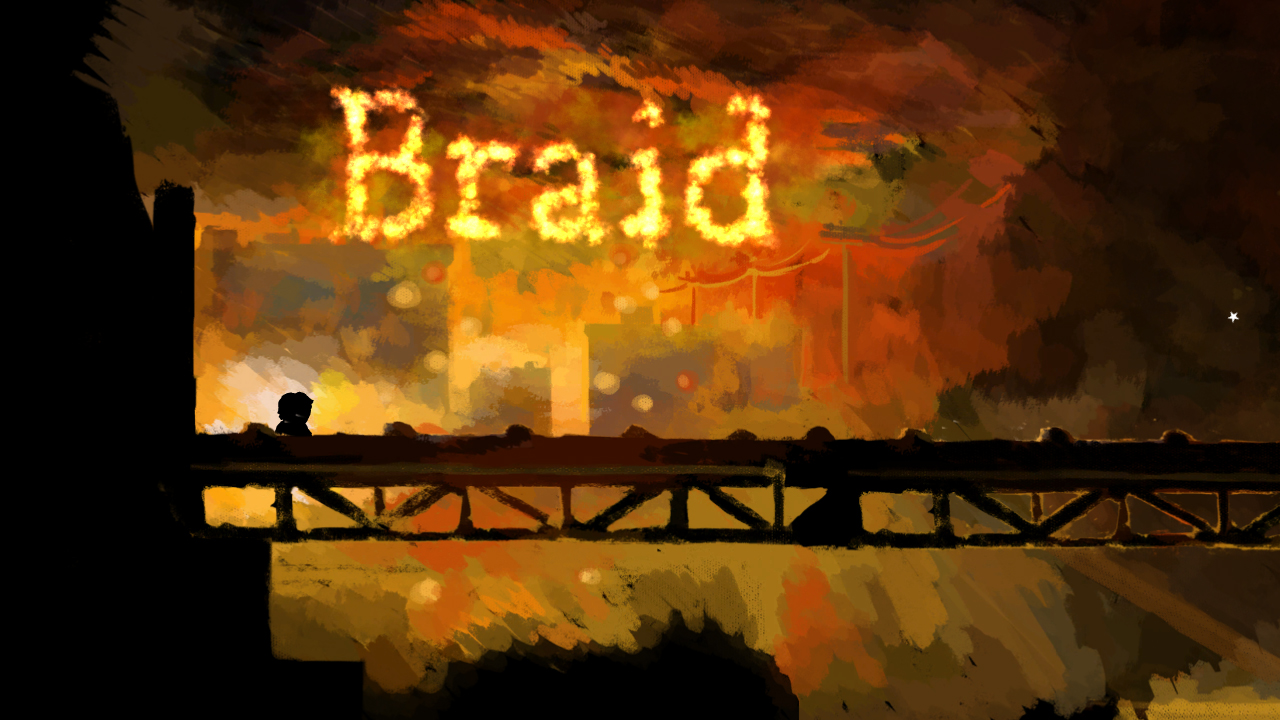
I was surprised by the backlash against this profile of (Braid creator) Jonathan Blow. I’ll concede (for now) that it was pretentious, elitist, and a bit narrow-minded...but it was also right.

Most video games are dumb. I thought that was pretty self-evident, but perhaps not.

What does that have to do with art, though? I like Call of Duty, Mass Effect, and Super Mario Galaxy a lot. I spend most of my time with “silly” media: stuff that entertains and is fun, but has little else to offer. Sometimes, though, it’s nice to be challenged, provoked, or elevated.

Art does this. It engages us through an energetic aesthetic that excites our senses and imagination, but with a purpose. A landscape might be beautiful, but it’s the painter who paints it, the photographer who photographs it, or the writer who writes about it that has an opportunity to use that beauty in order to make a point.

Shakespeare takes a stinging critique of humanity and combines it with clever rhymes and beautiful metaphors. That’s why we call him The Bard and still force his work upon ungrateful freshmen. His plays would still be fun without the philosophy, but they wouldn’t be art.

I admit that I’m employing the term “art” in an unusual way. We tend to think of it loosely as anything that’s pretty and/or meaningful. Hence the Mona Lisa is art, as well as Transformers: Beast Wars.

However, a definition that can include both of those things seems deeply flawed. To put a Renaissance masterpiece in the same category as a ‘90s cartoon that saw the Transformers reincarnated as animals tells us nothing about either one. This isn’t a value judgment. It’s not a judgment about meaning, either. Beast Wars is more meaningful to me than the Mona Lisa ever will be. Instead, what matters is the difference between art as a whole, and the distinction between good and bad art.

Art has an agenda. It examines the human condition, disputes political and social issues, provides cultural commentary, or reflects upon itself. I would like to see more video games do the same. In other words, I would like to see more video games be art. But I’d also like to see video games do it well; to do it in a way that is unique to them. That means that, in addition to having video games that are art, I want to have video games that are good (maybe eventually great) art as well.

For that to happen though, the lines must be drawn clearly and resolutely. The most helpful distinctions might be between entertainment and art. Skillfully employing aesthetic elements in order to excite or bring pleasure to an audience is a great thing. It’s what the blockbuster is predicated on. But that is an entirely different project from trying to skillfully employ aesthetic elements to make a point, or raise a question, or critically investigate something about ourselves or the world around us. You can do both. A lot of the best art does. However, they essentially remain two different goals.

All video games strive to be entertaining and earn their cost of admission. And a lot of them, especially in recent history, have been (compare the median score handed out today with the median from the last console generation). Unfortunately, very few strive to be art as I have defined it above, and even fewer of them succeed in being good art (we could argue about who makes the list, but it’s undeniable that the list is small and only a handful of titles are even in the running).Bioshock
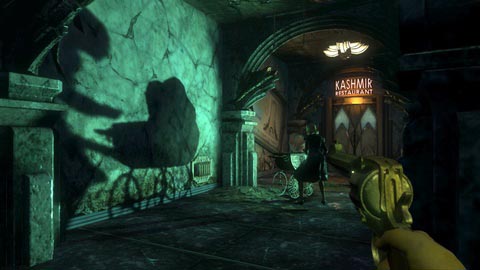
It’s no coincidence that many of the video games that have gotten the closest to being actual good art reek of auteurism. An auteur means more control, more control means clearer message, and clearer message means better art. Hideo Kojima and Ken Levine have been doing this in the AAA space (with Metal Gear Solid and Bioshock, respectively), but indie developers like Blow have perhaps had more success because the smaller budgets allow even more control. Levine’s next game has to sell, whether it tries to be art or not. Blow’s does not.

This isn’t any different from the movies wherein blockbusters and art-house films can co-exist. The difference, however, is that we are nearly guaranteed movies like Tree of Life and Drive every year. Artistic video games are produced much less consistently. There are certainly business models at work that partly explain why Hollywood can support as many unmarketable movies as it does (like Melancholia), but at least some of it has to do with a cultural demand not seen in video games.

What’s more amazing than how much money was wasted on making Green Lantern is how much money is still spent on the slew of Oscar nominees that most people haven’t even heard of before they’re showcased at the annual awards ceremony. In theory, Green Lantern should have paid off. That’s why it was made. But few, if any, of last year’s nominees for Best Picture were made with the expectation that they would be a financial hit.

They were made because their creators wanted them to be made, and because as a society we expect a certain amount of them to be made. The same thing is starting to happen in video games. Developers, writers, and artists are collaborating on projects they want to produce because they have something they want to share or communicate in ways that only video games can, and video game players are becoming more open to these untraditional experiences. Journey is a prime example. It’s compelling and substantive, and makes an argument about life and friendship and loneliness.

Even if I don’t agree with that argument, it’s wonderful that I can interact with and reflect on certain issues through a videogame. If only more of them afforded players a similar opportunity.

Former Editor-in-Chief of IGN, Hilary Goldstein (whose work I admire and respect), made some boneheaded arguments about this very subject in a recent column. It went something like: “Art is bullshit and video games are better and anyway who even cares?”

I don’t see why this line of thought would be convincing to someone who loves novels or film, and I don’t see why it should be convincing to someone who loves video games either. Plenty of art is bullshit. Plenty of video games are also bullshit. What we should take away from that is that lots of art in general could be better. And, in the same way I want novels that I can grapple with and discuss, I want video games that stay with me long after I’ve played them; not just because they were imaginative or fun, but because they explored an important subject in a way that other media hasn’t.

The only way for more video games like that to be created is to start expecting more as a community. Just assuming that all video games are automatically art, or sticking our heads in the sand and mumbling “who cares?” isn’t going to help the medium grow, mature, and become more diverse.

 
Problem? Report this post
BITMOB'S SPONSOR
Adsense-placeholder
Comments (25)
Default_picture
May 03, 2012

"I admit that I’m employing the term “art” in an unusual way."

I stopped reading here, sorry.

Default_picture
May 04, 2012
Cool.
Default_picture
May 04, 2012

Why did you make this comment? Just to make it clear that you don't respect the author? Or do you feel your opinions are so superior that you need to let the author know that you don't need to read his work to know you're somehow better? Reject his argument or agree with it, but regardless, try not being a dick sometime.

Default_picture
May 04, 2012

Hello, Matthew Antezana. :-)

The tone of my comment was apologetic. I do disagree with many of Gach's assertions and premises, and I didn't want to use an hour of my free time writing a complete rebuttal (I'm not very good at writing, so my writing process is slow).

Furthermore, that task seemed moot if he was using his own unusual definition for art.

I chose to inform the author that I had given up on the article, and apologized. That's at least a better form of feedback than not saying anything and closing the window.

By the by, even though I disgree with the contents of his article, I take no stance on his thesis statement. I don't agree or disgree with it, because it's much too broad and vague. We'd need very precise definitions for "video game" and "art" to tackle that question.

Robsavillo
May 04, 2012

Hm. You seem to be arguing against yourself throughout this piece. Why do you consider Pac-Man, Zelda, Doom, Super Mario Bros., Mortal Kombat, or Grand Theft Auto not art? You say we can have good art and bad art, but if the work is bad art, then it's not art at all. How does that follow? Your distinction between mere entertainment and art is wholly unconvincing.

And I'm disappointed to see yet another analysis of this discussion dripping with classist rhetoric. Art is not just for "establishmentarian elites," it's for everyone. And authorial intent is not the only lens through which to view creative works -- reader interpretation is just as (if not more) important because art is inherently social and cultural.

Default_picture
May 04, 2012
I don't believe I saif those things but maybe I'm missing them...could you quote me where you take me as arguing that? And I don't see where anything I'm suggesting is at odds with art as social or cultural discourse (negotiating meaning, value, and interpretation between author, audience, individual, etc.). The bit about establishmentarian elites is me summerizing a view that some seem to hold...not mine. Perhaps I didn't make the clear enough in the essay.
Robsavillo
May 04, 2012

Your introduction that summarizes the debate as you see it: This appears to lend truth to the various characterizations that the games-cannot-be-art-and-it-doesn't-really-matter-anyway crowd have expressed. Maybe you don't endorse it, but you never say that. And it colors your entire article.

Subsequently, when you get into your distinction between "art" and "entertainment," you parallel these views by claiming that some art cannot be art because it's not good enough by your own subjective standard; therefore, most video games cannot be art because they suck.

But let's look at God of War as an example. It may simply be a reaffirmation of hyperviolence and sex, but just because it doesn't challege us to self-reflect doesn't mean it's not art. Aside from authorial intent, God of War holds immense meaning in regard to what it says about the culture that produced it and consumed it. In other words, reader interpretation is vitally important.

But you elevate authorial intent when you discuss Kojima and Levine as something that is inherently better, and therefore, their works qualify as art where others fall short.

As Steven wrote below me, this opens us up to bickering contests about which specific works within a medium are art. And now we're no longer engaging games with a critical eye that initiates an interesting discourse...we're just arguing over whether we should even discuss them at all.

Default_picture
May 04, 2012
With regard to your second paragraph, quotes? Where am I saying those things. I feel you have misinterpreted me, but without seeing what gives you rhis idea I'm likely to think that you misread me. I'm not trying to close down discussion. I'm trying to open it up. And discussion requires justification. For example if God of War is art there need to be reasons why put forth in suppport of this position. My entire piece is about how uncritically accepting that all videogames are art, and that all art is equal, serves neither the videogames nor their audience. With regard to authorial intent, I cite them not out of an attempt to proclaim authorial intent as the only important, or most important consideration, but rather to suggest one reason why the games that are of viewed as critically engaging happen to come out of situations where there is more control over how the object is crafted. If you don't think authorial intent is important though, you'll have to explain why.
Scott_pilgrim_avatar
May 04, 2012

Maybe I'm misunderstanding Rob (though I don't think so, since I read the same argument in your article) but I think this sums up our problem:

"That means that, in addition to having video games that are art, I want to have video games that are good (maybe eventually great) art as well. For that to happen though, the lines must be drawn clearly and resolutely. The most helpful distinctions might be between entertainment and art. Skillfully employing aesthetic elements in order to excite or bring pleasure to an audience is a great thing. It’s what the blockbuster is predicated on. But that is an entirely different project from trying to skillfully employ aesthetic elements to make a point, or raise a question, or critically investigate something about ourselves or the world around us."

You're applying a subjective standard to "entertainment" as "not art" because it doesn't fit your definition of making a point, raising a question or critically investigating. Ironically, there's a widely accepted term for art that's only seen as entertainment or a silly deviation from the norm: popular culture. And while, yes, we rarely look at pop culture as art in the moment, we often study it as important art once we have hindsight. Shakespeare perfectly fits this discription: his plays were entertainment for the masses. Very few people studied his work as art in his lifetime. It's only later that we looked back and recognized his brilliance.

I guess my main contention is that I don't see why we need to label games as not-art in the first place. Most critics who've tried to do that in the past with other media were eventually proven too narrow-minded to listen to anyway.

Though I will grant that the desire to defeat these critics helped pushed those media forward., so perhaps therein lies the value.

Default_picture
May 06, 2012

I'm not sure that the distinction between art and entertainment is a subjective one. After all, we have to different words. This seems to imply that they are two different things. Othwise, if there was 100% overlap, one or the other of them would be redudant.

Is pop culture art? Or is it pop culture? Again, all art is part of culture, but not all culture is part of art. 

You speak of brilliance, which makes me think we are on the same page. Even if we disagree as to which games are more artistic or complex, we agree that some games can be more artistic or complex, therein admitting of a standard by which to judge and hold what is produced in the medium accountable.

I'm less concerned with anointing any game "art" than I am with defending the existance of a standard by which we can all agree to argue about where videogames succeed and where they fail. 

The nihilistic abyss I fear is one wherein people say with regard to videogames "to each his/her own," and as a result no one stands up and holds the art from to account; praising it when it achieves something, but even more importantly criticizing it when it does not.

Default_picture
May 07, 2012

"I'm not sure that the distinction between art and entertainment is a subjective one. After all, we have to different words. This seems to imply that they are two different things. Othwise, if there was 100% overlap, one or the other of them would be redudant."

That's a TERRIBLE argument. We have a name for two words that mean the same thing: synonyms. Beyond that, English is SO redundant that I can randomly omit words and you'll still .... what I'm saying.

That being said, not all entertainment is art (sports) and not all art is entertaining (most things in museums).

But anything that's been crafted to be more than its function is art (video games).

Default_picture
May 07, 2012
The words are different. They mean different things. Definitions matter. As for videogames having been crafted to be more then there function, do you have examples? Isn't the function of many games to be fun? And in those cases how do they go beyond that function?
Default_picture
May 07, 2012

Of course definitions matter; that was my point. Some words just have the same definition ("cyclone" and "typhoon" for instance). Art and entertainment do not have the same definition (as I said above), but saying they mean different things BECAUSE THEY ARE DIFFERENT WORDS is false.

They mean different things because they mean different things.

How many videogames don't go beyond just having fun? You use Call of Duty as one of your examples of a game that isn't art. But as soon as something has plot and story, it has drama, so how can it be anything but art? Most videogames are an extension and natural evolution of literature, theater, and film.

Even something as bare-bones as the NES Super Mario Bros. can be classically analysed for themes and meaning, something that Jonathan Blow essentially did with Braid when he inverted the princess, knight, knave archetype and made the "hero" into a creepy stalker (which I could further argue is a fallacious inversion since in Super Mario Bros., the kidnapping was about power over the kingdom, not sex).

Let me put it this way: multiplayer Call of Duty is not art anymore than Monopoly is art; it's a competitive game. It certainly contains art (all the visuals, computer models, etc.), but is not art in and of itself.

Single-player Call of Duty is interactive theater, and is art.

Default_picture
May 07, 2012
I don't think I said anywhere that Call of Duty wasn't art (did I?) but rather was using it as an example of a product that is silly (i.e. dumb). And reading themes into a game is different from the game being a vehical for something else. Is there a point to Mario's aesthetics outside of fun and whimsy? Did its creators make it with an eye to a larger, deeper issue? And yes, obviously words are different because they have different meanings...not the other way around. You're poit was that the difference in meaning was a subjective one. Clearly that is not the case.
Default_picture
May 07, 2012

Come on, now, if you've got a stance, stick to it firmly. You said (regarding CoD): "...stuff that entertains and is fun, but has little else to offer. Sometimes, though, it’s nice to be challenged, provoked, or elevated. Art does this." That implicitly states that because CoD doesn't "challenge, provoke, or elevate" (in your opinion), it's not art. If you won't even admit that, I'm just talking to a wall and I'll stop now.

As soon as themes are present, a thing (such as a videogame) becomes a vehicle for something else. That's what themes are for; that's why themes are used.

Mario has always been about the struggle to gain power, and actually becomes a lot more interesting when you consider Bowser's position. Princess Peach/Toadstool is the sovereign ruler of the Mushroom Kingdoms, a position that Bowser covets and, to an extent, believes is rightfully his since he controls the military while Toadstool/Peach just has the support of the peasantry and merchant class. For Bowser, power means military might. Unfortunately, even if he's good at being a military leader, Bowser is terrible at politics, a skill useful when ruling peasants and merchants. You can see this in his sole tactic to gain all the power: kidnap the person who has the power he wants.

In later games, you can see that Bowser's army is the Mushroom Kingdom army, since whenever there is an exterior threat, Bowser gladly joins the "good" side to push out the invaders while the toadstools have no other "army" of which to speak.

The Mario games are about the balance of power, the threat of military dictatorship, and the value of small, well-trained commando units when dealing with figurehead leaders.

OTOH, while "Koopa" seems like an obvious reference to kappas from Japanese legends, Bowser seems to actually be more of a devil figure. Kappas aren't depicted with horns (like Bowser is), and Super Mario Bros. 3 has the player travel through Bowser's land of perpetual night and lakes of fire, and if that doesn't sound like Hell I don't know what does. And if Bowser is Satan, then his primary antagonist, ostensibly, is God. So Princess Peach/Toadstool is essentially God, ruler of fluffy cloud Heaven, and Mario is her archangel.

So, yes, there's more to Mario than just "fun and whimsy".

My (earlier) point was that you were making a poor argument, as I clearly stated (to quote, "That's a TERRIBLE argument. We have a name for two words that mean the same thing: synonyms.") I made no mention of the subjective or objective nature of the possible differences between the definitions of art and entertainment, although, you should notice that I supported there being a difference between the two.

Don't put words in my mouth.

But, now we have a new argument regarding words. Words are not different because they have different meanings. The same word can have different meanings, but it's still the same word (run, as in, "I'll run to the store," run, as in, "He's had a run of bad luck," and run, as in, "I'll run you through with this knife").

Similarly, two different words can have the same meaning (cyclone and typhoon).

Words are different because different letters are used to make them. Words mean different things when they mean different things.

There is not a connection between the two.

Robsavillo
May 11, 2012

Ethan, I thought about what you said here for some time now:

"Isn't the function of many games to be fun?"

And I think this makes clear that your premise (for splitting up "entertainment" and "art") is inherently flawed.

The function of a video game is not "to be fun" -- that's an example of a video game going beyond its function.

The base function of a video game is to execute its code. That's it. Anything beyond that -- like elliciting emotions from the player (including fun!) -- demonstrates how games are art. And I think we can all agree that video games are made to be more than the mere execution of their code.

Blog
May 04, 2012


The weird thing about the constant call back to classic rhetoric is that it ignores the constant evolution of art/commerce. It’s as if everyone has spent time in ONE class on art history or spend the day on Wikipedia reading about “Art” capital letter. Then, with no sense of the actual artistic community, they’ve decided what is or isn’t art.


The movie “Battleship” is probably not art, but that’s a matter of intent, not affect. If someone out there really believed in “Battleship” and created it with their own time and money, but thought: “This will be a commercial failure, but it’s something I believe in and something I want to say,” that’s ultimately all it takes to be art.


That doesn’t automatically make it good art, but we can open up an entire discussion about the arbitration of good vs. bad via the subjective.


I just finished a master’s degree in a field that is so “artsy” that it can make you sick. I’ve been nominated for awards by one publication, and then panned by another. It leaves me wondering, even as I move on to the next phase in my career, whether I’ve ever been good at what I do.


Spend time in one graduate workshop as an artist and find out that they’re all circles of people with different ideas about how to negotiate art and culture. One person will applaud the same choice that another derides. Meanwhile, the idea of what is or isn’t art gets debated by the critics. As if their conversations about it will somehow ratify it or exile it.


Sad news for everyone, artists included: No one agrees, least of all the people creating art. I once had a guy tell me that an entire piece I’d worked on was useless because I was a fan of Pearl Jam. This guy has an MA in my field.


People like Phil Fish make the same kinds of douche-bag sweeping statements about things like Japanese games—meanwhile a Japanese developer has created a hard-core darling in the Dark Souls/Demon Souls franchise. Even his clarification about “modern” Japanese games is one clearly created in a vacuum of his own ego.


We often find ways to ratify our own enjoyment, our own biases and our own prejudices. This means that there are people out there who really believe that EA is the worst company in the world, that Japanese games suck and that we can codify art and call it a day.


We can’t even agree on morality. Who should live or die. Society is still struggling with dialectics from thousands of years ago, the Catholic Church is still sending out thank you notes and apologies for stuff that happened in the 18th and 19th centuries. The U.S. government once ratified a document that listed blacks at 3/5ths of another human being—and people thought that sounded about right.


That may seem tangential, but the point is simple: We once had a legal document that devalued the humanity of an entire culture—and many of those injustices continued into the modern era. We’re not going to agree on what is or isn’t art, and any consensus, no matter how warm it makes us feel in our tummies, is going to revoke or ratify the art or works of another.


It’s intent. If you meant to make art—if you created a thing that you value and believe in, and you did it because you went to your seething continent and dragged back the wilds of your unconscious for all of us to view in menagerie—that is art. If you cynically created a piece of commerce in order to cash in on a commodity in a passionless vacuum—that’s not art.


But hey, even if I’m wrong about my definition, and Battleship the Movie is somehow art too—I’m not going to argue for or against it by using the voice of scholars that would have mistaken a film for sorcery.

Default_picture
May 04, 2012

The weird thing about the constant call back to classic rhetoric is that it ignores the constant evolution of art/commerce.”

Is my piece rife with call backs to classical conceptions of rhetoric? Please point them out.

“that’s ultimately all it takes to be art.”

Why is no justification needed? Why does calling it that make it so?

“The U.S. government once ratified a document that listed blacks at 3/5ths of another human being—and people thought that sounded about right.”

Now it doesn’t so things have clearly changed. Are you denying the possibility of progress on these issues? Because clearly there has been progress, at least narrowly conceived.

“That may seem tangential, but the point is simple: We once had a legal document that devalued the humanity of an entire culture—and many of those injustices continued into the modern era. We’re not going to agree on what is or isn’t art, and any consensus, no matter how warm it makes us feel in our tummies, is going to revoke or ratify the art or works of another.”

And this seems the whole point. We HAVE made moral progress, maybe not fast enough, but it’s happening. If we look at other disputes in other fields, what’s to think that progress is any less possible there? Pointing out disagreement doesn’t prove that’s in any way necessary. Even with regard to the question of “what is art” there are a handful of schools of thought, with some in better repute than others, as well as a lively, and rightfully so, fringe of other views. And while this landscape of ideas is bound to change, the fact that it exists in no way indicates there can’t be, at the very least, better and worse answers to these questions.

“But hey, even if I’m wrong about my definition, and Battleship the Movie is somehow art too—I’m not going to argue for or against it by using the voice of scholars that would have mistaken a film for sorcery.”

Have I done this somewhere? Quotes? I’m not sure what you are trying to engage with, but it doesn’t seem to be the above essay.

Default_picture
May 04, 2012
Apologies for the format. Can't seem to get it to space properly.
Robsavillo
May 11, 2012

I added some spacing. Hopefully, I made that a little more readable, Ethan.

Default_picture
May 04, 2012

Blerrrrgh, I think I'm officially tired of this topic. Okay, here goes anyway.

All video games ARE art (noun).

Most video games are BAD art (noun).

Yes, I will definitely lump the Mona Lisa alongside Donkey Kong Jr. and Call of Duty. I can also lump them all together under the categories "visual media", "created to make a profit", and "narratively bare".

"Art" is a very broad concept. It originated from a term closer to artifice which basically meant, "A thing I made." Now "art" basically means, "A thing I made that goes beyond its functional use." So, aside from some truly terrible learning games, all video games are art, just as all movies are art, and all fiction is art. This is not a quality judgment: art can be bad. In fact, I'll invoke Sturgeon's Law and say 90% of all art is crap. The fact of the matter is, art is not a scale. One thing is not "more" art than another; something is either art, or it isn't, and the debate shouldn't be "how much art" but "how good is this art".

What you mean is, "Art-y" (adjective). Braid is "art-y". Fez is "art-y". Mass Effect is not arty. Artiness is a style that inherently tries to be good art, but it's not MORE art than media in other styles (although it's often BETTER than your average blockbuster).

Default_picture
May 04, 2012
I did a piece that tackled this issue when the Supreme Court was voting on whether video games were closer to art or drugs. http://www.youtube.com/watch?v=FlELdzI4qNA Check it out, it's good stuff.
Default_picture
May 06, 2012

Thanks for the link...intersting take.

Default_picture
May 04, 2012

Great article! I feel like this is the discussion that the gaming community needs to be having more often. Too often gamers are quick to say that "Games are art, twas ever thus, end of discussion," and stop there, and I think that's a major mistake. As you said, games will stagnate and never grow unless we start to really analize them to find out what it is about them that works as art, or doesn't.

I feel like one of the major roadblocks left in making games-as-art is actually gameplay. Too often the message of a game is lost in the humdrum of miandering through the game. Unlike films or literature, games are actively working to stop the player from progressing, and thereby suppressing the flow of the narrative. Some games like Braid do get closer since a lot of the major themes of the game are pretty closely tied in with how it plays. Still, as the game progresses and gets harder and harder to complete, many gamers will grind away at individual levels or give up completely. Obviously as a game-as-entertainment this makes perfect sense since we expect games to increase in difficulty, or they'd be kind of pointless. But if Braid becomes too difficult to make it through to the end then the ultimate point of the game's message may be lost completely, potentially undermining its potential to be an in-tact piece of art. I feel like until this conflict between the game-as-entertainment and the game-as-art can be reconciled, it's going to be very difficult to make an artful game that works as well as an artful movie or book.

Default_picture
August 13, 2012

You must log in to post a comment. Please register if you do not have an account yet.