Maturity in Gaming

Zoompersonal
Thursday, June 25, 2009

Editor's Note: Have a seat, because Jonathan's piece on maturity in gaming covers a lot. But it's totally worth reading. Though our immature side could have used a dick joke or two. -Michael


Maturity in gaming has come a long way from the early 8-bit days, but even the most adamant of gamers can tell you that “maturity” in gaming still has a long way to go. Here is a list, in my opinion, of a variety of spectrums of storytelling, human being, and human interaction that gaming needs to strive towards to be taken more seriously as a mature medium of entertainment. At no point do I want anyone to take this list as a “all of gaming must head towards serious content” argument but rather a request that a select few developers and publishers stop pumping insane amounts of money into the Grand Theft Auto and God of War clones of the world and create something new and meaningful from time to time.


Religion

Few games try to cover the complexity and depth of story that religion has to offer. Most offerings for religious gaming have been either educational (the countless number of Bible games!) or just plain awful (anyone else remember Noah’s Ark for the NES?).

Religious stories and games will surely shock certain crowds and please others. This is easily one of the biggest reasons why most developers are petrified of creating a game with serious religious undertones. However, religion in gaming could open up a world of new experiences for gamers. Dante’s Inferno is a game that EA has already tried to promote via some of the controversy that is expected to come with religious content. While EA may have jumped the shark they certainly knew going in that people were going to be offended.

Religion has inspired millions upon millions over the span of human civilization. Holy wars have been fought, empires and countries birthed and destroyed because of religion and its powerful ability to move people. I want to see religion used intelligently and powerfully to convey human emotions and interactions with the world.

Consequential Violence

Violence is clearly the most heavily used way of interaction in gaming. We use it to be the hero and the villain. We use it to change the world around us. It is the de facto standard for gamers to engage and alter the world in a meaningful way.

Remember the first time you saw Saving Private Ryan? The visceral and realistic nature of the violence felt so different than the Bond-bullet-dancing violence we had gotten so used to. The violence in certain video games could push towards becoming more “realistic”. I don’t want that to come off as, “I want to see just exactly what it would look like to have a bullet enter and exit a human body”, but rather that I want to see the real and human consequences for our violence. Violence changes people in so many different and complex ways. Few people are the same after witnessing the loss of life. Many people who played Grand Theft Auto 4 recall the option where they had to choose between two people to kill. The consequences were felt and many people had reasons why they did it, but more importantly many had regrets or mixed feelings about the decision after the action. This is something that rarely happens in video gaming.

I want it to truly mean something when a life is lost in a video game (whether it’s you or the enemy). Clearly not all games would work to have such heavy-handed repercussion’s motivate the interaction, but if gamers want to hold gaming as a mature form of entertainment we are going to need much better examples of how gaming can deliver on this experience.
Romance

Romance is an area of human interaction and emotion that gaming has attempted on many occasions but has mostly failed. We have seen videogames go from the simplicity of Mario saving Peach to the complexity of Alex and Gordon's interactions in Half-Life 2. We rarely get to see genuine relationships that gamers can connect to.

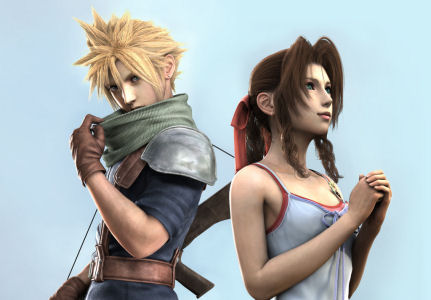
Believe it or not many gamers are big softies. We love witnessing a romantic relationship as long as it’s meaningful. Case in point, Aerith from Final Fantasy 7 is the obvious “turned gamers into misty eyed softies” example. The sheer number of people that claim that the death of Aerith caused at least an emotional response shows that romance can be done in gaming.

Gaming needs to strive to move away from the hero saves girl romantic relationship and focus on the other ways romance can grow in a game. Half-Life 2 has done a great job of providing a love story where both the guy and the girl are capable and complex people. Where Peach’s existence was created for Mario to save her, Alex was created to help Gordon. Few realistic (and more importantly, relatable) romantic relationships stem from a one-sided affair.

Companionship/Friendship

With the sudden demand for co-op gameplay in our normally single-player experiences we are heading in the right direction for some interesting and complex relationships in our games. Companionship has been done in gaming for quite some time now. Most core gamers can relate to missions or objectives in games where we must protect/lead an AI companion from point A to point B. While this has been an early way of creating a bond between yourself and another, it really does need to be pushed further.

Showcasing a relationship that really feels like a friendship can be incredibly difficult in games. Why did so many gamers feel an attachment to the weighted companion cube from Portal and those same gamers couldn’t care about Shiva from Resident Evil 5? Clearly, presentation and your experience with the companion holds a lot of weight to the depth of your connection.

On the other end of the spectrum Left 4 Dead provides a more open ended way of creating friendship and connections. Many times when playing L4D with strangers I found myself thinking of my teammates as friends more and more as we made our way through the campaign. Often times what was hesitation at the sight of a teammate in trouble became instinct. Leaps of faith to save a friend became justified. With no story but your own personal experience to create companionship, L4D often times created some great emotional responses with very little to work with.

Storytelling through gaming

Very few games use the gameplay itself to tell narrative and story. Often times we are caught between the forces of “gaming time” and “story time” whether it be cut scenes, text sections (like dialog) or audio (think BioShock’s recordings). None of these often used ways of telling story in games actually pertain to the way the user normally interacts with the world.

Braid is a prime example of storytelling that only truly works as a game. The core game play focused on time manipulation which directly related to the story. They felt incredibly cohesive. We need more games like this. How often have we heard the line “the book was much better than the movie”? This often-used line stems from the idea that certain stories are almost always going to be told better or more completely in the original format. I think most gamers would agree that a book or movie based on Braid would be just plain silly.

The pacing of a novel certainly varies from the pacing of a movie and the same can be said about gaming. That said the need for cut scenes will always be there, but some games can truly take advantage of the medium. Another good example of a great mix between story and game play was BioShock. When that certain moment in BioShock reveals the major story twist, it truly plays off of our expectations and norms associated with gaming.

Power of Choice and Consequence

Since Star Wars: Knights of the Old Republic made it popular, the power to choose your avatar’s reactions and choices have started to become more and more pivotal in role-playing games and has slowly entered other genres as well (think Infamous). Gaming provides the unique ability to directly interact with story. Much like the Choose Your Own Adventure books gaming have tried to develop branching stories and paths based on simple (and often black and white) choices made.

Obviously some games pull it off better than others, but as it becomes more prevalent in gaming the quality and depth of it will continue to rise. BioWare has stated that Commander Shepard can die in the Mass Effect 2. Fallout 3 allowed for good, bad, and neutral karma, creating better shades of grey of morality. The much-hyped Heavy Rain will supposedly allow for many of the main characters to die without the game ending, leading to some very different story branching possibilities.

Fallout 3 is also a good example of the disappointment that giving players the idea that they are making choices with impact can lead to when in reality their actions mean little in terms of story. How odd was it at the end of the game to play through a certain mission when you were supposed to be a “bad guy”. It just didn’t fit with your actions throughout the game. Games that give us choice need to make the choices truly matter.

 
Problem? Report this post
BITMOB'S SPONSOR
Adsense-placeholder
Comments (15)
Default_picture
June 26, 2009
Nice write up, but with religion I think you forgot about Bible Adventures. 8)
Default_picture
June 26, 2009
I really enjoyed this article and I couldn't agree with you more both on the games you highlited and what needs to be done.
Jason_wilson
June 26, 2009
Interesting piece. But I think that it's worth noting that BioWare's "Choice and Consequence" system comes from its earlier games, like the Baldur's Gate series, and not just Knights of the Old Republic.
Default_picture
June 27, 2009
While I agree with the sentiment of maturing the medium of games, I think mainstream games wont/cant provide what you are asking, for either not being financially viable and/or has been done. First; religion in games, I think its just not a good idea. One think that all maninstream games have in common; story driven ones anyway; is that the main character causes violent acts thru most of the 5-8 hours of gameplay. I dont see how a religious message can be introduced without taking decicive stands against or pro that perticulary ideal. I think that your "Consequential Violence" and "Power of Choice and Consequence" are pretty much the same thing; I know you can split hairs and think of one that can have more then one non violent paths but overall its all about choice. I have nothing else to argue; its a great idea and I think that that some game developers are slowly catching on the idea that a segment of the poulous enjoying have meaningful choice in a game. Just for the record I dont belive that there has been a game that provided that. Storytelling through gaming, this is going be where I have to disagree with you. Braid, in my own humble opinion (or imho, how kids this days like to say it) is a prime example of story and gameplay being in completely different rooms, except a few exoteric gameplay moments. I belive Valve is doing a much better job of intergrating story in the gameplay itself i.e. Portal, Left 4 Dead; which gave you the oportunity to learn about the world, sitiuation without a cutscene or 5 min talking head. Other developer seam to have paid attention and used the same tehnic like 2D Boy and there fantastic World of Goo. Last point I am gonna tackle is the idea of friendships in games. I completely agree with you on this one, I'd like to expand my own thinking about it. Friend releationships have been done in games like Ico, Shodow of the Colossus, Portal, and even Fable 2 to some extent (more example can probably be used) the main problem I belive is that there a lack of good writers in the game development at this point in time. Films have shown that the best(read: easy) way to crate relationships is by spending time with well developed characters; key word is "developed" I think you made a very good point about how Shiva in RE5 was nothing more then an automaton, her character was blend showed no emotion and nothing in the game made you belive that she was a real person; while the companion cube itself was an inanimate object, Glados made you feel guilty about destroying it, creating a bond. In conclusion I think that what you are looking for in games people have done or are working on. Unfortunatly I dont belive that mainstream gaming audience is not looking for those thing in games like they the movie going audience is looking for great cinematography, direction, writing or acting; they just wont shit to blow up :)
Zoompersonal
June 27, 2009
George - Awesome comments. I agree that many gamers just want to use video games as an escape or just as a way to have a good time. Certainly pumping more heavy handed story and content into video games will turn people off from it. However, just like movies, we see a small niche audience who search out the heavy and dramatic movies. Meanwhile the rest of the world would rather see Transformers and Wolverine. I enjoyed watching those movies at the time, but a few years down the road I will probably not recall much about the movie. However, I certainly won't forget powerful movies like Hotel Rwanda and Crash. Likewise, I enjoyed my time playing Red Faction: Guerrilla but it certainly won't stick with my like Portal or Braid. There is a place for both, I just want those games that do push for the mature niche audience to really capitalize on what format has to offer.
Zoompersonal
June 27, 2009
Jason -Your right Bioware's earlier titles did incorporate choices and dialog options. However, I feel that the general popularity and desire for choice by the gaming audience really didn't hit it big time until KOTOR. Much like how Alone in the Dark may have been the first survival horror game, it wasn't until RE that the genre really came into it's own.
Default_picture
June 27, 2009
Jonathan - I cant belive that you where able to understand my comment; reading my comment now and I see all the spelling and grammer mistakes I made, its kind of hard for me to understand some of it. In my defence I already had a few beers and I was in a bit of a hurry :) I do think the same, there are people in the gaming industry that try to push the games in differnet direction and not just try to appeal to the 13 year old in all of us (Micheal Bay referance there). Films have there 'heroes' of today cinema like Michel Godry, Rian Johnson, Wes Anderson and Steven Soderbergh (yes I am aware that he did the offal sequels to Ocean's Eleven but he also made Bubble and The Girlfrined Expirnecce) I do belive that games have there own with Fumito Ueda, Keita Takahashi, Jonathan Blow and Tim Schafer. To continue the comparison of films and games, the great films (that try to puch new boundries) are few and far between but definitely worth wait just like with great games. Dilsclamir: I am in no way opposed to mindless entertainment, I just went to see Tarnsformenrs 2 the other night, I love Megan Fox :)
Default_picture
June 28, 2009
The problem with putting serious, mature content in a game is that gaming are too far on the entertainment side of things. If a game is not intrinsically fun to play then no one will want to spend time playing it. A lot of brilliant films and books aren't exactly entertaining or fun but they're not expected to be unlike in games. This undermines any interesting moments of "seriousness" in a game because as soon as you have had that moment it's back to blowing, shooting, matching, raiding, leveling, etc. I think that unless people are willing to play a "game" to experience a serious exploration of some mature content without it necessarily being entertainment you won't see it happen.
Default_picture
June 28, 2009
Most of the points you brought up are at the very least, touched on in Mass Effect. There's a point where you have a conversation with a character about the existance of God... Choice's you make in the game certainly have concequences... Choice's you make can lead to romance... It's a great game, if you don't mind conversation heavy video games. I kind of see what Matthew is saying. I think a great videogame is always going to end up being like a Pixar film. There can be some really emotional (I found Up pretty heart wrenching at times) scenes, but its still a cartoon. Ico was a very emotionally involving experience (for me anyway) but it was still a video game. Pixar is always going to be nailed down to the fact that in the end, they've got to tell a story that kids can enjoy. And game designers are always going to be nailed down to the fact that the game has to be fun. Still, for me, Pixar transcends being just for kids (almost miyazaki-status films) and are always a treat to watch. And we've got real talent in this happy medium to transcend being just for halo kids. (nothing wrong with Halo.. I actually love Halo... but you know... the community) oh... and Xenosaga was pretty religion-heavy.
Default_picture
June 28, 2009
As awesome as a game like that would be, you would need large amounts of money and the right team to pull it off. And the hardest to get between those two is the money. In this day and age of gaming, money rules which means that most mature, meaningful games are stuck in a vicious circle: making a good mature game needs money, but they don't make that much money if any and big companies that have the capital to fund those games don't like not making a profit. ''What about Bioshock?'' you say. Well it was marketed as a shooter the whole time so it would avoid that problem. Other than the art deco thing, none of its deeper messages were on the boxes or adds. Core gamers reading magazines and websites knew about it and had a massive game boner for it. Casual gamers saw the box and probably went something like: ''Oh a new shooter. OMG that giant diver looks awesome!!!!'' Long story short, you have to convince publishers it's worth it or it's not gonna happen.
Default_picture
June 28, 2009
@John Michael: You forgot Xenogears :P
Default_picture
June 28, 2009
Nice post man, but I have to disagree with you on two things. Violence in GTA4 and Gordon and Alex's "complex" relationship. After playing through both games I found myself not caring about anybody's life in GTA, and Gordon doesn't talk, so I don't see how a relationship can be made when only 1 person can talks and the other just kills things. At first, in GTA, I cared about other people's lives. After more and more driving accidents with hitting people, I stopped caring. When my date asks me if I'm involved in crime after I just blew up a minivan containing a mother and kids (well, maybe they were kids, they were in the backseat. I couldn't tell), I don't feel wrapped up in the game. I laugh at the situation, because it's funny. If somebody watches you blow up a car and asks you if you're involved with bad people, it's funny, because clearly, I am a bad person. Ah, well. I don't mean to sound bitchy because I agreed with just about everything else. Once again, Great post.
Zoompersonal
June 28, 2009
John Michael - I think you nailed a very good point. Pixar at the end of the day does need to make a movie that is geared towards a younger audience. And your right, developers need to make a game that at the end of the day is "fun". However, I do think fun can be a pretty broad term, and in fact a better way of saying it, is how much enjoyment are you having or how engaged you are. I really enjoyed "Flower" on PSN and I thought that that game was incredibly mature. I love playing Final Fantasy games but I am not sure how much "fun" I have grinding my way from level x to level y, I do however enjoy the gratification of finally defeating that boss because of the "work" I did. Gaming is a strange beast where your enjoyment level can vary so wildly at any given moment that it's hard to understand "how" one developer can take the same concepts as another developer and create a completely different experience. Oh and I think Pixar's last two movies (Up and Wall-e) show us that game developers have a long way to go before they can deliver that much emotion and story in only a matter of minutes.
Default_picture
June 28, 2009
One thing I feel is being overlooked here is what makes games unique compared to movies or books. The interactivity that video games allow is much deeper than any other medium. In movies you watch one character shoot another, in video games you are often the one shooting other characters. There hasn't been many times in a video game where I really felt the emotional impact of taking a life. Even if a game prompts you before killing a character to let you know this will be a big decision in the game, how many people did you kill in the game with little to no regard for life to get to that point? I felt worse about incinerating the companion cube in Portal than killing certain characters in GTA4. It could be because the cube was something that helped me more than a lot AI characters do or because I didn't have to destroy anything in Portal until then and the game made me destroy this cube. In some way I felt like I betrayed the companion cube, it never wronged me and I ended it.
Default_picture
June 29, 2009
Youcef Lardjane - oh man... in my list of games I regret having not played, Xenogears is near the top. Josh Timm - I think the Gordon/Alyx thing all depends on how much you, as the player, are willing to become attached to Alyx... same goes for GTA 4, I guess... I could be wrong though... wouldnt be the first time. Jonathan Schoen - Ain't that the truth. I have a hell of a time playing Mass Effect to this day, but I can easily see someone being bored to tears playing it. And yeah, video games have a long way go.

You must log in to post a comment. Please register if you do not have an account yet.