The paradox of player-choice driven game endings

Default_picture
Tuesday, August 28, 2012
EDITOR'S NOTEfrom Eduardo Moutinho

Unfortunately, players don't care about the flow-chart nightmare that developers need to overcome when creating ambitious, choose-your-own-adventure style narratives in games. But I'm happy to know that the challenge hasn't kept studios from making more of these titles.
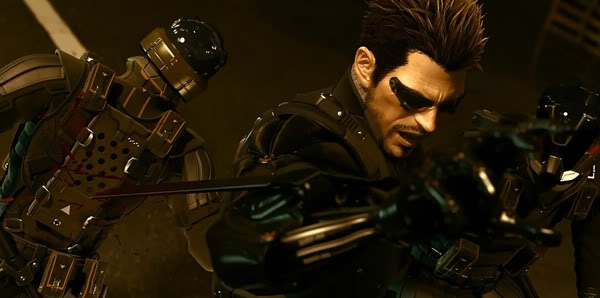
Deus Ex: Human Revolution

This article contains minor spoilers for Deus Ex: Human Revolution and Mass Effect 3.


I'm guilty of blaming game developers for creating unsatisfactory conclusions to otherwise outstanding stories that, quite frankly, deserve much, much better. You see, I recently revisited Eidos Montreal's cyberpunk masterpiece Deus Ex: Human Revolution to remind me of how expertly crafted its story is and how effectively its sinister atmosphere managed to make me feel paranoid of the world around me. 

Everything is just as I remember: the characteristic sepia tone of the world, charismatic voice acting, and the ... not so great ending. Human Revolution’s critics might have criticized the misplaced-and-immersion-shattering boss battles at the time of its release, but I found the polarizing ending to be far more disappointing. 


Don't get me wrong. I enjoyed the cryptic revelations from whichever ending I chose, but the delivery method felt like a huge injustice. After skulking around a morally corrupt world steeped in conspiracy, how does the experience end? By pushing one of four buttons. The mechanic of deciding Adam Jensen’s fate feels so misplaced that any of the possible endings lost all impact. 

I am definitely at risk of beating a dead horse here, but the end of Mass Effect 3 suffers from the exact same problem. ME3 arguably has some of the deepest character development of any video game series, and the emotional attachments I formed with masterfully written characters like Garrus and Tali only served to agitate me that much more when considering the conclusion. The eternal threat of the reapers destroying all organic life in the galaxy and Commander Shepard’s efforts to stop them culminate in a vague, color-coded ending that makes it easy to understand why so many fans have criticized developer BioWare.
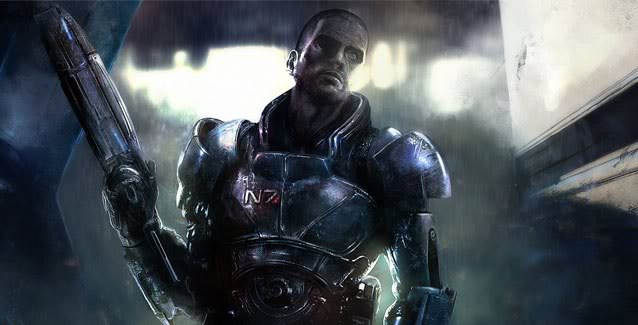
Mass Effect 3

Do Eidos Montreal and BioWare really deserve such criticism? I don't believe so. After replaying both Human Revolution and ME3, I have come to believe that technology and money are the problem. Imagine the sheer amount of technical power that would be needed to write and code multiple endings that take into account every single choice and every line of dialogue that could change a potential outcome.

The cost of creating such endings, which would all feature unique gameplay, can't be justified. After all, why waste development time creating an ending that most players might not even choose?

Regardless of how flawed video games might be in terms of storytelling, the ability to craft a personally tailored journey for the player is a unique feature not seen in books or film. Gaming narratives are just starting to gain legitimacy, and it would be a shame to see this momentum go to waste due to a lack of funding or the limitations placed on developers because of technological barriers.

 
Problem? Report this post
BITMOB'S SPONSOR
Adsense-placeholder
Comments (3)
Default_picture
August 29, 2012

I completely hear you about ME3 and DE HR.  THey are two of my favorite games of all times, but I kind of feel like no matter what their ending was going to be disapointing.  The problem is, they happen to be two of the most immersive games of all times and creating an ending of that level of immersion was simply impossible.  

Default_picture
August 30, 2012

It is a tricky one. On the one hand people are always going to be dissapointed that a beloved series of games didn't provide the ending they wanted, but on the flip side, branching narrative and multiple choice really help to personalise the experience for the player.

Human Revolution for me is one of the most atmospheric and immersive games I have ever had the pleasure of playing through. As you said though, it might just simply be impossible for developers to create conclusions that take into account every choice a player makes to maintain the immersion. 

Default_picture
August 30, 2012

Did Eidos Montreal and BioWare deserve so much criticism for how the games ended? The answer is it depends on the degree to which each studio allowed the reasonable expectations of their established audience to influence the design and development of the games.

I knew nothing about the Deus Ex franchise when I played Human Revolution so I had no expectations for the game. There was nothing controversial about the ending to me because without a prior emotional or financial investment in the story and characters, nothing in Human Revolution made me care about how the game ended. But for players who were emotionally and financially invested in the franchise, their reaction to the game and the ending was probably radically different than my own. So the question is did Eidos understand what their established audience reasonably expected to find in Human Revolution? Or did they simply design the game as they saw fit without giving consideration to the expectations of the established audience? And what claims or promises did Eidos make about Human Revolution to the established audience before releasing the game?

Based on what I've read, it seems like the development team allowed the feedback of other game developers and Eidos's marketing department to play a larger role in guiding the design of the game than what they knew the established audience expected. So Eidos deserves some level of criticism for this alone.

Mass Effect is however, a completely different story. Mass Effect 3 created a massive controversy because on one hand, EA-Bioware completely failed to deliver the features, functionality and content needed to make the advertising and promotion of the game, and the franchise truthful and legal. On the other hand, EA-Bioware failed to acknowledge they had an ethical obligation to deliver their "artistic vision" for the game within the framework created by the premise of the franchise and the reasonable expectations of the audience. Multiple and drastically different endings to the trilogy were clearly demanded but EA-Bioware simply chose to ignore their obligation to provide them so they could cut costs and maximize their profits.

So yes, EA-Bioware deserved all of the criticism they received for Mass Effect 3. In fact, thus far they've gotten off relatively easy considering that a very strong argument can, and still may be made that they violated consumer protection and deceptive business practices laws with the marketing and promotion of both Mass Effect 2 and 3.

Ultimately, the lesson the AAA industry must learn from these types of controversies is: the fact that games are now a protected form of free speech and art does not mean developers and publishers are protected against the consequences of ignoring their obligations. If consumers can't trust or believe AAA developers and publishers, it erodes confidence in the entire market and it inevitably drives consumers out of the market. This is why meeting reasonable consumer expectations is a foundation for building brand loyalty and integrity.

You must log in to post a comment. Please register if you do not have an account yet.