Home
Home

Tim thinks it might be a good idea for reviewers to wait for developers to patch major problems before casting final judgment on a game. He's isn't certain this idea is a good one -- and I'm not either -- but it could be worth a shot!
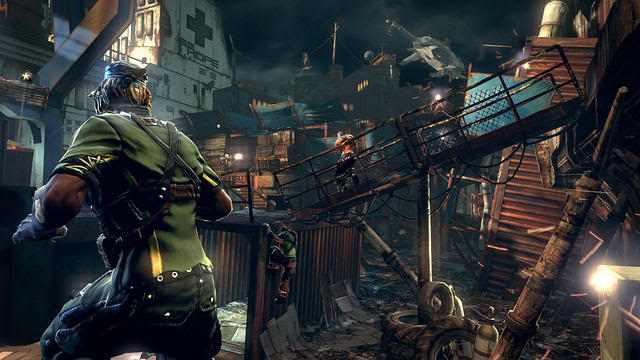
Brink is out in the U.S. -- and has been for a couple of days now -- but what about over here in New Zealand? Nope. That means I’ve had plenty of time to digest the reviews and the subsequent reactions. And because I’m not playing Brink right now, I am constructively twiddling my thumbs.
What do we want from the gaming press? Over time we’ve built up preconceptions about what a review should look like, and as long as it ticks the boxes, then we’re fine. If it doesn’t? It's time for Operation Tantrum. So what happens when a reviewer flat out says he won’t review it?
Face it, we’re a very demanding audience. We expect writers to review from the perspective of the average gamer, a mysterious creature from whom all our tastes have descended. We also often assume that this mysterious creature is us.
More importantly, we want these reviewers to get their reviews in on time because we pay their damn wages -- somehow -- through us buying games or economic trickle down...and stuff.
Anyway, I’d love to see more transperancy in reviewing. Reviewers shouldn't let the community’s expectations hold them hostage. Some reviewers have moved away from numbered scores, and this is good...sometimes. But a number can also help, and often does. The problem arises when the audience fixates on the number or a single line of the review.
Reading an article that says “look, this game’s not in a fit state to play right now, so I’m going to give it the benefit of the doubt and come back to it when it’s not playing so poorly” was far more helpful than reading others that said it was a buggy, unpolished mess not worth my time.

This way we don’t write the game off; we just acknowledge that a launch-day purchase might be underwhelming, so put it on the back burner for a while. It also acknowledges the power patches have to right wrongs that a launch review would have you believe are permanent.
Admittedly, there is the question of where you draw the line between minor launch fixes and ongoing patching. I’d hate to increase the workload for reviewers, but maybe sometimes we need a second wave of reviews one month in, or at least a quick article revisiting the bugs and assessing whether or not the developer has fixed them.
Cast your mind back to another somewhat buggy release: Alpha Protocol. I picked it up this year, and I enjoyed it. But it’s still kind of a mess and really only warrants a discount purchase. I was looking forward to it prior to release, but when review time came, it was found wanting. I didn’t buy it because the critical response influenced my judgment. I’m fickle like that.
To speculate, what if more people had said that it had promise, but advised waiting for a patch? Would Obsidian and Sega have less concerned its low Metascore and actually put resources toward a much-needed patch? Maybe Alpha Protocol would be better experience today than the post-launch orphan it became.
Unfortunately, the flip side is that this might give developers and publishers even more leeway to boot an unfinished game out the door with assurances that there will be a day one patch. I hope this isn’t the case, but I’m not an industry insider, so I don’t know. Cynicism tells me it’s pretty plausible, though.
It does seem to place the onus on the developers. Rather than giving a low score and crying “for shame, sir!”, could we instead raise an eyebrow and say “you know better than that, and I expect it back here, fixed, this time next week”?