Home
Home

Visit a forum topic of things people wish games would stop doing and it won't take long before Quick Time Events come up. Widely credited with having been invented by Shenmue but popularized by God of War, most people probably know them as those obnoxious little “Press X to not die” prompts that come up in the middle of cutscenes. Sometimes they do actually work and even work well, but most of the time they just plain flat-out don't. And I'm sure it mystifies a great many people as to why developers keep putting them in.
X didn't appear in this image to avoid being typecast
Well get ready to have your minds blown (Unless you can press A, B, X, Y, X, A, right NOW), because in a certain sense the roots of the QTE go back much farther then anyone realizes. They've just been going by a different name, less feared name: the 'Use' button. The link between them is called an Atypical Action, and they just might be the key to advancing game storytelling.
Consider a normal FPS, CoD: Black Ops works. Think about all the buttons you press over the course of playing it. Whenever you press the right trigger (Or whatever button is appropriate to your platform of choice) you fire your gun, you press A and you jump, press left trigger and you aim. These are all Typical Actions, an array of standard actions tied to certain buttons and always those buttons. Typical Actions are the basis that gameplay has always been built on, from jumping in Super Mario Bros. to entering your combat stance in The Witcher.
Yes, I get it's cool Geralt, but would you mind telling me how I do that?
But there's one button that's different. The Use button does everything from picking up guns to planting bombs, and can do even more in other games that feature it too. Tied together under a single generic verb, the Use button has no specific action of it's own. It's purpose is defined entirely by it's surroundings, by the context in which it's used. If that sounds like a very loose definition (i.e. of course it has an action, it's action is to use), then consider that if you could get the context right, you could make the Use button fire your gun, make you melee, jump, aim, and even walk, all without ever breaking it's original parameters.
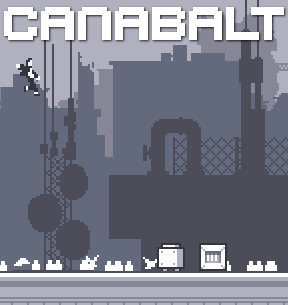
Call of Canabalt: Modern Running 2
This is a clear-cut Atypical Action, a consistent movement by the player that brings about an inconsistent result as defined by context. Now, I made an admittedly very lofty claim about just how important this concept is a few paragraphs ago. I'm sure we can all agree the Use button is a marvelous but humble little piece of design, but the key to advancing storytelling? I wouldn't blame you for thinking it's ridiculous. To explain why it's not, we'll have to jump mediums entirely.
Imagine if you will a movie. Something exciting with action and thrills, but more importantly a story actually worth following. The catch is that the main character can ONLY perform the Typical Actions of Black Ops, and remember that doesn't include the Use button. Could such a character really be cut out to be the lead in a real storyline, limited to such a basic set of interactions? Fire guns, throw grenades, punch people, check the map on the scoreboard if you really want to get daring. Wouldn't amount to much would it?
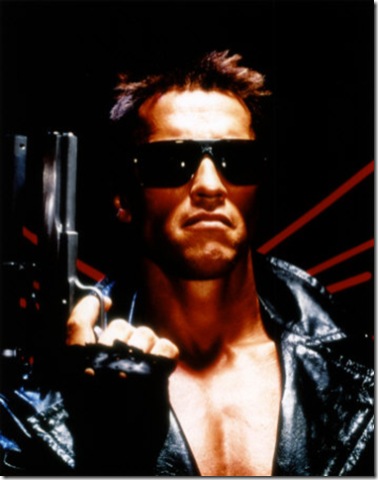
Then again...
Black Ops itself get's away with it by relegating most of the storytelling to other characters or things in cutscenes. But next time you watch a movie, take note of all the minutia the characters perform, both background and actually relevant to the plot. By avoiding these the movie would begin to crumble at the edges, sometimes a little and sometimes a lot. But if we endeavor to tell a story entirely in-game, we face the exact same problem.
Atypical Actions are the key to doing things outside the scope of 'normal' gameplay, and even breaking up the repetition that turns many non-gamers off most titles. And there is no game that better exemplifies this then Quantic Dream's PS3 masterpiece Heavy Rain. Yes, the script had some issues, the voice-acting for a few parts was clunky, and there was too much random inconsequential stuff to do by the later chapters. But those criticisms melt faster then a Nazi’s face in Raider's of the Lost Ark when leveled against everything the game gets right. And what it got right most of all, beyond its story, direction, graphics and everything else, was interaction.
Yeah, that was totally just an excuse to use this. Enjoy
Forget hijacking cars in Liberty City or riding through the Great Forest of Cyrodiil or any other open world that boasts it freedom, you can do more in Heavy Rain then any other game for the sheer sake of having almost no typical actions. You move with R2 and steer with the left stick, L1 changes the camera and L2 opens your characters thoughts menu, those are literally all the Typical Actions the game has. And even those buttons get co-opted during many of the interactions.
So, that may be all well and good, but it doesn't really answer what makes it's system of pressing unbound buttons when you're told to any different from your standard Quick Time Event. All QTEs are Atypical Actions, but not all Atypical Actions are QTEs, why? The missing piece, and the key to making all of this work, is the idea of synchronicity.
One of the biggest complaints brought against QTEs is that they feel arbitrary. The buttons being called for rarely feel relevant to the actions being performed, causing the player to question if they are really contributing at all. People don't like feeling that their games are playing themselves, it's the same problem as cutscene overload: games are meant to be played.
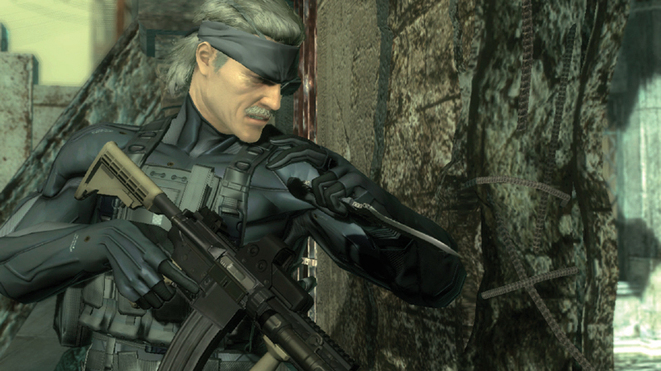
Not if he has anything to say about it
A true Atypical Action must present some of what the player is trying to accomplish in it's commands, and this is the pivotal factor that elevates Heavy Rain. If you're performing an action to the right, you move the stick to the right. If it needs to be done slowly, you make the motion slowly. Throw something like a ball at a hoop and you pull the controller itself through the air quickly. In some way, it always synchronizes between the player and character, sometimes surprisingly well.
They aren't simply something you have to press to finish the cutscene, little more then hitting the Play button on a DVD, they are something that you as the player are actually doing. True, there are some instances during the fight scenes where it breaks down into more basic button presses that don't really appear to correlate with what you're trying to do. But even these are saved by having the prompt appear directly on top of the relevant object in the scene. If you need to press Triangle to dodge a punch, the Triangle icon shows up over your opponent’s fist. Not only is it an incredibly simple way to show you exactly what you're going to do, but it makes it much easier to pay attention to the commands and the scene itself at the same time, something it's predecessor Indigo Prophecy AKA Fahrenheit struggled with.
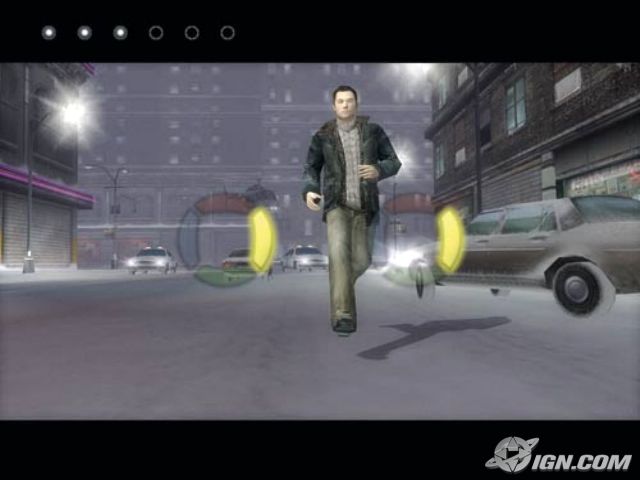
Simon Says... divide your attention equally!
Now, under no circumstances am I saying that all games need to be Heavy Rain. I'm not even saying all games need to incorporate these ideas. But I will say that as soon as developers become more comfortable with Atypical Actions and learn how to integrate them better, we will have found the tool we needed to make our worlds deeper, our characters freer and our plots more unrestrained by the classic tropes of our medium when we want too.
Now press the “Back” button in ten seconds to return to the previous page, this is your only warning.
One-Sided Argument is a review/opinion series that focuses on why games are good or bad instead of whether they're good or bad, and on what we can learn as an industry from both. Mike Richards is a reviewer/opinionated person who focuses far too much on making this ending bit good and filling it with nothing worth learning. He is nowhere and he is everywhere on the internet, at least until he meets a nice, stable site he likes and settles down.