Being poor is good: Why engineered currency scarcity improves a game

Default_picture
Friday, February 10, 2012
EDITOR'S NOTEfrom James DeRosa

Here's a hint: If you want money to become irrelevant in Skyrim quickly, make lots of potions and improve the Thieve's Guild. Fences will drop 4000 gold on you like you're threatening to take their knee caps.
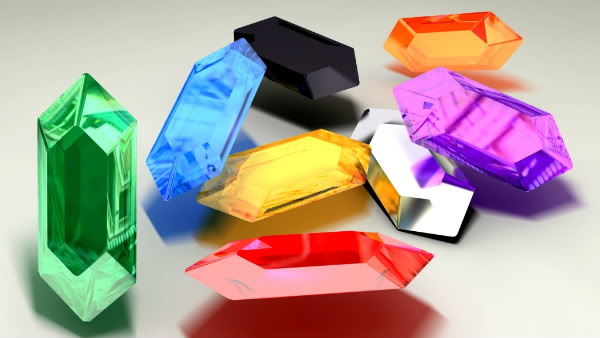
Imagine a exquisite field of grass, blowing in the Hyrulean wind. Now picture an unbroken line of clay pots surrounding the field, fresh off the pottery wheel. Bet you don't see plants or earthen wares, do you? No, you see cold hard cash because that's how Zelda games have conditioned you. Money is your reward for exploring and adventuring. Inside each pot and underneath every clump of dirt is the possibility of a hidden rupee. But what would happen if you knew your rupees were worthless? Would you still feel compelled to play the game?

What seems like free money is in reality a tool to encourage and motivate the player -- a dog treat for playing "correctly." You earn a small amount of money for taking the time to prune some grass or smash a vase, it's a reward equal to the task.

Likewise, killing a spider the size of a ice-cream truck rewards you with a heart piece, which is perhaps the most coveted item in the game. But for the most part, the majority of Link's compensation is through in-game currency, which in The Legend of Zelda's case is the multicolored rupee. But what happens when there's nothing left to buy and rupees lose their value?


You begin each Zelda game with a laundry list of purposes for your tiny bag of rupees. Even that first lustrous, green crystal helps stave off abject poverty. Once you reach a shop, you can only gaze longingly at the impossibly expensive items, which are far outside your budget. "One day," you tell yourself. "If I save real hard, I will have enough."

You enter another dungeon prepared to scour every inch for treasure chests, squeezing enemies for every last jewel. You're optimistic and willing to take on any side quest with the hope of inching ever closer to that elusive sword or that shield you've always wanted.

It's even a little bittersweet when you finally purchase that item, only to have it later replaced by a stronger, more costly ware. But it's no matter. The cycle of optimism begins again as you leave in search of an even bigger sack of money. And it's not just Zelda: It's Skyrim. It's Final Fantasy. It's any game with a currency system.

One day, after hours of questing and conquering, you begin to realize your savings have grown considerably. You stop worrying about inn fees and the cost of potions. You stay in the fanciest quarters and chug back the most expensive elixirs like they are water. Finally, you enter a shop for the last time, and realize there's nothing left to buy.

Twilight Princess especially suffers from an imbalance of supply and demand. I can't recall how many times I opened a chest and closed it, leaving behind 100 rupees because they didn't fit in my wallet. And it's not that I needed a bigger wallet: I needed a reason to spend the cash. I think the creators were aware of this problem because the game features magical, rupee-powered armor that eats up your stash in seconds. Nevertheless, by the end, you don't even want to open minor treasure chests, only to relive the heartache of leaving more booty behind.

Essentially, it's a broken system that seriously damages my motivation to finish a game. It is also a reminder of why we play: we enjoy the journey. Questing, like life, only stirs our passion when we don't have the things we want. It's during the pursuit of something that we came alive. The fun is in acquiring rupees and spending them, not in amassing a gigantic fortune that serves no purpose.

How about you? Have you ever lost interest in a game once you had too much money?

 
Problem? Report this post
BITMOB'S SPONSOR
Adsense-placeholder
Comments (12)
Default_picture
February 08, 2012

This has been a problem for me in almost every Zelda game. I don't quite playing the game but I certainly don't care about making money. What I need is some sort of Hyrulean casino or stock exchange so I can throw away piles of cash quickly. 

Default_picture
February 09, 2012

Hyrule Golden Saucer? Sign me up!

Dscn0568_-_copy
February 08, 2012

Another fast responder to the writing challenge! Thanks for participating!

Default_picture
February 08, 2012

This is an issue with quite a few games. I remember in many RPGs buying 99x every consumable, since I was just overflowing with cash.

Re: Zelda specifically: Link to the Past had the artificial RNG money sink that was the dark world digging/treasure chest guessing games for heart pieces, and the more steady, deliberate sink into expanding bomb and arrow bags. Given that title's relatively short length, hitting the rupee plateau seemed to happen right when you were about to defeat Ganon.

So maybe it's a game length thing. /shrug

Default_picture
February 09, 2012

Good point, I wonder why the Zelda games after LttP haven't used this more deliberate currency system? Also, LttP felt pretty long, but maybe I am mis-remembering? Are the newer Zelda games a lot longer?
 

Default_picture
February 09, 2012

LttP could be long, but it's beatable in several hours. Even without prior knowledge on the game, I'd say a new player could conceivably beat it in a single figure hour count. There wasn't too much dialogue, not every item was necessary to beat Ganon, etc.

Of the newer 3D Zeldas, I only extensively played Wind Waker. It felt longer, but I'm sure I could have beat it very quickly on a re-playthrough.

Default_picture
February 13, 2012

I don't understand why in the latest instalments of the Assassin's Creed series, they keep making the character being able to steal from other people's pockets... no matter if I've already ammassed a huge sum of wealth that I no longer know what to do about it,

Default_picture
February 13, 2012

Can you imagine a billionaire with his own private palace, going out into the street to steel a few coins from some poor guy's pocket?

Dscn0568_-_copy
February 13, 2012

It's no longer about the money. It's about the thrill.

Default_picture
February 13, 2012

Haha, killing high priority targets and diving headlong hundreds of feet into carts of hay isn't enough. Must steal this poor fool's lunch money. Assassins are terrible people.
 

Default_picture
February 21, 2012

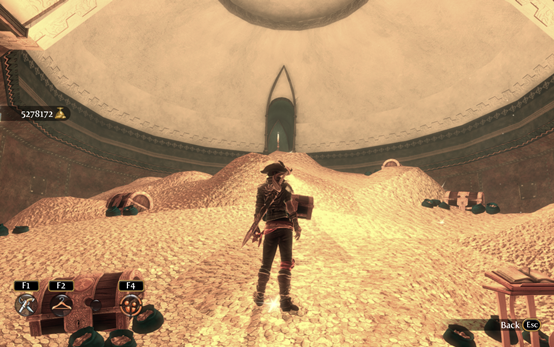
Fable 3's Treasury: A case study in pointless currency systems


Fable 2 and 3 are some of the worst offenders in meaningless commerce systems (among other things).

The image above is of the player's treasury in Fable 3. The object floating atop the pile is a key that can only be accessed once the player has amassed enough gold to climb and reach it.

The kicker is, the amount of gold necessary to do it is easily attainable but far in excess of anything the player needs to finish the game. Both Fable 2 and 3 feature a real estate buying mechanic in which the player can rent out houses and take profits from owned shops. The money comes in at such a ridiculous rate that the player can own every building in the game without much effort.

One could argue it's an end in and of itself, but there's really no game there. It's too simple and provides no challenge or real reward beyond saying "I own this world." As if you already didn't in the only sense that matters.

Default_picture
February 22, 2012

Wow, i actually loathed having to go pay the upkeep on my bazallion properties, and for what? Another million gold? Plus it makes all those really tough decisions like whether to drain Bower Lake or make it a natural reserve irrelevant. I had so much money I was never tempted to do an "evil" deed for the greater good of saving the kingdom!
 

You must log in to post a comment. Please register if you do not have an account yet.