Home
Home

The reasons why I haven't already completed BioShock, one of 2007's most celebrated video games, are unimportant. What is important to me at this time is to write as much as I can about the game I have experienced thus far, because my infant son and my exhausted wife demand my constant attention right now. I can't predict when I may have another chance at this incredible game and even though the Internet is overflowing with writers who laud and re-laud this game, I don't want a little thing like childbirth to keep me from having my say, especially since writing about BioShock is the only way I can "experience" the game for the foreseeable future.
My respect for the quality of BioShock overwhelms me; I do not know where to start in proclaiming how much I enjoy this game. Back when I played the demo last fall, I already explained how the game got me hooked right away with its distinctive art style and captivating world. For all the first person shooters set in outer space or on alien planets, BioShock is grounded on Earth in the 1960s. Admittedly, this is a steampunk/alternate history 1960s where humans have the technology to build massive underwater cities and genetically empower themselves with downright magical abilities, but the world of Rapture immediately enthralled me. Lots of video games have random stuff scattered in corners to encourage players to take their time and search their surroundings. BioShock might be the first video game I've ever played where the surroundings alone convince me to slow down and take a good look around (although there's certainly an abundance of items to be found as well).
As a game environment, Rapture is dripping with style and atmosphere. A typical first person shooter game has levels that are about as interesting as a trip to a self-storage warehouse. Graphical fidelity may offer us more visual detail than when the genre was new but few game makers take advantage of that to give their worlds character. Rapture, in contrast, is a underwater city that feels lived-in, making the chaos that tore the city apart all the more chilling. Banners hang from the ceilings proclaiming the ideals of the city's founder while hand-written protest signs, discarded luggage, and corpses litter the hallways. Audio diaries dropped in corners or left on desktops deliver stories of individual residents, warnings and cautionary tales to outsiders that never reached the surface. Was there a singular disaster that drove Rapture's citizens mad, or was the descent a long and torturous process? Did the violence and mayhem come from the top or rise from the bottom? What kind of a society would stock vending machines with food, alcohol, and ammunition? These are questions I ask myself over and over again.
For all its artistic merits, Rapture is also an exceptionally well-crafted space for the player to navigate. These are not linear levels full of monster closets and constrictive hallways, nor are they labyrinthine in their layout forcing the player to run in circles. They feel inspired by mission-driven games like GoldenEye 007 and Perfect Dark where running straight through to the end was not an option. In the two areas I have seen thus far, the exit has been easily accessible from the start but in order to use that exit, I had to accomplish certain tasks first. The in-game map and navigation system made finding what I needed a breeze. Also, crouching and jumping are refreshingly kept to a minimum. Ever since first person shooters realized that such abilities were necessary, game designers seemed to include lots of elaborate jumping puzzles or cramped air ducts that need to be crawled through to justify those motions. BioShock thus far has entirely omitted the former and made sparing use of the latter and I greatly appreciate it.
If the world of Rapture is what's holding my attention, it is the unparalleled emotional content that BioShock delivers that keeps me up at night wondering when I'll play it again. More than any so-called "horror" game, BioShock frightens me constantly, and not just with cheap tricks like enemies who leap into the frame. I dread each new door I open and each new staircase I climb because I fear for what I may find next. The first full area of the game is the "medical pavilion" which includes a funeral home, a crematorium, and a mad surgeon who found frustration with the human form so he just kept operating and operating until he ran out of patients. This is the stuff of real nightmares, not demons or aliens or zombies. I'm already scared of hospitals and mortuaries and who doesn't get anxious about getting anesthetized, wondering if you'll wake up or not?
Beyond the thrills and chills, BioShock also offers something few other games do: sympathetic foes. Unlike the clearly insane Splicers and security automatons who attack you on sight, Big Daddies and Little Sisters are content to ignore you as they go about their own business in Rapture. While the option to rescue or kill the Sisters is one of BioShock's most talked-about feature, it is the choice to fight or avoid the Daddies that I find more compelling. Dealing with the Sisters is not nearly as emotional as the game would have you believe; whichever you choose, it's just a matter of pressing a button and watching what happens next. The characters in the game tell you that "harvesting" the resources in Little Sisters kills the host, but from a player's perspective you never see anything unpleasant. Your character simply picks up the girl, who looks positively monstrous with her glowing eyes, and in a flash she is replaced by a slug and you are rewarded with more power. If this is supposed to give me pause or make me question my actions, it's not working.
By contrast, the Big Daddies are formidable opponents who lumber about Rapture, emitting whale-like moans and shaking the ground (and your controller) with each step. In order to reach the Sisters, you must first take down the Daddy guarding her and that is no small feat. The stakes are high when fighting a Big Daddy and as such, the choice to fight one has much more meaning than the harvest/rescue option the game is so famous for. Killing the Splicers is self-defense, killing the Sisters is abstract, but killing a Big Daddy is deliberate and in the end, they crumple to the ground with more of a whimper than a roar. The Little Sister he was guarding will run to his side and tearfully plead "Wake up, Mr. Bubbles!" Enemies that leave behind grieving children? That's the most powerful moment I've seen in a video game since Aerith died in Final Fantasy VII.
If I were to complain about BioShock, I would point out that there are some minor oddities with the controls that can lead to confusion. The SQUARE button both reloads your equipped weapon/ability and will begin the hacking mini-game when near certain machines. Since the window to hack machines can be brief, this has resulted in a lot of unnecessary reloads because I pressed the button too soon (or too late). Likewise, the X button is the generic "interact" button and is used both for searching objects/enemies and for picking up items. Holding the X button will replay the most recently discovered diary entry in your inventory. In tight spaces, the multipurpose nature of this button can lead to frustration. Say I pick up a diary that is on a shelf with other items. I cannot listen to it until I look away from everything else and press X or else I will start picking up items or searching random boxes.
Of greater concern to me over the long-run of the game is the combat, which is not particularly engaging thus far. The enemies may have lots of personality and talk to themselves for extra creepiness, but they are not very clever. They do not so much as "take cover" as run in circles, occasionally disappearing behind an obstacle only to emerge from the other side. Thanks to their manic shouting, they are easy to get the jump on and they almost never ambush me. However, because new Splicers will turn up in areas I previously cleared, the tension level of the game is well-served by their blabbering. I can never feel safe in Rapture; no matter how many maniacs I put down, more will come to loot their bodies and attack me.
That raises another one of BioShock's elements of intrigue: who am I? The nature of a first person shooter is such that I cannot see my on-screen avatar; instead, I see the game world through his eyes. Yet nearly all games in the genre celebrate the hero on the cover of the box, in the main title screen or through cut scenes. Wolfenstein 3D and Doom, two of the most influential first person shooters, even included the character's face in the heads-up display. BioShock does none of these things. I have no idea who my character is, what he looks like, nor do I even know his name. He had a single line of dialogue at the start of the game, but since then he has been silent. The only hints I have received so far are the photo of his parents he was looking at on the plane and the curious tattoo on his wrist. This clever embedded mystery is yet another factor that keeps me chomping at the bit to proceed further into this world.
I could probably go on discussing minutiae but I feel like I've said what needs to be said: BioShock is an excellent video game. In a market that is absolutely swamped with first and third person shooters with increasingly interchangeable characters, settings, and stories, BioShock stands apart with its unique ideas and rich storytelling. There was once a time when all first person shooters were known as "Doom-clones" because they sought to emulate the success of that title so closely. This name fell out of favor as new ideas crept in and the genre developed. If we video gamers are lucky, we can expect some BioShock clones in our future, and I very much look forward to seeing where the genre goes from there.
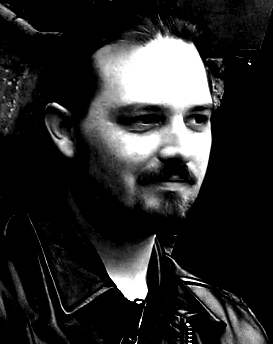
Daniel Feit was born in New York but now lives in Japan. Follow him on Twitter @feitclub or visit his blog, feitclub.com