
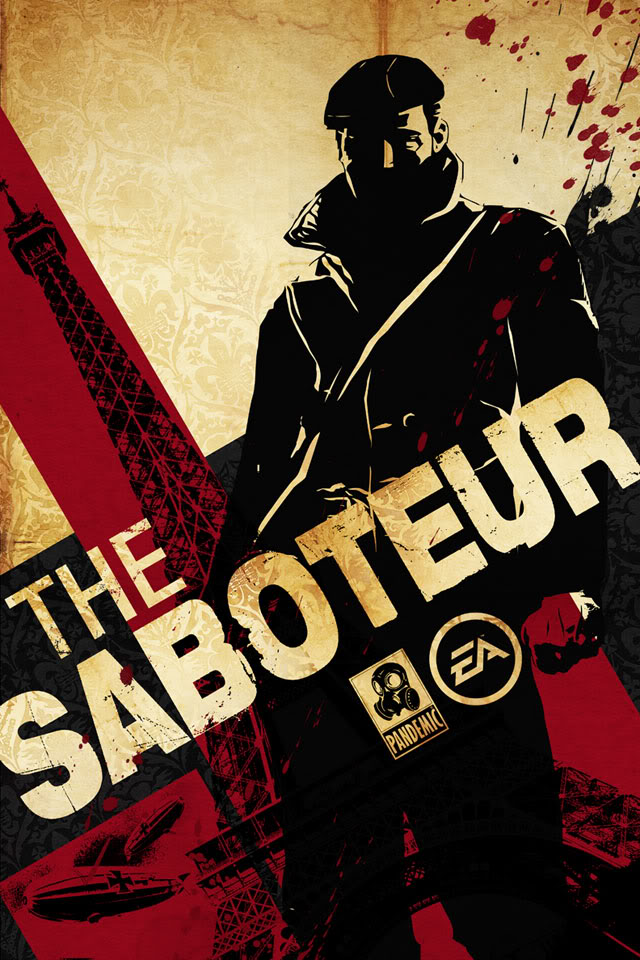
Saboteur and the Disconnect Between Game Critics and Gamers

Alexemmy
Wednesday, November 24, 2010

The Saboteur boxartEven though I received The Saboteur as a gift, I immediately had snobby thoughts about it. How good could it possibly be with the middling reviews critics gave it? I put it in my PlayStation 3 fully expecting to give up long before finishing it.

To my surprise, the game slowly grew on me the more I played it, even though I'm not a big fan of open-world games. Most of the time, their endless side missions, fetch quests, backtracking, and overall repetition grate on me quickly and I throw in the towel well before I ever complete them. The Saboteur was much more straight to the point, with very few side missions to distract me from the main story, and I was engrossed enough to actually complete it -- something I don't believe I've ever done in an open-world game.

Upon finishing the game, I decided to set out on a mission to figure out why I perceived the game so differently than the media's general indifference to it. Before I read began analyzing other reviews, I penned my own review, and as I wrote, it became more and more positive -- I ended up with a five out of five (not perfect, but still "excellent" according to my own review scale). I just couldn't justify anything lower based on the primarily glowing review I had written.


Then I set to work searching for an explanation to the great divide between my opinion and the popular view of the game. With each review I read, I found myself nodding in reluctant agreement. I noticed these gripes as I played, but I mostly discounted them once the game was over. Some of this could be my own experience. The critics widely panned the controls -- something I didn't notice at all, but then I missed all of the other open-world games this generation. Still, I think a lot of the disconnect I experienced speaks to the natural divide between professional game reviewers and the general gamer.

When game journalists review games, they have to take everything into account. They pay special attention to things like controls and graphics, of course, and often take notes of every thought they have while playing. As a result, an issue like a fidgety control scheme doesn't escape their judgement even if the overall story and aesthetic of the game is very strong. Not only that, but game reviewers try to play everything, and it's understandable that having just finished a title that does a particular mechanic will stick out compared to better executed titles.

The average gamer doesn't have that breadth of experience and doesn't necessarily fault a title for being technically inferior to another recent release. Possibly they are even defensive of the game. Some gamers feel compelled to justify their purchase, but others simply disagree with a negative assessment of a game they liked. If the sum of a title's positive aspects cloud their view of the negatives, they may feel that their game was wronged and rise to its defense. If the sum of the game's positive aspects clouded their view of the negative ones, they feel like the game was wronged and they should defend it.

This entire process got me thinking. First off, I should probably work on getting better at reviewing games, but maybe pro reviewers also need to change, too. Perhaps critics should concentrate more on the overall experience and less on minor gripes...or do gamers just need to stop being so defensive? What do you think?

 
Problem? Report this post
ALEX R. CRONK-YOUNG'S SPONSOR
Comments (13)
Default_picture
November 24, 2010

I see people all over the Internet who write nasty things about game critics who aren't critical enough about the games that they review.  The consensus of the mean-spirited, vocal majority on a lot of gaming sites is that all of us game critics are on the take, accepting money from game publishers to give a game like Demon's Souls a score over 4 when obviously it's complete trash.  Or whatever.

As game critics we have to remember that audience as we write, because the people who are most likely to even read whatever we write are the jaded gamers who don't realize yet just how jaded they've become.  Casual gamers don't read reviews nearly as often as they should, after all.

When I review a game, I have to ask myself "What does this game do that makes it better than other recent games of this sort that I and my audience have played?" and then I have to grade it accordingly while justifying that grade.  Meanwhile, a potential consumer just has to play and enjoy (or not) a game before forgetting that games even exist for three or four months.  You're right in that it's a very different sort of approach to the video games that both groups theoretically love (or at least like to think that they love).  I'm not sure that there's much to be done about it, though.  As long as I write a thorough review that explains where I stand (and why), then I've done what I needed to do and any intelligent reader will come away with the information that he needs prior to making a purchase decision.

Christian_profile_pic
November 24, 2010

I don't think you had a problem in your review approach at all.  I've said this too many times in my comments on this site, but I think that reviews are, and should be, subjective.  

From that point of view, I actually didn't like The Saboteur for all those same reasons.  They just stood out a lot more to me than to you.  I just felt that it was Mercenaries with a broken stealth mechanic.  Ultimately, I liked the idea more than the game itself.  That said, it had one of most atmospheric game worlds and, shockingly, is one of the only games I've seen that uses black and white correctly (shame on you, Splinter Cell: Conviction).

That said, I think comparing/contrasting games is perfectly valid, if that's how the game made you feel.  Again, I call shenanigans on Splinter Cell for screwing up black/white so badly, when The Saboteur shows everyone how it should be done (high contrast, selective use of color--in other words, not simple greyscale).  If minor gripes affect your experience with a game, then I think it's fine to knock the game down for that.  I don't think it's a service to anyone for a reviewer to compartmentalize their experience: if the details ruined their experience, then they can't honestly recommend a game in spite of those details.  

Ultimately, it's up to the reader to decide what's important to them.  Personally, when I do read a review as a purchase guide, I always go in knowing what, specifically, I'm looking for.  AC: Brotherhood is a good recent example.  A lot of reviews touched on things that I already knew: the freerunning is still inaccurate, there's some texture pop-in, the story ends on a real WTF note.  If those details ruined the experience for the reviewer, then that's fine, because I know it's stuff that won't bother me as much.  The information I'm extracting is the stuff that I didn't know: is it a rich singleplayer experience?  Is the meta-game worthwhile?  Is the wild multiplayer experience successful and why/why not?

OK, that got way out there.  Great piece! :)

Default_picture
November 24, 2010

I agree. I didn't actually read any reviews aside from a handful of technical articles on the special filtering they did for the PS3 version, so when I saw it on the shelf for $18 I grabbed it just to see the graphics. I ended up sticking around and beating the game in 30 hours, then spent another 30 hours getting every last trophy in the game... And I'm really not much of a shooter/open world game player, aside from the Fallout series.

Twitpic
November 24, 2010

Great points, Alex! I've been staying away from reading game reviews from professionals reviewers for two reasons: First, I hate noticing the small annoyances they notice and having it bother me, and second, I can't find a professional reviewer that has the same views as I do.

Andrewh
November 24, 2010

I've had a copy sitting around forever, and I was simultaneously excited and nervous. Now I am much more excited!

Default_picture
November 24, 2010

I recently played The Saboteur as well -- found it in a clearance bin -- and the game really did surprise me with a fairly interesting narrative and clever use of color to signify your progression in the game environment. But to your point that game reviewers should perhaps focus more on the experience as a whole, I personally prefer a reviewer to explain whatever issues they had with the game, no matter how minute or inconsequential. One of those minor problems they point out may be something that I find all too frustrating or an absolute annoyance, and may very well prevent me from playing the game. Though, to a lesser extent, I do agree that reviewing a game as one unified product, rather than splitting judgement over several areas (gameplay, graphics, sound, etc.), is something I would be more apt to read, as I don't always need to consider how crunchy the leaves are under my character's feet as he walks through a forest.

But that doesn't mean Mr. "Average Gamer" should just keep on moaning about review scores and inconsistencies in opinion. As has already been stated by so many others, reviews are not completely objective in nature. What one person finds fun may be to someone else the single worst thing ever to be created by mankind -- so long as we continue to listen to "The Internet". I would love it if every CoDbro would just take a step back and consider whether annual Call of Duty installments will eventually lead to the franchise pumping out the same bland, homogenous shooter every year.

But you're right; the "average gamer" can be very defensive over his/her (more likely his) purchase. Some professional calling a game you shelled out over $60 for "bad" can be a real hit to your ego, as if that person had insulted your taste directly. I hope for one day, when in that situation, John Doe Gamer will look past the difference in their opinion and that of the reviewer, and just play the game. I mean, that's why we play games, right? Because we enjoy them?

Assassin_shot_edited_small_cropped
November 24, 2010

My view leans very heavily towards the subjective -- experiential -- approach. I'd love it if reviewers could do away with formulas and ticking boxes; I want them to ditch the sequential discussion of features, story, sound, graphics, and whatever else is on the back of the box.

Instead, I want to read about how it [i]felt[/i] to play the game. Did the reviewer enjoy it? Why? And why should I care (or not, as the case may be)?

If some minor thing stood out, I want to know about it -- because it might stand out to me, too. But don't mention anything that didn't have a significant impact on your experience, no matter how "important" the marketing suggests it is (okay, if it's a major feature, you can say in passing that it didn't affect you).

Bmob
November 25, 2010

I, too, prefer more subjective reviews. I don't think that objectivity is the name of the reviewing game, and although I understand professionals having mental checklists to cover, I don't believe reviews citing barely-noticeable jagged edges or an ever-so-slightly insensitive reticule are all that helpful.

As Richard says above, if something really stands out, then by all means bring it up; if the graphics and voice acting are some of the best on the console, feel free to dedicate a paragraph or two to just those, but it's the game I'm interested in, and I'd love to see much less technicalities.

Default_picture
November 25, 2010

I think the industry needs both reviewers and critics. Like many in the comments, I like reviewers to be subjective in their assessment of games - rating them based on the overall experience of the gameplay. Reviews like this help the consumer in making informed financial decisions. As a consumer, I've found a group of reviewers who's opinions and tastes align with my own - I can typically trust the reviews of these folks, because I know I've agreed on them when it comes to past games.
At the same time, though, I think that gaming as an industry needs critics - people who are going to take a game town for any flaw, who are really going to demand perfection. But as with almost any other industry, the reviews of a critic are less consumer oriented: critics are concerned less with whether the game will meed the standard of the consumers, but whether a game will live up to an internal higher standard. While we might now always want to trust critics when it comes to purchase decisions, they are absolutely critical in helping an industry grow and develop. 

Andrewlynes
November 25, 2010

Haha I was just about to write pretty much exactly what David King wrote. I agree, sir!

100media_imag0065
November 25, 2010

Just this year alone I played two games that shot up on my list of Best of The Year list. Metro 2033 and Darksiders. Metro 2033 especially was praised by some, and spat on by other reviewers. I had the same problem as you. I wrote my own review, right here on this site, and I just could not understand where some of these reviewers complaints were coming from.

I knew what they were complaining about, but I just did not see any of it as problems that deserved to be used as an excuse to lower the overall score. It is as if they were just upset it wasn't another Call of Duty. It didn't control like Call of Duty. It did not look like Call of Duty. It was not simply a ultra linear target practice simulator. Yet, some reveiwers just did not give it a fair shake. And these same reviewers gave Modern Warfare 2 glowing reviews. A 3 hour long repeat of the first Modern Warfare was being looked at much more kindly than Metro 2033, an original and incredibly atmospheric experience that I haven't seen since System Shock.

I gave up trying to figure it out. I usually don't have such strong feelings about the way games are reveiwed. I understand it is one persons opinion, and all that matters is my enjoyment. Yet it really makes you wonder. It makes me wonder because obviously there reviewers enjoy the FPS genre, otherwise they wouldn't have been handed the review. It makes me wonder becasue, since it is safe to assume that these reveiwers are fans of the FPS genre, they must be getting a bit tired of the stale genre that is filled with clones of Call of Duty. It makes me wonder because, despite all of this, they get their hands on a original FPS that looks and feels nothing like the standard run of the mill FPS's, and yet they did not appreciate it's triumphs.

Profile_pic4
November 27, 2010

Alex I think you bring up a really good point about Average Joe Gamer's perspective versus The Pro Reviewer's trained eye.  A positive (or negative) game review has an impact.

I might scan review scores on a new game to get an idea on how it is being received, but I don't like reading game reviews until I have actually started playing.

Also, this settles it.  Both Metro 2033 and the Saboteur have been on my radar.  I need to go ahead and just pick them both up already (and clone myself).

Default_picture
November 30, 2010

I had a similar reaction to a game that was critically panned. I really, really liked Alpha Protocol. I liked if far more than I liked Mass Effect 1, which I found to be a generic and rather tedious space opera. What I liked the most was figuring out what dialogue choices to choose when talking with all the other characters and seeing what kinds of ripple effects your decisions end up having. I definitely wouldn't recommend it to just anyone, but I really don't understand all the hate it got from professional reviewers.

You must log in to post a comment. Please register if you do not have an account yet.