Home
Home


Editor's note: I despise advertising, and I don't want to see it invade video games. Jon's living in a fantasy world if he thinks console developers would offer free content due to advertising revenues, too. Don't let Verizon commercials and $15 map packs surprise you. -Rob
The number of people playing games is rising. This is good. The price of an average console game is rising. This is not so good. The cost of producing a standard retail release is also rising due to the increased graphical capabilities of current generation consoles. This is bad.
In an ideal world, an expanding marketplace and increased retail price would make up for the higher costs developers face on their end. But if current evidence is anything to go by, this is not the case.
Many have blamed the recent influx of "unfair" downloadable content -- such as the industry's experiments with charging extra to unlock content already on the disk, leaving a game's story unfinished to get people to pay for it later, or billing players who want to unlock cheats -- on greedy publishers looking to fatten their already overflowing wallets.
This view is a little hard to believe. Such a practice sullies a publisher's reputation in the eyes of many gamers, and as such, it appears to be an act of desperation rather than a calculated business strategy.
An alternative to forcing consumers to pay more is to get this extra revenue from advertising, which would offer other companies an in-game space to promote their goods. Consumers have reacted negatively to this tactic thus far, and understandably so. Previous attempts to sell goods to players are unsubtle and patronising at best, and have actually negatively impacted a game's quality at worst.

Longer load times as a result of advertising are understandably a very bad thing, but it would be ridiculous to dismiss the idea altogether. Load times are -- without question -- games' worst feature, and the few titles that provide banal "hints" or art (Bayonetta's sublime loading screens notwithstanding) are merely examples of its best implementation. Why not monetise these moments, and thus, use advertising in a way that doesn't affect gameplay?
If developers use enough care and attention, in-game billboards can work well. No one wants to see a Pepsi sign whilst traversing the ruins of Washington, DC in Fallout 3, but gamers are usually OK with the same advert on the side of a Gran Turismo track or in a football stadium. If developers use the same amount of care to fit ads in similarly well with non-sports titles, then could they not add yet another layer of realism to an experience?
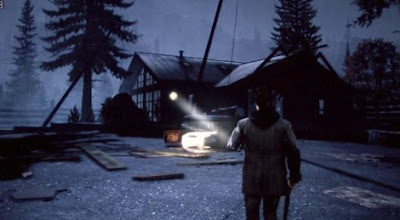
Similarly, real products could be used as items in a character's inventory in place of something generic made up by the developer. Alan Wake's use of Energizer batteries is a good example of this.
The idea of extending the life of your flashlight would require batteries to be present in the game. The fact that they happen to be of the Energizer brand doesn't change the gameplay experience in any way and likely provided Remedy Entertainment with a little extra cash to keep the game's development going for as long as it did. Alternatively, would anyone really care if caps in Fallout 3 were from Coca-Cola bottles rather then Nuka-Cola?
No matter how good a game is, nine times out of ten it's only going to provide money in one form: sales. If gamers look at an ad whilst they wait for their online matches to load, then this can provide developers with an additional incentive to keep their servers up for as long as possible, as well as provide them with the income to put out free patches and potentially free DLC.
Gamers are right to get angry at in-game advertising as it stands. It can ruin a game for many people. When publishers force you to look at obnoxious ads, it often leads to a feeling of exploitation when you've paid for a full-price retail release. If adverts are unobtrusive and cleverly implemented, though, they might just provide a valuable way of making riskier games more profitable.
At the end of the day, it'll benefit consumers like us.