Home
Home

It's tough to explain the creative process even to people who've experienced it. How do you take a raw idea and shape it into something real that other people can understand and experience? If you're Richard Perrin, you simply follow wherever that idea leads you.
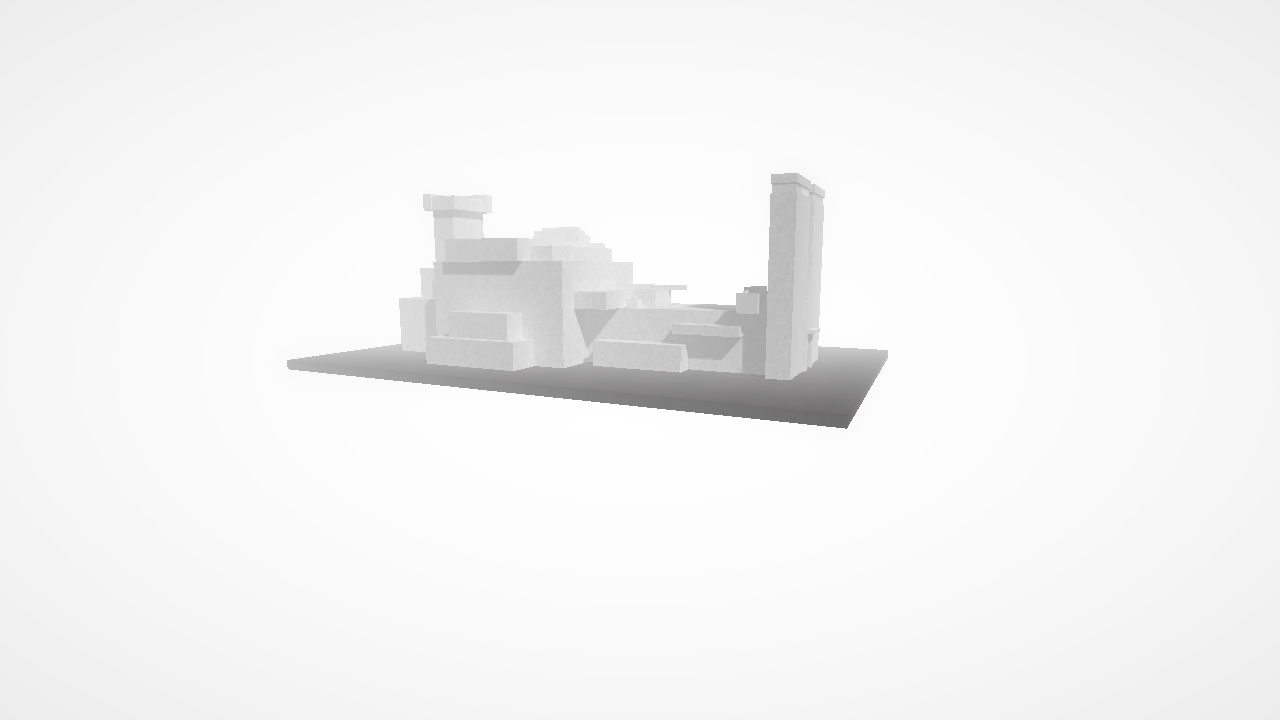
You stand in a pure white landscape with no indication of how you got there. A singular point in the distance tells you where where to go. This is Kairo, the latest game from indie developer Richard Perrin. It starts from nothing with a far-away goal in mind, and that's how Perrin starting working on it, too.
“I didn't think about it as a puzzle game," says Perrin. "It was barely even a game. I just knew I wanted to make something that took advantage of the monolithic scale that games can do easily but rarely approach."
Perrin started with a few images in mind and dove right in, modeling the first building quickly then creating one room at a time.
“I work like this a lot,” says Perrin. “I don't spend a lot of time planning. I just tend to jump in and see where it takes me. I find the feel I want with a game, and getting something running quickly helps me decide how best to explore that feeling. In my mind, it's like when sculptors talk about revealing what's hidden inside the rock. I feel like I'm trying to reveal what the game wants to be."
Story
Kairo is minimalistic, hinting at a great story just under the surface ... a reward for players willing to dig deeper.
“The game has very specific narrative," says Perrin." My goal is to tell that without any dialogue or text, I'm hoping that all the strange things you find and all the pieces of machinery you get working will slowly hint towards what is really going on. If I've done my job right, then as the ending sequence unfolds, players will understand how what they've done has gotten them there.”
The minimalism Perrin used says a lot about the project’s origins as well. Originally, Perrin didn’t know if he wanted Kairo to be a game at all or more of an interactive story like Dear Esther or Proteus. Puzzles came in the course of experimentation. “If it was going to be for other people, I wanted them to engage with the world, feel like they were actually making a difference, and have some kind of purpose beyond mere exploration.”
To meet his requirements, Perrin built “mood rooms” without puzzles that contain clues clues into the deeper meaning of the story.
Mood
Kairo has already drawn comparisons to another classic puzzle game.
“Myst gets brought up a lot," admits Perrin, "and it's interesting to me, because I didn't set out to make anything like Myst. I can look at where the game is now and see it's a valid comparison. Mostly, I was much more focused on creating a world that I personally found interesting to explore.”
“Mood-wise I really wanted to hit the same notes as a game like Ico ... that feeling of walking around a decaying, abandoned place.” Inspiration came from other mediums as well. “There's a manga series called Blame that has this awe-inspiring sense of scale, and I want to make places that just seem too vast for humans a big element, too.”
Players spend most of their time in Kairo reconstructing and reactivating ancient machines in what seems like an ancient temple. The architecture is simple -- solid-color shapes with pictograms on them -- yet alien.
Perrin chose an abstract design philosophy for both practical and creative reasons. “I wanted to design a game I could make entirely within my own skills. I'd had some failed collaborations with other people, and I wanted a project that would succeed or fail entirely off my own back.”
“On a creative level, the inspiration came initially from some photos of models made by abstract architects," he adds. "They looked really interesting and I wanted to see if I could create a world that looked like that so I could explore it.”
Setting a mood requires proper sound and ambience, something Kairo has in spades. Perrin turned to musician Bartosz Szturgieweicz to find the right tone for each room. “He's got a really dark ambient style that is exactly what I was looking for, so mostly I just trust him to give me something that works.”
Puzzles
With no narrative and no onscreen prompts to nudge the player along, puzzles might seem obtuse or confusing at first glance. Perrin recognized that, while modern players expect to be able to finish what they start, they don't want all the answers laid out before them, either. So he included an unobtrusive hint system.
“The hint system was a really hard call," he says. "I don't really like guiding players by the hand. I'd rather people slowly and carefully figure everything out."
However, Perrin also notes that, "Adventure game puzzles can be killer for game flow.” While taking Kairo to trade shows like PAX, he made note of where players got hung up. He designed the hint system (accessed in the pause menu) to keep players from simply quitting. Determined players can finish the game without touching it.
“There reaches a point where a player is just not going to get it," says Perrin. "The pieces are not fitting together. Then they either alt-tab out to GameFAQs or give up in frustration. That's the point when I hope people use my hint system to get a subtle nudge in the right direction.”
Building hype
Development on Kairo started two and a half years ago. Since then, it;s been featured at numerous indie gaming shows and won a few awards in the process. That's led to an interesting problem faced by an increasing number of indie developers. Expectations start to build even before an alpha is released. The pressure, to say the least, can become intense.
“At various points, I've had a crisis of faith about the direction of the project, enough so that I just wanted to abandon it and work on something different," says Perrin. "Knowing I have customers who've already invested in it makes me stop and realize I've got responsibility to these people to deliver something that lives up to my promises. I want it to be just right.”
How did we get here?
Similar to the protagonist of Kairo, Perrin started his game not really knowing how he came so far.
When he looks back at his previous game, The White Chamber -- made with two friends in college -- Perrin says he has no idea how they actually finished it. His team wanted the finished product to be so perfect, they agonized over ever detail.
“When we finally put it out, I hated the game," he says. "All I could see was everything that didn't live up to my expectations. It's taken me years to come around and be proud of what we did. The weirdest thing for me is that I don't think I really had the skills as a game designer to pull that off, yet somehow I did.”
“When I finally returned to working on games a few years later, I thought I could make something really well put together, like The White Chamber, and found I was quite frankly rubbish at making games,” says Perrin. “It's now taken me years of practice to figure out what I'm good at and how to take advantage of that. I now feel confident saying I at least have some idea how to make games. But that doesn't explain how I released White Chamber back in 2005.”
Perrin has come a long way since he began work on Kairo, but he says he learned from doing short term game-development jams. “I feel like they're the thing that taught me most about game design and development. Taking small projects from inception to completion allows you to experiment and grow a lot more than just digging deeper and deeper into one huge project.”
Release
Kairo pushed live on Perrin’s website, lockeddoorpuzzle.com, and is currently under consideration in the Steam Greenlight program. Despite being featured in many indie showcases, Perrin says that attention hasn’t translated to success on Greenlight just yet. But he isn't sweating it. Too much.
“Rather than driving myself mad trying to figure it out, I'm just gonna focus on doing the best I can with the launch everywhere else,” he says.