
What games can learn from comic books

37893_1338936035999_1309080061_30825631_6290042_n
Tuesday, January 03, 2012
EDITOR'S NOTEfrom Eduardo Moutinho

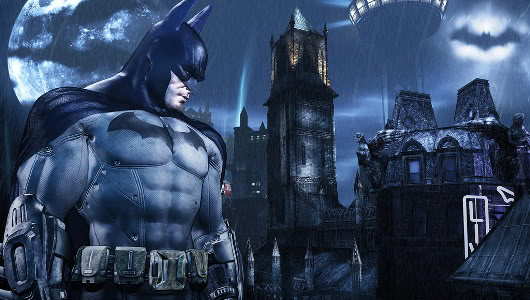
As someone who never really got into comics, I find Chase's piece to be pretty insightful. I believe titles like Batman: Arkham City show the significance of the link between comic books and video games.
NOTE: This is my entry into December's Secret Santa Bitmob Writing Challenge. I was challenged to discuss the relationship between comic books and video games.

When I am forced into one of those dreadful conversations about video games as art (it's a valid debate that I'm sick of having so frequently), the comparison of games to movies often comes up. People on the “art” side of the argument will look at the way film evolved and apply that logic to how video games might evolve in the future.

But cinema is just one of many entertainment avenues, and it’s unfair to assume that gaming will follow in film’s footsteps exclusively. Maybe a new perspective is in order. Let’s talk about video games from a comic-book perspective.


In the history of American comic books (let’s put Japanese manga to the side for now; that's another article for another time) five eras have existed:

The Platinum Age: Books came from bundled comic strips and were mainly intended for a somewhat-shallow entertainment experience.
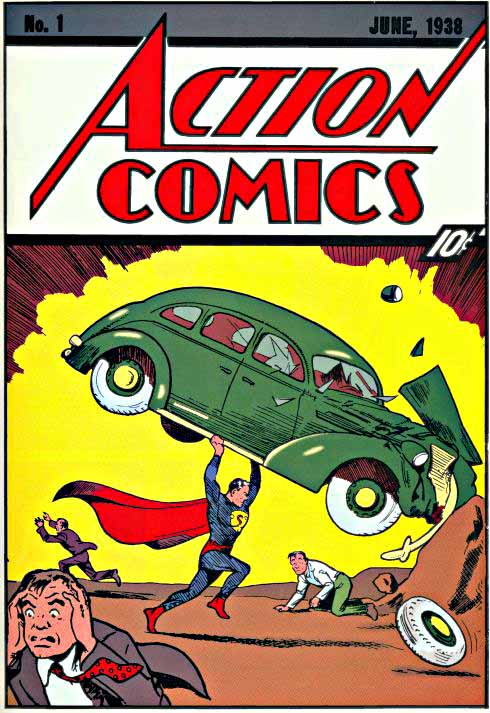
The Golden Age: Superman and the medium-defining super-hero comic genre were introduced.

The Silver Age: After the late Golden Age’s experimentation, a resurgence of the super-hero comic occurs.

The Bronze Age: Comics were revamped to address social issues and super heroes were humanized. Spider-Man’s girlfriend, Gwen Stacy was killed, and Wonder Woman lost her powers for a prolonged period.

The Modern Age: This is today's era where a few, large mainstream publishers and many smaller, independent publications make up the industry.

What’s interesting is that despite the evolution of their stories and genres, comic books seemingly hit their peak in the Golden Age. Believe it or not, even with the popularity of comic-book films like The Dark Knight and critically acclaimed series like The Walking Dead, along with a thriving independent-comic scene, fewer comics are sold in North America now than in any previous time. Video games, however, continue to be on an upward tick. New consoles generally outperform their older counterparts.

Maybe that’s due to the mediums themselves. Not to downplay comics (which I very much enjoy), but their format is not very unique, making adaptations into other forms of entertainment, such as film, easy. Games, on the other hand, offer a unique interactive experience that so far hasn’t been able to be effectively adapted to other channels. Did you feel immersed during the Doom movie’s first-person sequence? The unofficial poll I just took between me and common sense points to no.

So what do we do with this information? First, I think we should count ourselves lucky that gaming is still growing. Second, we must keep in mind what makes games special: interactivity. And we need to maintain focus on that aspect as this medium evolves.

 
Problem? Report this post
CHASE KOENEKE'S SPONSOR
Comments (6)
Lolface
December 29, 2011

Another thing that games could learn from comics is that the ESRB might become irrelevant, kind of like the Comics Code Authority.

Also, comics may not offer a unique format (its reading...with pictures!) but I don't think that is why it is so easy to adapt comics into movies as opposed to games. When film makers try and translate what makes a format unique into film, it usually fails. Ang Lee's use of panels in his Hulk film were just as bad as Doom's first-person sequence (though panels have been used to great effect in 24).

While games primarily feature interactivity, the constants across all mediums are story and characters. If the characters and story from games can't be translated into another meduim succcessfully, then that means that either the people doing the translating aren't very good at it, or the source material isn't very good. I'm starting to become concered that the problem is the latter.

37893_1338936035999_1309080061_30825631_6290042_n
December 29, 2011

I agree with your last point. If you can craft strong characters, setting, and plot, those things should be able to translate pretty well. While games certainly seem to scratch the bottom of the barrel sometimes, there are some good examples of gaming characters that have branced out. The Gears of War, Assassin's Creed, and Halo comic series were actually pretty decent, and though I haven't read them, I hear good things on the Mass Effect novels.

Even Sonic and Mega Man got fun cartoon adaptations, though I'm still waiting for a Psychonauts one (I feel I may be waiting a long time.)

Default_picture
January 03, 2012

My first thought was the Comics Code, too, and the lingering after-effects in the US that created a mainstream cultural concept that comics are designed primarily for children and must therefore be kid-friendly -- and are a waste of time for "serious adults."

The broader landscape is starting to catch on to just how rubbish that idea is, and a well-applied dose of Sandman or V for Vendetta, if not something like Persepolis, tends to convince a willing skeptic. 

I've often felt a direct parallel to games and gaming in that "won't someone think of the children?!?!" mindset that comics artists have been dealing with for decades.  We see it all the time, in the mainstream mindset that video games are too sexy and too violent for children, and that they're meant for boys 11-18 so they shouldn't be that way!!!11one!!

Rubbish, as pretty much everyone on a site like Bitmob would know, and starting (FINALLY) to be replaced in the broader consciousness with a fuller picture, but still a frustrating wall to encounter.

37893_1338936035999_1309080061_30825631_6290042_n
January 03, 2012

All stellar points (ones I wish I had included in the post in the first place.) I was on a deadline with the Writing Challenge, but this might be an interesting enough topic for a follow-up that digs a bit deeper.

Default_picture
January 04, 2012

@matthew, i don't think the problem is that the source material is necessarily bad, but the medium of videogames is very open, which makes it nearly impossible to translate to a more restricting medium like film. Like the 1st person segment in the Doom movie, it wasn't interesting because we had no control over the camera, (which also induces motion sickness) and it was only a brief moment in the overall film. Basically it sucked. But the source material (FPS games in general) are awesome because you control the camera and you spend 20 hours immersed in the world versus the 2 hour film.

But maybe you're right, videogames as source material is just too thin. The story only fills some of the gaps, the majority of our love for games like Halo or Doom comes from the stuff that happens between the gameplay and the story. In the universe of a game, this invisible experience is like Dark Matter, the developer or the marketing guys can't see it, nor can the story writers or level developers, yet this undefinable experience created through hours of gameplay and the player's imagination is like the dark matter keeping the world spinning.

Dcswirlonly_bigger
January 03, 2012
I think the Comics Code Authority problem is exactly what a lot of people in the industry don't want to happen. Not the code itself (the ESRB already effectively regulates the industry), but what it did to comics in the mainstream consciousness. People are afraid that games could become like comics in America - enjoyed by almost no one but children and hardcore readers. If games have anything to learn from comics, it's what kind of mainstream image to avoid.

You must log in to post a comment. Please register if you do not have an account yet.