Home
Home

 A human, of all beings, saved intergalactic civilization. I defeated the rogue Spectre, along with the mechanical monstrosity controlling him, with consciousness and crew intact. Well, mostly. My real adventure just started. Yet I was left with only one option.
To wait.
I wanted more Mass Effect. And I wanted it immediately.
Most players face this conundrum with epic-story-arc releases, especially when those titles have truly immersive worlds. By the time I finished the first game in the Commander Shepard trilogy, I was desperate.
Downloadable content packs were quick and shallow endeavors. New playthroughs were fun, albeit far from fresh. I couldn't wait two years for the story to continue.
So this led me to do something drastic -- something I had never done before. I decided to buy a novel based on a video game. My thinking was simple. If I enjoyed scanning through all the codex entries in BioWare's space opera, why wouldn't I find pleasure in reading an actual book based on the saga? It seemed pretty logical to me.
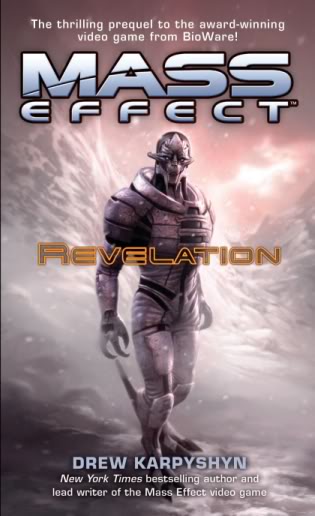
I suddenly found myself at the local bookstore sifting through Halo and Resident Evil paperbacks, looking for that literary lifeline. There it was, Mass Effect: Revelation, in all its analog glory. Thus began my foray into the ever-evolving world of expanded-video-game-universe fiction.
Once I finished Revelation, I moved onto the next volume, Ascension. I also checked out Redemption, the four-part mini-series published by Dark Horse. I'm not even into comics.
What I am into, however, is all things Alliance and Illusive.
 To this day, I still journey through these often-overlooked bits of old-school storytelling. You know what? I've enjoyed myself. Sure, the writing is far from something you'd see discussed in The New York Review of Books, but it serves an important purpose: renewing developer-induced patience.
You don't need a controller to visit your favorite pixelated places. These stories provide that escape and some much-appreciated exposition. Thankfully, enough gaming-related books exist to fill a real-life library with virtual adventures. And it's quite common to see the names of well-known game writers on some of those cover pages, continuing the narratives of their digital franchises in ink.
Better yet, many byte-based releases allude to the bigger picture established in expanded fiction. While playing Mass Effect 2, I couldn't help but smirk when Tali referred to the "Idenna incident." Even a side mission touched on this plot element from Ascension. All of this only really made sense because I read that book.
Take a moment and see if your favorite interactive odyssey made it to the printed word. If it has, I suggest you flip through some actual chapters while you wait for the next virtual ones.
It sure beats banging your head against a wall or experimenting with cryogenic technology.