Separator

Why are video-game characters always depicted as perfect?

Default_picture
Monday, September 19, 2011
EDITOR'S NOTEfrom Rob Savillo

How should developers handle character development, and how can they balance that with competing interests between challenge and linear narrative? Justin tackles these questions, yet he cannot find a clear answer. What do you think?

Alan Wake. Issac Clarke. Nathan Drake. What do these three characters have in common?

They are ordinary guys who are thrust into extraordinary situations that they just happen to luck through time and time again. They aren’t the only ones; dozens of video-game characters -- plenty of which are portrayed as average people who are thrown into crazy predicaments -- seem to have a divine power watching over their every move.
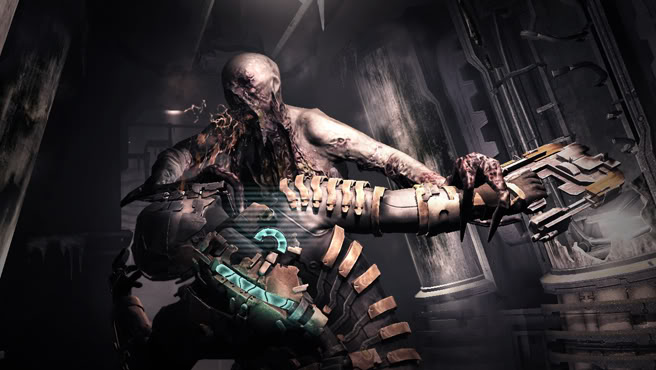
They can’t die -- at least not permanently. They never fail to accomplish their goals. They always win in the end.

Why are video-game characters so perfect in terms of the overall narrative?


Games are rather unique medium in that they allow players to manipulate things as they choose. Unlike movies, television, and books, video games are entirely comprised of interactivity.  Because of this, games have a bit of a different agenda. They can’t just tell a story; they have to also be fun and challenging to play.

For a lot of games, part of that challenge comes from the risk of dying and losing some progress, a holdover from the days of arcades and developers wanting as many quarters out of you as they could possibly get. But no matter how many times you perish in nearly every modern game, you get to come back within a few minutes of your death to try again.

It doesn’t make sense. But if the game were to just end when you died, no one would ever have fun. The Prince of Persia: Sands of Time excuse tends to work best, where the whole game is portrayed as someone recounting his story and saying, “No, that isn’t how it went,” if the player happened die. This is the exception, not the rule. Most games just assume players can suspend disbelief and fill in the blanks themselves. True failure is something that is never allowed in video games.

L.A. Noire came along and tried to change some of that. Here was a game that allowed players to fail -- at least in some respects -- but still continue. Players can miss key evidence, lose suspects during a chase, and even arrest the wrong person for a crime, yet the game will still continue onward. Sure, the overall story doesn’t change -- just some small minutiae here and there --but it is a step in the right direction. The characters are that much more believable because the game will let them fail, just like real-life detectives who probably make mistakes every day.

Failure in video games is a tricky beast -- one I’m not quite convinced that can be solved. On one end of the spectrum, we have games with Hardcore modes like Diablo 2 and Dead Space 2 that end your game with one death, as if the character was truly real. These modes tend to only be for masochists and achievement hunters.

On the other, we have the 2008 Prince of Persia, where any death through combat or misstep is immediately corrected by Elika’s magic. This stripped the game of a lot of its momentum because there was never any penalty for making a mistake.

Until an acceptable middle ground can be found, we will continue to have game protagonists who are essentially godlike super soldiers who can never die or make a mistake, forever making us feel like inept human beings in comparison.

 
Problem? Report this post
BITMOB'S SPONSOR
Adsense-placeholder
Comments (9)
Sp_a0829
September 18, 2011

Endwar is one of those few games that let you keep moving with mistakes. You wage war in some place of the planet and, if you screw up, is not Game Over for you. You just lost a battle, but the war continues.


But it also was a bummer that the game forces you to beat it with all three factions to unlock the "Theather of War" mode.

That made me eager to finish the damn game, and I had to rage quit whenever a battle went wrong... After a while, I found myself commiting the same stupid mistakes over and over and tought "I really deserve to lose this battle, those were pretty questionable desicions back there!"

From then on, I proudly carried my defeats... And developed some pretty strong battle tactics from then on.

Default_picture
September 18, 2011

I'm glad to hear that more games do this that I didn't know of.  An RTS where one battle lost doesn't mean the end sounds like a great idea, considering no one side ever wins all the battles in a war.

Default_picture
September 19, 2011

There have been a few games like this over the years - the Panzer General series did it way back when as well (TBS rather than RTS, but same progression system) - play really well and you knock over the UK early on and get an early invastion of the USSR, play really badly and you'll be on the back foot going into the Russian winter and likely in all sorts of bother.

The Total War series (and most 'grand strategy' games - think Civilization, Hearts of Iron, Europa Universalis, Galactic Civilizations II and so on) also has a very viable game where there are winning and losing moments - and you can still play the entire length of the game, not win but have plenty of winning and losing moments, and have a very fulfulling experience.

It's when you get into the character driven, story-heavy experiences where things like this get tricky, as for each different permutation of what could happen when someone succeeds or fails, there's often a need for a whole other set of game assets and plot points.  It's like how in the Bethesda games you can fail many of the quests, but there are only a few points where key changes make a difference to the way the story unfolds.

The other issue is that if you were able to have a game where there really was meaningful and balanced consequences for actions, then it could quite easily take the player from the 'exciting' track and into a less exciting course of action, leading to many people not necessarily enjoying themselves.  Say, in an RPG, you spend too long on side quests and the main quest line carries on without you, for instance, or you fail to protect the contact that gets you into the port, so you don't manage to sneak on board the cruise liner, and the person you're supposed to be spying on sails off into the sunset and you're stuck doing odd jobs back on land.  Just some thoughts :).

Robsavillo
September 19, 2011

Justin, you might want to check out Heavy Rain, which is another game that lets players fail in some respects and continues going forward. In this case, the narrative does change based on the player's successes and failures.

I'd like to see developers step even further away from the arcade mentality by ditching the linear narrative all together. I feel that the linear narrative is what's really keeping these archaic mechanisms (e.g., the game-over screen) in the medium.

Game shine best when they model worlds and develop interesting rule sets. Within those constraints, they should allow players to write their own stories, but those rules themselves can also impart a sort of narrative from the developer, i.e., an overall meaning for the game. Demon's Souls accomplishes this with the tendency mechanics, which encourages the player to become a demon knight and progress down a path of darkness. I'd like to see more of that.

Photo3-web
September 19, 2011

You beat me to it, Rob. In Heavy Rain, it's actually possible for all four main characters to die, and the game continues seamlessly. I'm not certain that games should stray from the linear narrative, but I like Heavy Rain's approach, whereby the story accomodates your choices (or eff-ups).

I admit that I've done something of a 180 on David Cage. He's really on to something regarding gaming's stubborn refusal to innovate and their stagnant narratives. In most games, all we're really doing is fulfulling a pre-determined outcome.

Default_picture
September 20, 2011

Heavy Rain is the one game I realized after I posted this and promptly smacked myself in the head.  How could I forget something so good at doing a story that allows you to continue with failure?  It somehow slipped my mind while I was writing this.

Linear narratives are the simplest to develop and most companies aren't willing to step out of their comfort zones, both financially and creatively, to try something new.  I would love to see more concepts that are seen in books like stream-of-conciousness developed into interesting game ideas.

Default_picture
September 20, 2011

That's what it was nice to see Snake in Metal Gear Solid 4 -- he was vunerable, he wasn't perfect, and at times, he had to pass the torch to someone else (in MGS2). More realism is cool, but I think the gaming community doesn't like when a favorite character is killed-off. Even more so, many people complain about a game being too hard nowadays. Wish there was more challenge, honestly.

Default_picture
September 20, 2011

Play Kane and Lynch franchise. The entire game is dedicated to portraying these characters and their situation as realistically as possible, even down to how they would shoot with terrible accuracy, run like drunks, confusing sense of direction, and a disregard to cinematic pacing (spoiler: during the last Boss's monologue, the guy just shoots him in the face mid sentence. And the final "boss" is just a pair of dogs lol). The games disregard what people accept as cinematic and goes for what would realistically happen to these people and how would they realistically react in these circumstances.

Default_picture
September 20, 2011

Play Kane and Lynch franchise. The entire game is dedicated to portraying these characters and their situation as realistically as possible, even down to how they would shoot with terrible accuracy, run like drunks, confusing sense of direction, and a disregard to cinematic pacing (spoiler: during the last Boss's monologue, the guy just shoots him in the face mid sentence. And the final "boss" is just a pair of dogs lol). The games disregard what people accept as cinematic and goes for what would realistically happen to these people and how would they realistically react in these circumstances.

You must log in to post a comment. Please register if you do not have an account yet.