Home
Home
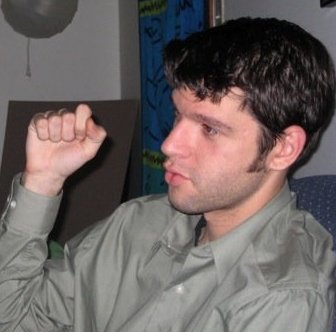
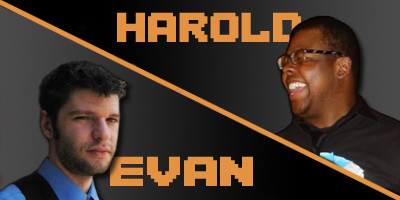
Editor's note: The always-awesome Splitscreen series returns with Harold Burnett and Evan Killham discussing wimpy characters and why they love them. Who's your favorite scrappy game character? -Brett
Bitmob Splitscreen is a one-on-one discussion conducted over e-mail on a single topic. For the eighth installment, friend of the column Harold Burnett and I sat down (at our computers) to talk about the wussiest game characters we could think of -- and why we like them. Read on for bad runners, the importance of training montages, and possibly the worst video game pitch you have ever heard.
Harold Burnett: Most video games I play revolve around the idea of ascension, with my character leveling or powering up over the course of the game. But occasionally characters lack emotional or physical power, which makes for interesting gameplay possibilities. Leon Kennedy from Capcom's Resident Evil 2 is a good example of this.
Leon begins the game in the classic fish-out-of-water situation. It's his first day on the job as a Raccoon City Police officer, which happens to be the same day that zombies take over Raccoon City. He spends most of the game running and avoiding combat.
Unlike members of the S.T.A.R.S. Alpha and Bravo Teams, Leon's skills are only slightly above average; there is no point during Resident Evil 2 when I felt that Leon was the best person for the job at hand. Every battle he encounters could easily end with his death, and even the game's last boss battle requires another character to provide him with the tool necessary to win. By the end of most games, your lead character has every tool and skill needed to fight the final boss, but Capcom manages not to betray what they had already established with Leon Kennedy.
Evan Killham: You make an interesting point about the assistance with the end boss. If I remember right, the first Resident Evil ends the same way, with Brad Vickers tossing down his rocket launcher so Chris or Jill can defeat the Tyrant. But with their training and abilities it feels like it's just a matter of what they're going to use to kill the big monster, and Brad's there to provide them with the most awesome means possible. In Leon's case it feels more like blind, flailing luck until a solution literally drops out of the sky.
Leon's also interesting because when we see him later in Resident Evil 4, he's exactly the opposite, all back-flippy and knife-fighty and saying weird action-hero shit like "Rain or shine, you're going down." Did you find the changes to Leon's character and ability in Resident Evil 4 disappointing, or was it still interesting to play as him?
HB: I did find it a little disappointing that Leon shows up in Resident Evil 4 as a total badass. I would have loved to play as Leon a little bit before the story begins, just to give me an idea of what kind of training took place. The Leon in Resident 2 and the Leon in Resident 4 are two totally different people. Now that I think about it, Capcom could have chosen anyone to be the star of Resident Evil 4. Leon brings no special talents to the table; any highly trained FBI agent could handle the challenges of Resident Evil 4.
EK: Well, Leon brings familiarity; I'm sure some people were excited he was coming back. But Capcom did miss out on an opportunity to include a sweet Rocky-style training montage in which Leon learns the utility of dumpsters and how to play Inventory Tetris with his item slots.
This was completely unintentional, but it does lead pretty well into my first wimpy example: Little Mac in Punch-Out!!.
Little Mac is...well, he's little; even Glass Joe towers over him. He doesn't punch very hard, and he can't uppercut unless he gets a star. He is in every way the underdog. But what he does have, apparently, is free will. Unlike his opponents, he isn't stuck in observable and predictable patterns, and that is how he succeeds. Punch-Out!! is one of my favorite games specifically because of this -- it's about an underpowered guy who can beat the shit out of bigger guys mainly because he's smarter than they are.
HB: I never thought of Little Mac as being an underpowered character, but you've convinced me. It seem as though Little Mac is completely dependent on your skill as the player. As far as I know, Little Mac never gains new abilities that would allow him to just rush through his opponents.
Pure, skill-based gaming like that in Punch-Out!! feels like a dying concept in games now. Some gamers complain about games getting easier nowadays, and I think this gameplay shift is one of the reasons. If your character is weak or underpowered, you will struggle in the game. I don't think most people want to struggle in games anymore. Do you agree?
EK: Some people, particularly those who grew up in arcades -- where screwing up literally cost you -- are perfectly happy struggling in a game. It's a badge of honor to beat a game that most people consider difficult. But I agree that by and large there's been a shift away from difficulty, and that's probably a side effect of the recent broadening of gaming's audience and the resultant push in the industry to make games that anyone can feel proficient in.
Still, there's something to be said about overcoming adversity. I think it just feels better to beat something on your eleventh try than your first, even though all of the tries in between that might drive you crazy. And I'm not necessarily talking about cheapness; I mean an actual challenge. Not to make this all about Rocky again, but he didn't beat Apollo Creed or Clubber Lang the first time he fought them. He lost, had to regroup, ran up some stairs, then got back in the ring, and it was fucking awesome when he finally beat them.
Do you have another example of a beneficially underpowered game character? Preferably one I can't compare to Rocky?
HB: No more Rocky-like characters, but I do want to reference another lead character of a film series from the late '80s and early '90s. John McClane of the Die Hard movies comes to mind when I think of underpowered characters who go through great struggles to come out on top in the end. An example of this in video games is Nathan Drake of the Uncharted series. I know people are tired of hearing praise for what the super-talented people at Naughty Dog have done with him, but it is worth mentioning here.
One of the things I really enjoy about playing as Nathan Drake is the fact that I feel like he could die at any moment. Every jump across a gap and every firefight he encounters leaves me with a feeling of exhaustion for Nathan. He gains no new abilities throughout his quest, and even his arsenal stays the same for the most part.
Much like when I watched John McClane crawling through air ducts, I can honestly say that there were moments in Uncharted when I really thought the villains were going to win. They possessed more skill than I did, and they had much better plans. I still won in the end, but it came after great struggle and many attempts. If the Uncharted games have given us nothing else, they have planted the idea that you should be able to finish a game with the tools you started it with.
The same goes for character abilities. While I enjoy acquiring some new overpowered thing at the end of a game, there is something to be said for spend 8 to 10 hours honing a core set of skills, instead of just acquiring the end-level item for the end-level boss.
EK: Nathan Drake is an interesting case, because I wouldn't really say that he's physically underpowered. He's pretty adept at headshots, has Wolverine-like healing abilities, and climbs walls like they're stairs.
The John McClane comparison is appropriate because both he and Drake are what I would call "psychologically underpowered." There are few points in either the Die Hard movies or the Uncharted games at which I think, "That guy has a brilliant plan, and it is poised to spring like the gleaming steel teeth of a bear trap." Instead, it looks like they're basically just making it up as they go, and luckily for them it all works out in the end.
Drake's appeal isn't that he climbs up the side of a crumbling fortress to reach a tiny window several hundred feet above the ground; it's that while he's climbing up there he's going "Oh shit oh shit oh shit" the whole time. Despite the Uncharted games' linearity, Drake's actions tend to come off as clumsy and improvised, and that's what I like about him -- he doesn't have any more of an idea of where he's going than we do.
Would you still like Nathan Drake if he was a really bad shot? At what point do character limitations break a game?
HB: I really think there is a fine line developers have to walk. I think it would be cool if a video game character's abilities were extremely limited. Maybe you play as an old man or a small child. Resident Evil 4 has an area where you play as Ashley Graham. It's a small piece of a big game, but that segment is really enjoyable. As Ashley you can't do much but run and hide, and this stands in complete contrast to the rest of the game. I felt more tension playing as her.
Being vulnerable in games is a very powerful feeling. It could be a feeling most gamers don't want. Personally, I want to feel helpless in a game. Why not create a game where you play as a henchman?
EK: Your henchman idea is interesting, but I wonder if it would work with a single player character. Henchmen are, by definition, disposable and numerous, so maybe you would play as several henchmen. Maybe you'd be a group of random ninjas sent to beat up Bruce Lee, and while there is no way you're going to take him down, you could keep him busy kicking your asses long enough for the Boss to get away. You could be evaluated on how long any individual guy can last before Bruce Lee flips him into a breakaway table, or there could be huge bonuses for actually landing punches. It would be kind of like Pikmin with no Captain Olimar. I suggest we call it "Kickmen."
HB: I have been thinking of the henchmen idea for a few years now. They seem like the ultimate underpowered character. Kickmen is a pretty funny and catchy name, and I think we have the makings of a new and exciting franchise on our hands.
EK: Anyway, I just finished Alan Wake, and he's an example of a character that is underpowered to the point that it actually makes the game frustrating in parts. Despite (somehow) being a crack shot, he can't run or jump for shit, and he can only sprint for a little while before he's doubled over gasping for breath. This means that the old survival-horror trope of avoiding combat isn't really an option; every enemy in the game can outrun him, and staying in front of them only means that more guys will appear until he's hopelessly outnumbered.
There's no reason to believe that a doughy guy who's never done an honest day's work in his life would be a marathon runner, but whatever tension his limitations build up turns to frustration and ineffectiveness far too often.
HB: It is interesting that Remedy took that approach to their survival horror. Maybe this was a reaction to Resident Evil 4 and 5, but it sounds like they missed the mark a little bit.
EK: Since you brought up playing as a child, I think another character worth mentioning here is Alyssa Hamilton in Clock Tower 3. She's not quite a small child, being 14, but she's definitely powerless. For most of the game, all she can do is run away and hide while fucked-up serial killers chase her. Sometimes you get some holy water to stun the guys, but it only slows them down for a little while before they're back after you.
Where Alyssa stops being applicable to this discussion is during boss fights, in which she becomes imbued with super-magical powers that allow her to finally fight back. On one hand, it's one of those extremely satisfying Power Pellet moments, but on the other, it undoes the interesting part of the game -- that you're playing as someone with little to no agency. I think it might be more interesting to defeat the enemies by setting traps or tricking them into falling into an incongruous but conveniently placed deep hole, but Alyssa uses a magical bow. It rings a little hollow after all the running.
HB: Have you ever played the Deception series or Trapt? The premise of those games is to set traps for enemies to fall into. I have only played the demos, but they really make you feel underpowered and helpless. I also found them pretty satisfying. The game made me feel like I was doing something more than mashing on buttons until I killed all of the enemies.
EK: I've watched a lot of Deception, and it looked interesting, but I never got around to playing it. It was an intriguing concept though, since it emphasized intelligence over brute force, and you defeat enemies entirely through indirect means.
HB: Games have always been about portraying characters that are stronger, smarter, and more capable than the user. Developers have really ratcheted up the powers and abilities that are given to the player. This makes for some fun and exciting moments, but too often these moments run together.
I'd have to really pick my mind to remember every final boss encounter I have ever had, but ask me about a character moment or situation where I felt weak or underpowered, and I could talk your ear off for hours. I want games to continue in this direction. Not every game needs to turn you into a god; sometimes I just want to be a father looking for his lost son in a mall.
Thanks to Harold for his time, and for putting up with all that shit about Rocky.