
Separator
Bourgeoisie Game Development, the Future of Gaming?
Default_picture
Monday, June 08, 2009

Editor's Note: Feeling a little jaded? Nick Dee shows why he's hopeful for the future. -Shoe


So I recently posted an article about the failure of the videogame medium to address certain key aspects of the human experience with an emphasis on its general denial that homosexuality exists in unstereotypical forms.

In response, fellow Bitmobber Brett Bates brought up this point: “With the explosion of more personal and boundary-pushing indie and downloadable games, I'm surprised we haven't seen more gay characters.”

And I could not agree more, but I’d like to take that idea a step further and hypothesize that the next generation of gaming is going to come from a boom of new innovation from independent developers.


We’ve got more and more kids heading to college thinking: I want to learn how to make games. I have no idea about what sort of statistics could go along with this argument, but certainly the amount of people wanting to get into the games industry is rising. (Portal began as a final project by college students and became hugely successful.) Not all these people will get jobs with EA or Capcom or whatever. So I suspect that within the next decade we’ll see more independent studios open up.
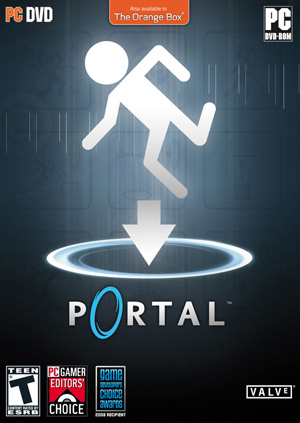
Portal

These people will be developing games that are maximized for low investment and high return. Whereas AAA titles may cost 3 or 4 million dollars, we’ll start to see more games like Braid, a comparatively low-cost game with fascinating, thought-provoking story elements and high-quality gameplay to back it up. Shorter in length, but richer in experience.

Or even consider Danny Ledonne’s Super Columbine Massacre RPG!. Way below average in terms of gameplay, but something that was totally new in terms of content, it is essentially an interactive documentary, and you come away having learned a lot about Harris and Klebold. With the artistic freedom of developing independently comes innovation.

So as development tools become more available to more people, the result will be more games. We’ve got countless Flash games online that are generally terrible. But I expect we’ll see a sort of bourgeoisie game development system begin to occur, if we aren’t witnessing it already: a middle ground between a free five-minute Flash game and a $60, 40-hour JRPG. Games like Braid that are personal and intelligent and unique.

braid

The next generation of gaming is still a long way off. But it won’t be heralded by better graphics or motion control. You don’t need the highest quality 3D graphics to make a high-quality game (see: http://www.bitmob.com/index.php/mobfeed/Why-I-still-love-2-D-gaming.html).

It’s going to be about increased thoughtfulness regarding content -- games that are developed without million-dollar investments but that still provide high-quality entertainment. Smaller teams without corporate overlords are going to provide fresher, more innovative experiences.

 
0
BITMOB'S SPONSOR
Adsense-placeholder
Comments (6)
Default_picture
June 08, 2009
I like this becuase you are taking the chance to predict far into the future, instead of looking only into the next year. Further more i feel your logic is very well thought out. Nicely written sir.
Default_picture
June 09, 2009
While I appreciate your thoughts and agree with many of the points you make (i.e. the return to garage developers... weird how that may come full circle), I don't see these necessarily being "games that are maximized for low investment and high return." This is especially true of games which feature homosexuality at the forefront, I'm sad to say.

Your example of Portal is an interesting one in that I doubt you have ever played the game (yes, a fully developed one) that led to the team being hired by Valve... I know I haven't. It took Valve taking over the creative development and throwing a bunch of money at the project to get it noticed by the masses... that is, the high return. Would of Valve gambled on a game that, while technically innovative, dealt with homosexuality... would EA have published it? Doubtful.

Braid is an exception, and it is making Jonathan Blow money in spite of extreme odds against him. Why is his story so rare? Because he has become successful in the distribution of his game through a service that is designed to be all but prohibitive of independent publishers/developers. But these services seem to be the only option: distribute through a service and gain attention but lose control and profitability, or distribute via the Internet and maintain independence but lose the mainstream and secure distribution. It's a really tough game to play, and until the distribution system is changed, I don't see technology helping the little man that much.
Brett_new_profile
June 09, 2009
The best part about digital distribution and and iPhones and flash is that these projects can actually be profitable for guys and gals working out of their garages. They can push out "innovative experiences" AND make a buck. It's win-win for everyone! And maybe even the big publishers will start to take notice...
Default_picture
June 09, 2009
I did forget about the iPhone... it seems like independents are doing quite well for themselves on there.
Default_picture
June 09, 2009
Honestly I did not care for braid. Hum guess I didn't just get it.
Default_picture
June 09, 2009
Colin, thank you for the reply. But I would argue that there are significant lesbian undertones to Portal. Check out http://www.bardinelli.com/blog/?p=829 for more info. Of course sometimes a “portal” is just a portal, sometimes a “pistol” is just a pistol, but I think that the interpretation of Portal as a statement about lesbianism is valid, whether it was an intentional theme or not.
You must log in to post a comment. Please register or Connect with Facebook if you do not have an account yet.