Separator

Don't cry about the likes of Farmville: We asked for pop gaming!

Default_picture
Wednesday, July 06, 2011
EDITOR'S NOTEfrom Rob Savillo

Are you annoyed that Farmville enjoys 80 million players? Or that people have downloaded Angry Birds 250 million times? Well, too bad for you. Michael argues that it's your own damn fault.

A phenomenon is sweeping the video-game realm. I've avoided it so far -- mostly because I want to pretend like it doesn't exist -- but I can't help but see it creeping into my daily life.

What started out as mere curiosity has become a huge part of my hobby, and I can't imagine it subsiding anytime soon. My will may be strong, but as more people are embracing this paradigm shift, I find it hard to avoid.

The phenomenon I'm referring to is "pop gaming".

At first glance, you might decide to bash the pop-gaming movement and complain about how Farmville has given many people a false idea of the medium...or how Jerry Bruckheimer should never have made a Prince of Persia movie.

But a closer look will reveal that this is what we've been demanding all along, and we never expected it to come to this.


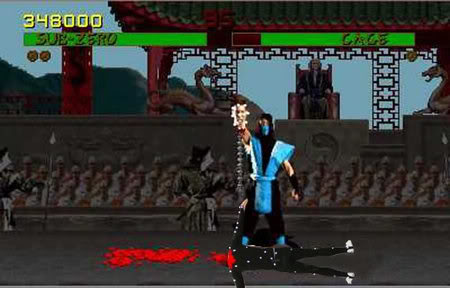
As many people spent the '90s sitting at home and playing hardcore games alone in their basements, they experienced the judging glares and condescending comments of pretentious detractors. These gamers quickly began to demand respect and understanding of their hobby while politicians accused their beloved Mortal Kombat -- and other "violent" video games -- as the core reason for high-school shootings and the like.

As time passed, people have slowly dropped the misconceptions and taken an interest in our hobby. What started out as a misunderstanding and a "waste of time" has shifted into a curiosity and respect for this thing we call video gaming.
When I think about this shift, thoughts drift into visions of game-related novels, movie adaptations, Farmville junkies, and masochistic little birds with a hankering for pork. These images are enough to make a Japanese-role-playing-game fan go nuts and begin slandering those wannabes.

My initial reaction was very similar, but as I see this mediums begin to permeate the world outside of hot, sweaty, dungeon-crawling warlords, I started to realize that hardcore gamers have very little reason to complain.

Take World of Warcraft: It contains what appears to be a niche market, but how niche can 12 million players be? You may have started out on the ground floor of this massively multiplayer online movement, but you've opened the gates and happily welcomed your friends. You showed them around, got them a glass of wine, and displayed grade-A hospitality. But by the time you looked up, the entire room was filled with people. Now you are upset because you forgot to close the door.
We have seen a large movement into the realm of MMOs recently. Leaders of free-to-play games, such as Nexon, have paved the road and found ways to convince normal people to pour hundreds of hours and dollars into an endless grind. That market is getting bigger, and as more companies jump on board, we will see more people losing their time to the micro-transaction model.

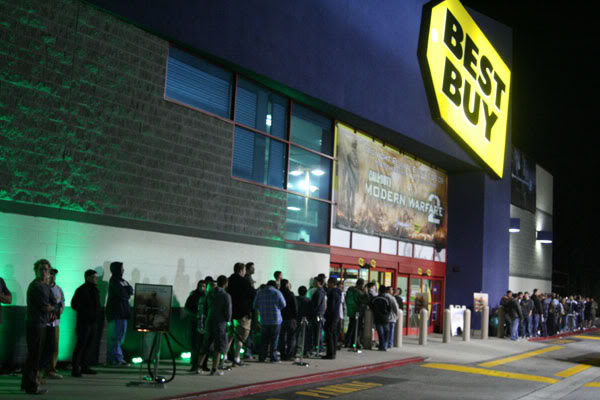
How about first-person shooters? How many of you spent countless hours in front of a computer screen with Unreal Tournament while fragging your friends and scoffing at those who just couldn't understand why you thought that could be fun. Now the tables have turned. You complain because some of the same people who laughed at you then have all but sold their souls to Call of Duty. It's a fight that you've fought for so many years, but you never thought it would come to this.

We were the ones who wrote blog and forum posts demanding respect from unreasonable parents and conservative politicians who said that shooting and fighting games were the leading cause of juvenile violence. We fought -- and continue to fight -- in fear of losing our precious games, and the battle is slowly being won. We proudly wear our Legend of Zelda t-shirts and honorably display our allegiance to the Horde and the Alliance. The floodgates have burst open, and we now stare in disbelief at the wave of support we've ushered in.

Every movie, book, cell phone, or Facebook game that comes out is not bad, but I can understand the frustration when you watch your favorite genres or series get watered down with under-par content. What was once a labor of love has been slowly ripped from the grip of the video-game forefathers, altered, and injected into the mainstream of America. Now corporations have seen ways to make additional profit off of our favorite titles and have all but forced us to support them.

We can't blame anyone but ourselves. No matter how much we think that motion controls are ruining the core experience or that cell phones and Facebook have inaccurately inducted business men and stay-at-home moms into the gamer category, we supported the development of our current predicament. If you feel like the issue has gotten out of hand but aren't quite sure what to do about it, then I have one thing to say: vote.

"How?" you might ask. With your money. You may be able to get your comrades to support your antics by posting on forums about how much pop gaming should die, but you aren't going to affect the decision makers unless you refuse to buy their products. If Angry Birds is ruining your gaming feng shui, then don't "accidentally" download it and get caught up in the addicting gameplay. If you have to choose between Prince of Persia and Bridesmaids, then go with the latter...though, at that point, you may have a completely different problem on your hands.

You could, of course, choose to support this change. It's not all bad. In fact, I find the new shift to be quite the stimulator for the industry. As revenue continues to pour in from the pop gaming market, we will see funds shift to develop higher-powered consoles that can hit the market at more affordable prices. Expect to see the Wii U announced with a fairly low price point -- due to the astronomical financial success of the Wii. There's a lot of good that social, mobile, and motion-control gaming can do to support hardcore players. Plus, Angry Birds is just plain fun.

At the least, don't forget the role you've played in making pop gaming a reality -- even you have made some bad judgment calls. So, dismount your self-constructed throne of conceit, uncover your hidden stash of Resident Evil and Mortal Kombat films, and face the facts: You're a pop gamer.

 
Problem? Report this post
BITMOB'S SPONSOR
Adsense-placeholder
Comments (17)
Ff6gast
June 14, 2011

Don't forget about pop gaming during the age of the arcade!  Anyone in a business suit or short-shorts would plop down a few quarters in the local Pac-Man.  Just as games have evolved from that social revolution, let's hope more good things come from this new generation of pop gaming!

Default_picture
June 14, 2011

Agreed!

I can't look down on the pop gaming trend too much. Your point proves that it can actually be a stimulant for the industry. It allows developers to think out of the box and modify the awesome content that is already there. We may want to laugh at Farmville, but it must be doing something right.

Thank you for the comment.

Default_picture
June 14, 2011

"As revenue continues to pour in from the pop-gaming market, we will see funds shift to develop higher powered consoles that can hit the market at more affordable prices."

I don't agree with this trickle-down economics theory. For one, casual gamers don't worry about spiffy HD graphics. Higher-powered consoles won't be developed on their behalf.

Moreover, the success of casual gaming tends to breed more casual gaming, not free up funds for core games/consoles. Nintendo found great success with the Wii, and that's terrific. But the Wii U could very well fall into creative limbo--casual gamers might be reluctant to buy another console, and core gamers might not find enough to entice them away from their 360's or PS3's.

I don't see how casual gaming (or "pop gaming") has a direct impact on core gaming. I have nothing against casual gamers, but the success of titles like Angry Birds hasn't spurred mainstream acceptance of video games. Instead, it's spurred mainstream acceptance of casual games. Most casual gamers probably don't consider Angry Birds and Farmville "video games". The success of the latter hasn't suddenly made Final Fantasy and Uncharted "cool."

For those of us who fought for mainstream acceptance and less flak from politicians, Farmville adds nothing to the discussion. Instead, it creates an entirely new one. And that's the point. Casual games neither help nor hinder core games. They're a sub genre entirely of their own.

Default_picture
June 14, 2011

I can agree that most of the time there is no direct trickle-down from casual games. Angry Birds popularity has done nothing, monetarily, for hardcore games. At the same time, I have to stand strong in my argument. The profits that Nintendo has made from the Wii has and will directly effect the development and production of the Wii U and any games released for the console. Assuming that the Wii U will cater to hardcore gamers, we will see a direct cause and effect of casual and hardcore games.

Also, with so many companies like EA releasing casual games on Facebook and mobile phones it's hard to deny that revune from those products are going to support their console releases.

Because casual and mobile games are so young it's hard to see that trickle down effect at this point. As that sub-genre gets larger and more mature, I believe we will begin to "hardcore" games benefit or hurt. At this point it's mostly speculation.

Default_picture
June 14, 2011

As a "core gamer", I've seen nothing thus far from the Wii U that makes it a must-have. I tend to gravitate towards story-driven games like Heavy Rain, Mass Effect, Uncharted, Alan Wake, and L.A. Noire, and judging by Nintendo's record, I doubt they'll cater to this sub-genre.

Nintendo's endless franchise retreads (Mario, Zelda, Metroid, Smash Brothers, etc.) don't do it for me.

Companies may stand on both sides of the casual/core divide, but can we honestly say that their casual efforts "support" their core titles? Has Rovio, PopCap, or Zynga released popular core titles? I think it's more accurate to say that certain companies use the profits generated from the sale of core titles to finance development of casual titles.

And as I mentioned, the success of games like Farmville and Bejeweled hasn't spurred mainstream acceptance of what we consider to be video games. The success of casual games has only raised the profile of casual games.

Default_picture
June 14, 2011

Your statement about the Wii U is a matter of opinion and does little to prove or disprove your argument. I also speculate about whether Nintendo can cater to their hardcore fans, but I think they may be able to do it this time.

Rovio, PopCap and Zynga are strictly casual game developers, so it's hard track their support for core games. If you consider the idea that they are bringing money and attention to the industry then it's plain to see that they are benefiting video games as a whole.

I think that it's hard to track where money goes in this industry, but I have a feeling that in the future we will see clear lines where casual game revenue will benefit core games.

Default_picture
June 14, 2011

I agree. Rovio, PopCap, and Zynga are strictly casual game developers. And yet you imply in your article (and the comments) that the success of games like Farmville and Angry trickles down to "core" video gaming, or what we tend to consider "video games."

"There's a lot of good that social, mobile and motion-control gaming can do to support hardcore gamers. Plus, Angry Birds is just plain fun."

"As revenue continues to pour in from the pop-gaming market, we will see funds shift to develop higher powered consoles that can hit the market at more affordable prices."

Your words, not mine.

Whenever someone implies that casual games are diluting the core gaming market, I tell them the exact same thing I'm telling you--the two markets have little or nothing to do with each other. If casual games grow in popularity, they've succeeded in drawing acclaim to casual games, not video games in general. Similarly, the success of casual games doesn't draw developers' funds away from core games. It seems more like casual games target a market that never existed before.

I do think that mainstream culture has grown to accept video games (at least more so than before), but it has little or nothing to do with Farmville, Angry Birds, or anything of the sort. I'd attribute it more to the PlayStation 2, FPS's, and gaming's burgeoning maturity (evidenced by L.A. Noire, Heavy Rain, Alan Wake, and other titles that push the boundaries of gaming storytelling).

Default_picture
June 14, 2011

"There's a lot of good that social, mobile and motion-control gaming can do to support hardcore gamers. Plus, Angry Birds is just plain fun."

Referring to how revenue from social, mobile and motion-control games can stimulate the industry, or promote the development of new technology, like the Wii U controller (which I like).

"As revenue continues to pour in from the pop-gaming market, we will see funds shift to develop higher powered consoles that can hit the market at more affordable prices."

This almost specifically referrs to development of the Wii U.

I also mostly disagree that the success of games like Angry Birds and Farmville don't draw acclaim to video games in general. I believe that when people are introduced to these bite-sized games many of them eventually desire more and work their way through varying genres.

Default_picture
June 14, 2011

Well, you're not the first person to argue that casual games serve as a sort of gateway drug. I'd argue that casual games present an experience that can be summarized as follows:

1) Easy learning curve
2) Pick-up-and-play
3) Limited depth
4) Limited assumption of prior gaming skills

And due to a plethora of factors, those we identify as "casual gamers" desire an experience like that. I don't think playing more casual games will change their perception. In fact, among my own acquaintances, I know quite a few people who've "regressed"--they used to enjoy deeper, "core" titles, but due to adult responsibilities, changing tastes, or newfound impatience, they've become "casual gamers." No amount of exposure to Angry Birds will "re-addict" them to core gaming. Instead, it whets their appetite for the next iOS or Facebook hit.

Time will tell whether the Wii U caters to a core audience, and whether it offers enough exclusive IPs (apart from its usual coterie of first-party titles) to warrant a purchase. If Wii U hosts the next Modern Warfare, that's terrific, but it's nothing that PS3 or the 360 can't offer. If Nintendo grows up and starts exploring complex, adult themes, coupled with mature storytelling, I'll gladly purchase their next console.

Profile_pic4
July 06, 2011

I'm way late to this conversation, and I usually agree with you, Jason, but this time I have to step away from your argument and shake my head vigorously in the "no" position.

I agree with the "trickle down" theory, but not in the Reagan-esque manner in which it has been discussed.  I choose to call it diffusion and/or acceptance.

As in technology diffusion from innovators to followers to mass acceptance.  These simple yet addictive games are the "gateway drug" leading to more advanced, yet still easy to play type games.  Not all, but at least some of today's Farmville/Angry Birds gamers will be picking up a platformer at some point and maybe even, eventually, trying a FPS or RTS title.

Because didn't we all start out that way?  My first game was Combat on the Atari 2600.  I was terrible.  But I was hooked.

I contend that a good many casual gamers will, in fact, appreciate the HD graphics.  Because most are followers, and have been told it is amazing.  They will buy HD TV's for the same reason they are starting to buy Bluray, which is the same reason they bought a DVD player and a rear-projection TV before it.  Because society told them they were supposed to in order to be "successful".

The kicker?  Some of these folks keeping up with the Joneses will actually grow to appreciate some (never all) of the benefits and maybe even play a core game with a friend or two.

Oh, and on an unrelated note, Angry Birds is wildly addictive.

Default_picture
July 06, 2011

If you need me, I'm going to be in denial and run back to my DnD table with my dignity...and my DM fedora.

Mindjack
July 06, 2011

Yeni’s farm is looking a little bland. Needs more bird fountains and lucha libre pigs.

Default_picture
July 06, 2011

Similarly, I remember when Comic-book-inspired films were a rarity and now we're inundated with mass-market versions. 

Default_picture
July 07, 2011

Initially posted this yesterday, but got caught in the overzealous spam filter.  Let's try this again!

"The nifty thing is: none of these are mutually exclusive.  I can play "Peggle" and "Angry Birds" on my phone before bed and still boot up Mass Effect or Fallout New Vegas on my PC and LA Noire on my PS3.

I have decided, though, that I have huge problems with the term "core gamer."  It's a definition that seems to migrate to meaning, "Anything with guns that's mainly liked by men and boys with lots on their hands," and that definition seems... problematic.

I mean really, it's the same thing that's the case with film and TV, right?  Not every movie is "The Godfather" or "Citizen Kane" but every year a few serious films come out for the true film buffs, mixed in with our superhero-CGI-fest-du-jour.  On TV, we get our Emmy-winning dramas mixed in with 20 hours per week of the "Real Housewives" of wherever.  The ocean of "games" has indeed expanded, and frankly I think it's only a good thing, as expansion, over time, probably leads to more creativity and more inclusivity."

Default_picture
July 07, 2011

Ha, at least you saved your comment :-)

I largely agree with you, and I've been pretty vocal about the fact that "mature gaming" ought to entail more than guns and gigantic boobs. But I think my definition of "core gaming" stands: higher learning curve, deeper gameplay, larger assumption of prior gaming skills, etc.

Default_picture
July 07, 2011

It was still on my profile page, hehe. ;)

I think your definition works quite well and it's one I'd accept -- it just doesn't seem to be the one getting used at large in the mainstream.  After E3 I posed the question to Twitter and to another blog: "What would you consider to be a 'core game' or 'core gamer'?"  No two people returned the same definition.

Default_picture
July 07, 2011

That's because most people associate "core gaming" and "core gamer" with a specific genre or two, rather than a design philosophy or gamer mentality. It's one of gaming's biggest problems right now, and has kept the medium relatively stagnant.

You must log in to post a comment. Please register if you do not have an account yet.