Home
Home

Callum explores how Demon's Souls' understated score helps it stand out among its peers as it better supports the game thematically and emotionally. My favorite example is "Theme of Maiden Astraea," where the music perfectly captures the gravity of your actions as you duel her guardian, Garl Vinland, to quench your thirst for souls.
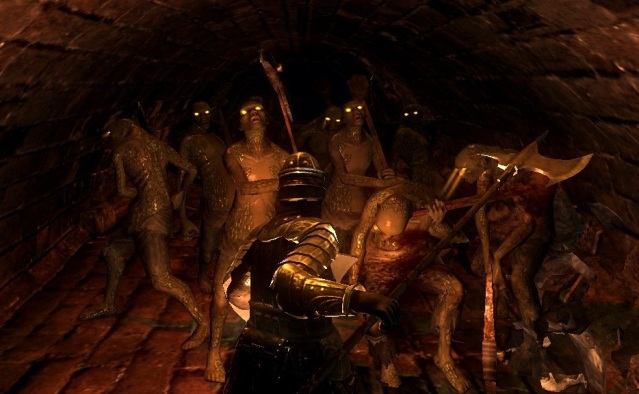
Demon's Souls is a game of little music. For the greater part of its long, trying journey, you hear next to nothing. The sounds of the environment control the aural, granting an unnerving glimpse at what lies ahead through footsteps, growls, screams, and clanging metal. Yet despite its absence from the spotlight, the music is what stands out.
Demon's Souls' score is understated. Its goal is to set atmosphere and terror. The dark, drab tone of the world casts a suffocating sense of dread and unease, which the game's few arrangements reinforce heavily by limiting their use and avoiding an abundance of bombastic compositions. In battle, its soundtrack maintains a low, steady hum. It eschews fast, hard-hitting beats to avoid playing up its bosses' strengths -- contrary to most games.
Traditionally, games make out boss battles to be grand encounters, invoking a "let's do this!" sort of tone to get you pumped and ready to go. Sweeping orchestras with undertones of danger or straight-up rock 'n' roll beats are employed to set the mood as the camera pans across the field with cinematic flair. It all works to get you lost in the action. You watch closely with glee as the fight rages on, which grows more and more grand by the second.
Demon's Souls is the exact opposite. Rather than build excitement, Demon's Souls instills dread. The flow of battle is more methodical and calculated ... not at all slow but far more stressful. One mistake is all it takes to be slain. The music reflects this appropriately, grounding almost every track in very hush tones to keep the tension high.
Steadily, the music builds from a low hum to brief spurts of booming, quickened notes before quieting once more. It doesn't dynamically follow the flow of battle, though, its highs often arrive at just the right moments, whether that be the very second you see the creature you're tangoing with or just as the beast tries its hand at crushing you (often quite literally). All throughout, the score keeps up an air of mystery and trepidation, never overstating the threats you face.
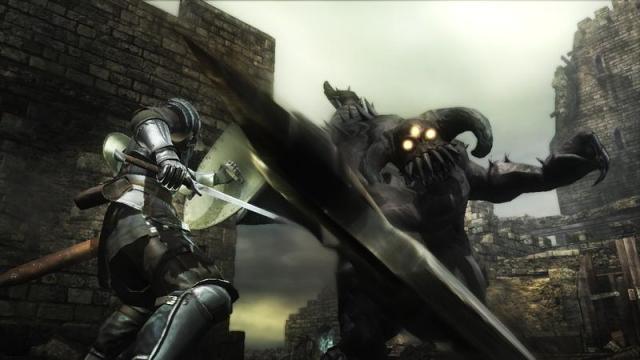
Only in a few specific cases does the game resort to a more forceful style: when the scale and power of the foe shouldn't be understated (such as when fighting Tower Knight, a gargantuan suit of armor backed up by archers surrounding the pit in which it rests) or the atmosphere demands it.
Organs wail while dueling a swift and mighty swordsman setting the tone for what amounts to be the perfect final battle. The scene, an empty throne room overlooking the entire palace, invokes optimal conditions for a long, epic struggle. In another, the percussion is barely audible at first, intensifying a horrifying sense of fighting an airborne foe in pure darkness, but then it suddently jumps in volume in an attempt to startle, especially so as the chimera lunges forward and nearly knocks you off the precarious bridge on which you stand.
Out of context, each track sounds like something out of a horror film. It's easy to imagine certain themes cast against suspenseful scenes. And that's why it works so well in Demon's Souls because the music acts as the perfect complement to the harsh gameplay and drab world. Epic orchestral compositions would have clashed even if they brought more energy to the proceedings.
One track worth mention: "Return To Slumber," one of the ending themes. After all is said and done, the demons vanquished and fog receding, one last piece of music begins. A soft voice cues up as slow, calming movements seep in. It takes on a lullaby-like quality. The credits roll, leaving you to reflect on your many victories and failures while the song carefully putsyou at ease. Finally, you can rest, relax. In a game riddled with tension, it is the perfect note to end on.