Spotlight: Moving on from Resident Evil, Halo 4, people promotion, and more

230340423

Resident EvilThe Community Spotlight features some of the best unedited articles that didn't quite make the front page. This week, we move on from a venerable series, wonder if Halo 4 is in the right developers' hands, promote people, and more. Mix your herbs and read on.


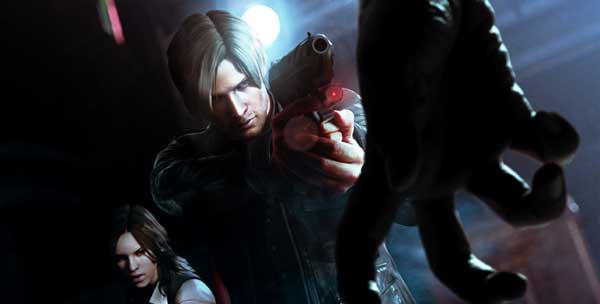
Why I'm moving on from Resident Evil games
By Avery Tingle

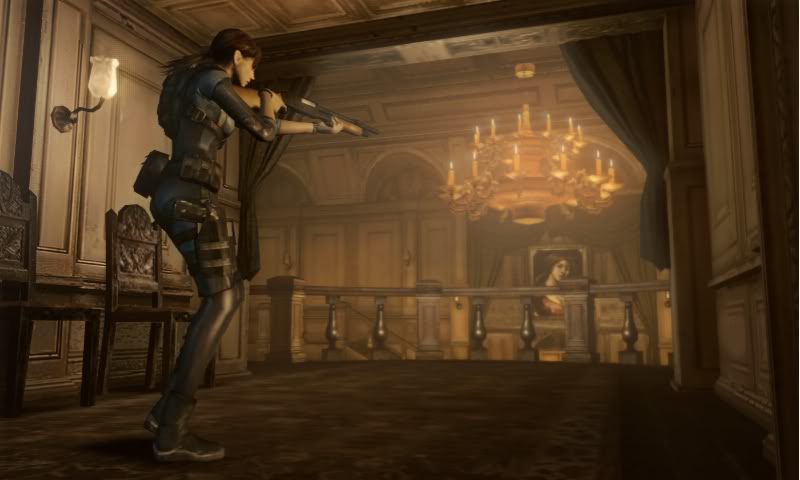
After playing the demo of Resident Evil 6, Avery was less than impressed. "Resident Evil is starting to feel like the Madden version of the survival horror genre," Avery writes, "a series of just-enough small tweaks and minor improvements with a new number slapped on."

Falling into the wrong hands (possibly)
By Jesse Meixsell

No, this isn't about the news of a Halo 4 leak. Jesse's concerned that Halo 4 was in trouble much earlier, when original developers Bungie handed the reins over to 343 Industries. Jesse looks at similar circumstances in other series...and their mixed results.

People promotion in a faceless world
By Aaron Davies

"Does gaming have a face?" Aaron asks. "Who are the people that most video game fans recognize and relate to?" Aaron argues that it's important for gaming fans to have a real person to identify and associate with a brand. Do you agree?

Microsoft doesn't want free advertising for Halo 4
By Alexander Kraus

Microsoft has rolled out new content policies that prevent fans from uploading their in-game creations to websites like YouTube. And that doesn't make sense to Alexander. "I'm sure the numerous content creators out there will be glad to not give you any free advertising for your games, Microsoft," he writes.

Read more >>

Resident Evil needs to give up on numbered sequels

Default_picture

Jill

Resident Evil 6 makes me weep. The series that used to haunt my dreams as a kid is long gone, and something sort of like Gears of War took its place. Amusingly, I’ve tried forcing my way through RE6’s campaigns at least six times at this point, but I always throw my controller aside in frustration.

Why? Because the series gave up on trapping players in labyrinthian monster factories and started imprisoning them in unskippable cinematic sequences and perpetual quick-time events. The scary’s gone, and the disjointed action game that remains just isn’t cutting it.

You can blame several factors for this, like the creator of the original game (Shinji Mikami) leaving Capcom, the fact that over 20 different studios worked on this project, or you can adhere to the misguided belief that Japanese developers just don’t get Western audiences. The real reason is that the franchise is too old and too nebulous to support itself anymore.

We need a reboot, preferably one that breaks away from all the crap mechanics recent developers have “expanded” since Resident Evil 4. Ideally, the team that made Resident Evil: Revelations would take over the series, drop the numbers and home console support, and evolve RE into a portable horror experience.

Read more >>

Developers need to support their released games on all platforms equally

Dsc03881
EDITOR'S NOTEfrom Rob Savillo

How would you feel if your version of a game was the only one to not get the patch? Should we accept this behavior?

If something goes wrong with a baby product, the company issues a recall. Food producers list the ingredients that might cause an allergic reaction. But video games, on the other hand, have turned out differently. While a game for the PlayStation 3, Xbox 360, or PC receiving patches to fix bugs is nothing new, developers should know that it still needs to be a complete package.

What happens when a publisher releases a broken game with no plans to fix it? Not only does that company have consumers' money but it isn't going to use that money to fix the problem. This is where things get interesting.

Now, let's have a look at what is loved and what gets the shaft. Patches are just patches. Downloadable content given to one version of a game and not the others? Then that’s when the "mommy loves me more" argument comes into play.

PS3 owners won't be getting Skyrim’s latest content. Let’s think about it.

Read more >>

50 years of James Bond, three decades of games

Captgoodnight_1a
EDITOR'S NOTEfrom Rus McLaughlin

Even with so many films getting the video game tie-in treatment -- and so many Hollywood types trying vainly to turn quality games into quality movies -- only one character has made an iconic mark on both mediums. Maybe that's why we're always eager to renew Mr. Bond's license.

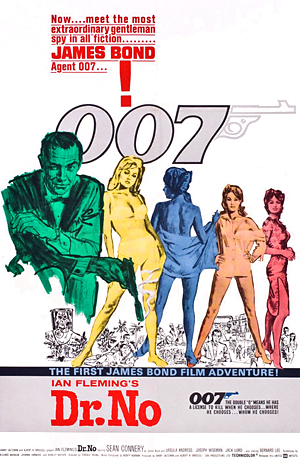
Dr. No PosterOn October 5, 1962, Sean Connery introduced himself to audiences in the UK for the first time as James Bond in Dr. No.

Since then, Bond has gone up against murderous megavillains lounging around titanic secret hideouts and an array of equally wicked minions ranging from the metal-mouthed Jaws to Bambi and Thumper.

There are a lot things I find irresistible about the films, whether it's the thrill of Bond's brilliantly narrow escapes, the bizarre plots the villains dream up, or the lovely women that can also turn the tables on expectations by being as tough as he is.

Bond started out in books written by author Ian Fleming, whose experiences in British Naval Intelligence during WW2 provided a healthy diet for Bond's fiction. As the books later became inspiration for the films, the franchise exploded into everything imaginable. Comics, new novels, and kid's cartoon James Bond Jr. made their way down the pipe from new writers in the decades since Bond boiled Dr. No like a lobster. And then came games as varied as Q's gadgets. From board games in the '60s to video games from the '80s, England's gentleman spy has made a place for himself in living rooms and man caves everywhere.

To help celebrate 50 years of Bond, I thought it would be fun to take a brief look on Bond's digital career. Kicking things off, let's head into the era of big hair bands and arcades: the '80s.

Read more >>

Bitmob's Big 10: September 2012's most-read community stories

230340423

Bitmob's Big 10

Is it already October? Yes, it is. And do you know how I can tell? Because my wallet's already lighter as the rush of holiday game releases begins. (Hang in there, buddy. It's gonna get worse for you before it gets better.)

Fortunately, our loyal Bitmob community churns out great content no matter the time of year. This month's list has includes analyses, apologies, and anecdotes galore. But sometimes, you've just gotta give it up for Master Chief dancing Gangnam Style. Congrats to everyone!

Here are the most-read community articles for September 2012:

10. Fan-made HD Arwing shows what Star Fox might be like on Wii U by Jan Neves

9. Nudity in gaming shouldn't be a bigger taboo than violence by Mark Willette

8. Why the reaction to Bayonetta 2's Wii U exclusivity is annoying by Ryan Conway

7. Why Borderlands 2 is more exciting than Diablo 3 by William Franklin

6. The Wii U is a stopgap at best by Ethan Clevenger

5. L.A. Noire: A case for the future of gaming by Chris Sampson

4. An open apology to associates and influences by Ryan Perez

3. Papo & Yo: A mirror of my childhood by Louis Garcia

2. Why Portal 2 should really get us excited for the next Half-Life by Justin Raymond

1. Halo's Master Chief puts down his rifle and jams to Gangnam Style by Jan Neves


Do you want to be on next month's list? Here are some tips:

Read more >>

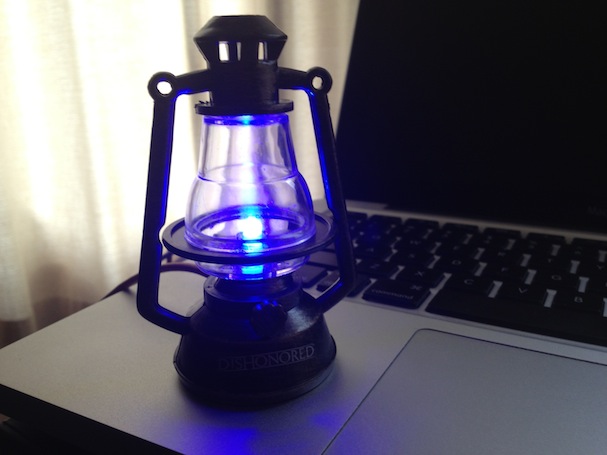
What do you do with Dishonored's USB oil lamp?

26583_1404714564368_1427496717_31101969_389938_n

Dishonored USB whale oil lamp

I received my copy of developer Arkane Studios' stealth-action title Dishonored today. Because I preordered it from Best Buy, I received a special bonus item along with the game: a USB-powered "whale oil lamp." I've written before about all the useless plastic crap I've accumulated over the years, so, hey...here's some more.

I can't fault anyone for wanting to throw a little something extra in with a video game, but what exactly do I do with this thing? I turned to the instruction sheet for some guidance.

"The Dishonored USB Whale Oil Lamp," it reads, "is a fun way of making your computer more attractive and your workstation more inviting."

Huh.

I read the rest of the page looking for anything else that might tell me what to do with it, but all it had to offer were a few safety tips ("Do not cover the lights with paper or cloth") and some extra-helpful troubleshooting tips ("If lights do not illuminate, make sure switch is in ON position").

OK, so it looks like I'm on my own here.

Read more >>

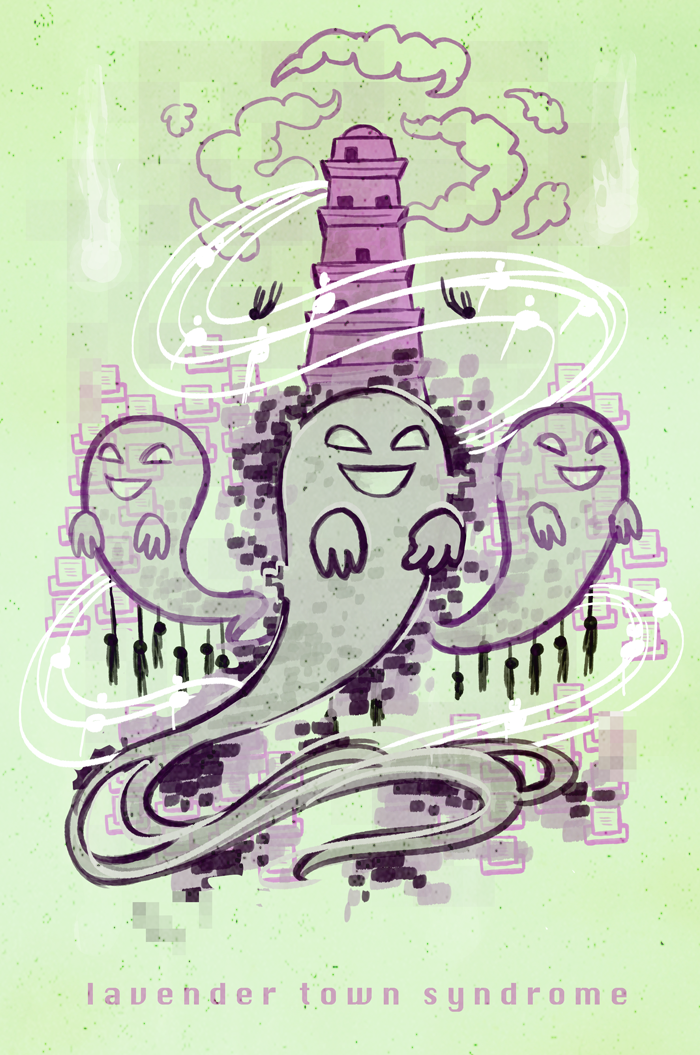
Pokémon urban legends turned into art

Default_picture

Lavender town suicides

I've always wondered why adults enjoy turning seemingly innocent toys and games into unspeakable horrors. The original Pokémon titles and even The Legend of Zelda: Majora's Mask have tons of creepy stories about them now, including haunted cartridges driving players insane and ghostly, disformed sprites that ultimately break your save files.

This month, artist Rebecca Reynolds is turning each creepy Pokémon story into a different image. Her first project tackles the eerie Lavender Town suicides legend where the unsettling music in Pokémon Red and Blue's haunted village drove children to supposedly kill themselves.

Like I said, I really don't understand this obsession with turning something relatively good-natured like Pokémon into some sort of waking nightmare. 

Read more >>

IndieCade is empowering me to become a game designer

Photo-3

IndieCade

I’m ready to transition from writing about video games to designing them. I wouldn’t have thought this move was possible if not for attending the international festival of independent games, IndieCade, for the last four years. I won’t continue as a weekly contributor to GamesBeat after Bitmob finishes merging with it at the end of this month. Fittingly, I want to look at my history with IndieCade as it sandwiches my journalism career and helps guide me to the next level.  

Read more >>

A Bitmob-to-GamesBeat update

Shoe_headshot_-_square

GamesBeat logo

Not that long ago (OK, OK ... it was a long time ago!), we announced that VentureBeat had acquired Bitmob. Naturally, since we've been telling everyone the merger would be done in a couple of months, it didn't. It's taken a lot longer than that.

Well, we're almost there now.

The code's finished, and we've done a lot of testing on it. We really, honestly, totally, truly believe that, by the end of October, Bitmob will shut down for good and move completely over to GamesBeat. If we do it right, we'll have migrated all profiles and articles over, and we can do the "business as usual" thing over there.

Phase one of this migration will be missing a few minor features from Bitmob, but it will have gained some new ones, too (especially in the Department of War Against Spam). We'll be improving the site from this upcoming initial launch, but the main hurdle now is just getting the first version of the site up with the ability for community members to post stories.

Please stay tuned!

In the meantime ...

Read more >>

Video game music just isn't the same anymore

5211_100857553261324_100000112393199_12455_5449490_n
EDITOR'S NOTEfrom Eduardo Moutinho

Sometimes nostalgia takes over objectivity. While some of the best gaming scores of all time have come from previous generations, plenty of today's franchises have amazing soundtracks. We just need to evaluate releases on a case-by-case basis.

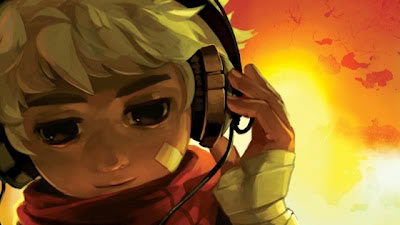
Bastion

I’m kinda fickle when it comes to most game elements. Eye candy is alright, and gameplay is important. But if a developer wants to instill a lasting, meaningful connection between myself and its game, the music needs to be amazing. I don’t like Halo: Combat Evolved, but its theme is fantastic. Mass Effect and Mass Effect 3? Amazing soundtracks. Bastion? Fez? VVVVVV? Win. Win. Win.

I could go at this all day. Mega Man, Super Meat Boy, The Binding of Isaac, the Prince of Persia reboot (yeah, I said it), Ninja Gaiden, Faxanadu.... Rush‘n Attack? Awful game, kick-ass first-stage song. Contra, Castlevania: Bloodlines, Earthworm Jim.... You got a good game? Show me the soundtrack.

But this write up isn’t about any of those releases. We’re gonna take a trip back to 1998. The place? My computer desk. The reason? Let’s just say Nintendo’s reputation for family-friendly gaming had my parents ridiculously locked in on one brand of console, so it was either Nintendo or Nintendon’t. The PC was my last, best hope for non-Mario goodness.

Read more >>

Spotlight: Survival horror is dead, what the Wii U offers, graphic adventure games, and more

230340423

Resident EvilThe Community Spotlight features some of the best unedited articles that didn't quite make the front page. This week, we explore whether the survival-horror genre is dying (or just undead), examine what the Wii U will offer gamers, and explain why video games are good for you. (Told you so, Mom.)


Survival horror is dead
By Jason Rose

While he acknowledges that different things scare different people, Jason identifies two key components of successful horror games: danger and difficulty. The problem? Today's titles, like Resident Evil 6, have abandoned these principles.

What does the Wii U stand to offer?
By Chandler Tate

Chandler wants to like the Wii U, he writes, "but at the same time, my mind is telling me no." He's not sold on the controllers and doesn't see much new in the gameplay, either. Do you agree?

Video games are good for you: The positive effects of video games
By Jesse Meixsell

Jesse gives us a collection of arguments in favor of playing games, including a number of sourced citations. What benefits have you seen from your time on the sticks?

The curse of graphic adventure games
By Alexander Kraus

Remember the old PC adventure games where the only method of movement was pointing and clicking? Alexander says the influence of that antiquated control scheme still affects games today, for better and worse. Interesting observations. 

Read more >>

Final Fantasy and the tradition of evil empires

Default_picture
EDITOR'S NOTEfrom Sam Barsanti

Plenty of games use an evil empire to quickly introduce an easy antagonist, but I'm pretty sure it's mathematically impossible for any franchise to have been doing it as long as the Final Fantasy series. Thankfully, Ethan is here to teach us a bit of role-playing game history.

I recently completed the mobile game Final Fantasy Dimensions, which brought back the series’ tradition of using an evil empire as the villain. This motif is one that is present throughout most of the Final Fantasy series, and it is easy to see why. Unlike the Dragon Quest series -- which usually focuses on an intangible, mystical or demonic villain as the bad guy (like Rhapthorne from DQVIII or Demon Lord Nimzo from DQV) -- an evil empire strikes an instantly recognizable chord with the gamer. It represents tyranny, oppression, subjugation, and the loss of the individual against a mass uniform force. The very word empire evokes so many sharp images in our minds due to our own background and history.

From a gameplay standpoint, the empire makes sense as an antagonistic force since it not only provides an overt villain, but also offers a large, overarching and layered game mechanic that can provide many colorful villains or characters under one umbrella (e.g. in Dimensions there are eight generals of the Empire's armies, and oh boy do you get to fight all eight of them eventually). At the same time, it also provides a counterpoint for your party: You are the individuals fighting against the masses that wish to conform you and crush you to a pulp. This provides not only high stakes for your plight but also consistently pushes the game toward an eventual showdown between your "individuals" and the empire.

Read more >>