Home
Home
I'm a fan of Roger Ebert. As film critics go, he's been a major presence in pop culture ever since I can remember, and his voice only got stronger when he lost the ability to speak. His writing carries weight in the world. I respect his opinions even when I completely disagree, but what I really enjoy is how he loves to salt a wound.
Several years ago, Roger Ebert declared that "video games can never be art."
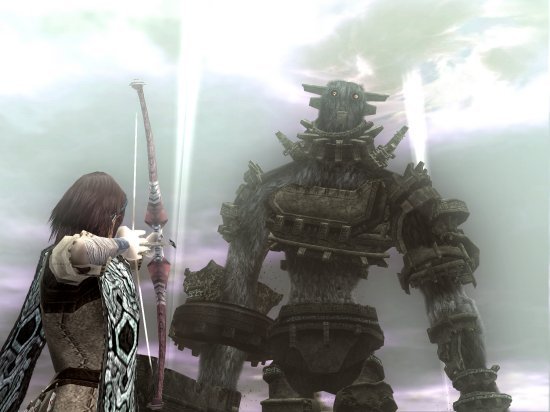
I got your neo-cubist theory right here, pal.
Refinements and equivocations followed, but Ebert stands by his core statement. He's not shy about bracing it on occasion, either. Everyone from Clive Barker to speakers at TED have challenged him and been shot down by simple reasoning with a pleasant buttering of snark. Games cannot truly be art. Full stop.
Truth be told, Roger Ebert is absolutely right...and entirely wrong. I can definitively say I've experienced moments of art in a video game. Maybe you have, too.
But who cares, right? Gamers aren't desperately hoping Uncharted 3: Drake’s Deception will qualify as high art, nor should they. Hell, many industry insiders (and people on this very site) write off the whole debate as worthless, but they're entirely wrong, too.
Here's why: Art is important, and it's treated with importance. Nobody attempts to legislate control over the purchase, rental, or public display of Shakespeare's plays, Mozart's operas, Picasso's paintings, or Ansel Adams' photography. Sure, you get people bravely trying to save responsible adults from controversial art and artists with less name recognition, but at least in this country, they tend to lose that fight. Art gets at least a partial pass to do what art does best...strive.
So for the purposes of this argument, I'm defining art as a creative endeavor expressing an idea that engages you on an emotional level in a way you might not expect but cannot deny. Art means something to you personally. It changes you. At its best, it inspires you.
Most games don't even reach for this. They're entertainments. Generally speaking, that's enough. I'll defend Raiders of the Lost Ark to the death as one of the greatest movies ever made, but is it art? I say no. A massive amount of artistry goes into making a video game, but it also creates strict rules and boundaries and makes you adhere to them. Art doesn't. Likewise, performing the basic functions of a video game -- navigating levels, completing objectives, destroying opposition -- doesn't qualify as art any more than playing a hand of poker. Indeed, Ebert argues those interactions invalidate the artist's intent. You can win a game; you can't "win" art.
Well, no. But interactive art has won acclaim for decades, all the way back to Robert Morris' Bodyspacemotionthings in 1971. Rather than invalidating the intent, consequences for your actions are very much a part of any game's vision and the player's experience of it. I'll go further: The power and intensity of those consequences can turn a game into art.
Your Blue Period ends now!
For example, Shadow of the Colossus sends you out to slaughter 16 magnificent creatures in order to save one girl's life and then, midway through, makes you seriously question whether it's the right thing to do. Short answer: no. From that point on, you're actively participating in your own tragedy. Similarly, Limbo puts you on a beautifully bleak, allegory-rich journey that subtly forces you to find meaning in its metaphors.
But BioShock's the game that kick-started the whole games-as-art debate by mining Ayn Rand objectivism to directly challenge the player's morality. Do you take the hard road and save little girls or murder them for personal gain? You make the call, not some character at a comfortable remove. I know heartless gamers who swore they'd waste every Little Sister they found, but they couldn't do it. The game got them. It changed them.
The game that got me showed up three years later. Heavy Rain opens with architect Ethan Mars horsing around with his boys. Before the opening credits roll, his eldest dies in a traffic accident and his idyllic life evaporates. Chapter 3 follows Ethan's weekend with surviving son Shaun.
These two people are so broken by grief, they don't know how to connect anymore, and it's your job to take care of Shaun for the night. Help him with his homework. Make him dinner. When you finally get the kid to sit down to eat, the camera shifts, Normand Corbeil's score drifts in, and Ethan simply watches Shaun eat in silence. This small moment, shared between father and son, is the best they can manage. It's a dim, beautiful spark of hope in the center of personal devastation.
As a father myself, that hit home.
Suffering for your art.
Of course, that moment won't happen unless you get the food, cook it, set the table, sit down and stay there. You can just as easily shoot hoops and wallow in self pity while your son zones out in front of the TV. Which resonates their emotional distance in a different way.
Aristotle maintained that good art imitated life. As an interactive medium, games can also strive to make you responsible for what you experience, and that's why you will never feel anything merely watching someone else play a video game. These are first-hand experiences, or they are meaningless.
So games will never be art for a casual observer like Roger Ebert...and that's fine. It's not his thing. Even if he dipped a toe in, there's no guarantee he'd feel what I felt. But his lack of knowledge on the subject did prompt him to issue a mea culpa last summer (though not a retraction) for publicly weighing in at all. "I was a fool for mentioning video games in the first place," he wrote.
Here again, he is entirely wrong.
This discussion is worth having. I like a good ride, but most games are painfully written, dully plotted cookie cutters. We can do better. Not every game has to be art, but every year the new releases push to do more than their predecessors, and every year the gamer population gets more sophisticated. Maybe it's time to transcend our medium more often. Games can be art, and developers must reach further, dare greater, and -- above all else -- strive to advance the artform.
After years of self-congratulatory repetition, we needed a kick to our complacency. It took no less than Roger Ebert to administer one.