
Or
Motion Control: Learning To Walk

Editor's note: I've been thinking about this myself; how the heck are we going to move around in adventure-style games with Natal? I mean, I'm not waking-up-in-the-middle-of-the-night thinking about it, but yeah. I'm glad it's not my problem! -Demian


Everybody and their mother wants motion control. With the raging success of the Wii, it's understandable. But is the slow move away from traditional gaming input methods for the best?

The tech demos so far have been relatively underwhelming:

The PlayStation Motion Controller was clearly pushed out of the gates a bit early, its demo essentially a sadomasochist's playground of different toys, paddles, and whips to fiddle about with. The fact that one of the first-person view demos was basically a phallus that spurted liquid from the center of the screen said it all, really.

The big push for Microsoft's full-body motion controller, Natal, came in the form of Lionhead's 'game,' Milo. Peter Molyneux described the project in an interview with Eurogamer:

"Milo can recognize the emotions on your face and the emotions in your voice. He can recognize certain words you say...he can recognize what you're wearing. If he notices you've got dark bags under your eyes he will say, 'You look tired today.'"

This may well be. But in the demo I saw, all he did was go fishing with his hands, and then steal a drawing for his homework. So assuming this is representative of the game experience, alongside what Molyneux has described, Milo will insult me, laugh at me, plagiarize me, and then ask me to go fishing. At which point I would like to drown Milo.

Pot shots at the tech demos aside, the biggest reason I'm unwilling to embrace full-body motion control is this: How the hell will you, or your character, gracefully walk from one room to another? Or even walk around? This is a question which seems to have been more or less ignored in the presentations by both Microsoft and Sony. Sure, they haven't been forthcoming with many details as it is, but the basic act of movement seems to be a pretty crucial one.

But in considering the issue, finding an elegant solution proves to be more difficult than you'd think.
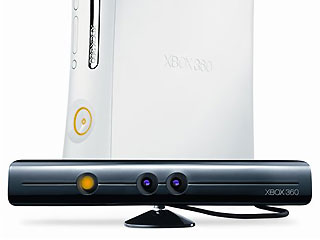
 
Microsoft's NatalNatal's Milo appears to be, for all intents and purposes, on rails. And while that will work fine for some titles, it won't be a fix-all solution. Ditto for the Sony Motion Controller's FPS mode.

I've had people suggest to me that adopting a pose like you're about to run, or are in mid-movement, could work. Natal or the PlayStation Eye could recognize the position and have your character begin to move.

But everyone who exemplified this tableau vivant of movement just wound up doing a convincing impression of an emergency exit sign. I refuse to play games looking like I forgot what I was doing midway through my best impersonation of The Flash.

The solution that seems most frighteningly obvious to me is having gamers jog in place to get from point A to point B. I don't think I could keep a straight face playing a game in this fashion.

Imagine the scene: You're playing an epic RPG. Your hero is standing in the doorway of a dimly lit cathedral. A bright white dove floats across the rafters, becoming engulfed by the darkness of a ceiling spiraling high above. The villain stands across from you on a gleaming pedestal. Flames roar out of the ground as wings sprout from his back and he begins to soar to the heavens, raining death and destruction all around. The hero steadies himself, and runs forward.

...Only he doesn't. He jogs forward. Maybe even half-asses it a little: bobbing up and down in place while hoping no one is looking.

The whole mess can be summarized in three simple words: Saviors. Don't. Jog.

And not to put too fine a point on it, but neither do gamers. I'm not in any way trying to push the tired image of video game enthusiasts as overweight and lazy. What I'm concerned with is developers taking what's a largely cerebral experience and making it so that our main interaction with it is a physical one, which seems to me to be a really great way to lose a lot of business

It really all comes down to that old question of whether gamers will be willing to exchange the highly passive roles they've been taking in their favorite pastime for a more active one. I don't want to sound supremely cynical in saying, 'I doubt it,' but until some of these core questions regarding interface are answered, I for one will have trouble getting totally behind it. After all, we have to learn to walk before we can run.

-Dashiell 'The Jogging Saviour' Asher

Comments (22)
Haha, oh man, I can't wait for the day of gaming branded treadmill peripherals! I think my fears are officially abated :P
Solution: Play on a treadmill. ;) Good point though, and I wonder if that means you still have to hold a controller in your hand to control movement, which would ultimately defeat the purpose. I guess we'll just have to wait and see.
I've been wondering about this myself. Seems like a simple push/pull with one hand could work well for movement, but is Natal sensitive enough to notice if you twist your hand in a particular direction in order to turn? Dunno. And then that just leaves one hand for whatever else you might want to do in a game. Well, and two feet.
Your writing's really funny! I loved this bit:
But everyone who exemplified this tableu vivant of movement just wound up looking like they were doing an impression of an Emergency Exit sign. I refuse to play games looking like I forgot what I was doing midway through my best impersonation of The Flash.
My two cents: there isn't really any point in addressing an immersive solution to walking without also dealing with turning at the same time. And seeing as how surround screens or VR helmets aren't on the table for now, dealing with walking can wait.
I think they'll need to make another add on for walking, like a wii fit pad that works like the more recent mouse track pads for laptops. It will recognize specific patterns of how pressure is applied and consider it walking. For example, my trackpad scrolls down windows if I touch with 2 fingers or move the mouse if I touch only with 1.
Honestly, I can't imagine playing FPS with anything like Natal. It's just so stupid. Maybe you just have a simplified controller you hold while playing Natal so you can play complicated games (control wise) like FPS games.
Uh, the PS3 motion controller has buttons on it. I don't think it would be that difficult to map movement in a game to the buttons.
This is only a problem for Microsoft, since they want to remove the controller altogether. The Sony's system is still uses a physical device, and the controller could easily be given an analog stick for movement or an attachment like the Wii's nunchuck.
great piece - the most fascinating point was the transition between a cerebral experience to an 'active' one. Also,Will the average house have enough space for Natal to take full flight? I remember seeing a trailer for it and there was this little boy playing a monster game swatting things with his hands and moving forward - near the end of the trailer, the boy was nearly right in front of the TV but his in-game avatar seemed to still have a whole street to progress through.
Exactly, I was pretty sure that was one of the things they were emphasizing about their device.
I'm imagining that the bulk of Natal's games will be party games for casual players which will sidestep, (heyo!), the whole walking issue. Games that require a lot of navigation will be controlled via a modified point and click method. You'll use your hands to point at an icon of some sort and you'll move and/or look in that direction.
@Rob: Does Microsoft want to remove the controller altogether? Maybe for certain titles designed to draw in new users, but I doubt they want to remove the controller for Halo or Gears of War. I think what you're going to end up seeing is certain games that are motion-only and others that use motion with the controller -- just like some Wii games use the Nunchuck and some don't.
I don;t think they are planning on booting the controller, but this article is specifically about the use of motion control in games and how it will be used. The problem is that with Natal, the amount of games that seem appealing using the Natal interface is limited because it doesn't incorporate a controller. If Microsoft continues to include their traditional controller with they console, there is nor problem. But they have a problem selling the idea of motion controlled games with Natal and expecting anyone to really imagine a unique, complex game without a controller.
Brett, I meant in their Natal-specific games. Microsoft was clear in their intentions when they had Spielberg rattle on about the controller being the last barrier to gaming. Will Natal games also makes use of the traditional controller? Maybe. I have my doubts.
I would like thank you very much for your superb ideas close to it! Moreover, you know, that the essay writers would like to use that stuff at the custom essays.
I just think you're taking Natal a bit too literally. When people were speculating on the Wii version of Twilight Princess they thought you'd have to spin around yourself to do Link's spin attack. Trust me, developers will try to do what makes sense on Natal, what will actually be improved with it. Arguably the best improvement of the Wii hasn't been its motion control but its pointer. It's made first person shooters and menu interfaces more accurate and intuitive. To make a first person shooter in Natal would probably still incorporate a controller but in combination with some hand motions for certain functions. Sony's motion controller looks so similar to Nintendo's that ideas used on the Wii will probably just end up on the PS3 but in HD. A PS3 version of Grand Slam Tennis with this technology is already being rumored. Most importantly though, like every major advancement in gaming, this is gonna take baby steps. Innovations like 3D and online gaming on consoles each took a couple console generations before developers actually learned how to design games around them. This generation's motion control game designs are going to come out as pretty embryonic. I wouldn't expect truly substantial motion control game design until the next console generation in which every machine will have accurate motion control from day one.
@ Daniel; How exactly is this too literal? I'm really just asking, not trying to argue. I just don't see Natal being able to handle what needs to be done to make a really interesting game. Like many people have said, it really looks more like a interface for navigation rather than gaming. And I hope they ad some sort of a peripheral device to Natal, I really think it needs it.
Jon, what happens when someone casually walks by the screen, or you involuntarily throw your hands up in frustration?
Wow, glad to see the piece is inspiring debate. Despite my cynical tone, I do remain cautiously optimistic about the development of these interfaces and am genuinely looking forward to seeing where the future is going. I agree entirely with Daniel that this process is going to take babysteps. To Shoe, thanks very much for the compliment!
Oh, and I think that if done right, Milo on Natal could change the face of Japanese dating sims. Have you seen the technology they're putting behind those things on the PC now?! They've got dating sims on there where characters through a camera can recognize your face and penis. I'm serious.
I think that this article is highlighting the worst of things that developers could do with Natal. The best things that I can think of are, for instance, an infinitely customizable control scheme. For instance, I've played plenty of shooters (especially PC ones) that just have too many features to be mapped on the buttons/keys in an easily memorable way. Why not have the less useful, but sometimes necessary options mapped to the a casual wave of the hand? I wouldn't mind being able to toggle through, say, the strength, speed, defense, and cloak modes in Crysis by just waving my right hand. Instead of taking four, two, or one different buttons on keyboard or controller, this could be reduced to one gesture. Beyond that, I'm sure there are far more productive uses for those who don't mind being conscious of it, like perhaps leaning your body to either side casually to look around a corner. I guess my point is that these gestural controls will only fail if they are restrictive with no benefits, as far as I'm concerned. If a game is restrictive by using motion controls but ultimately rewards you with an experience that's literally unattainable without motion and yet still exciting and fresh, I won't mind. Furthermore, if a game is far more expansive due to customization using motion, I certainly won't mind. The question is, are any developers smart, motivated, or creative enough to make these things happen?
You must log in to post a comment. Please register if you do not have an account yet.