Home
Home

It's been awhile since I've promoted a piece that celebrates the tropes and rituals surrounding video games. In his article, Matthew takes a moment to meditate on the wonderful feeling of starting up a new game.
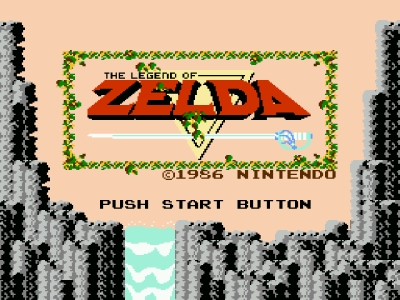
Feature films, best-selling novels, video games, and blog posts all have one thing in common. No, it's not that I'm shoe-horning them into the punchline of a terrible joke. It's this: They all start at the beginning. All of them require some gesture of initiation -- be it the turn of a page, the press of a start button, or the click of a title link.
I've studied multiple mediums over the course of my education, so I'm more than familiar with the stylistic and narrative conventions of film, literature, and video games. I know that films require opening credits -- or at least a title card. You can't just roll the film. What if no one's paying attention? Literature needs a table of contents, a dramatis personae, a title page -- something that let's you know you're about to jump into the story. Games, of course, require that the player press the start button before beginning their journey.
Somehow, though, only one of these conventions strikes me as peculiar and perhaps a tad outdated. It's the button: the one that has found itself on every controller and nearly every title screen of every game. What better topic to start my posting career at Bitmob with?
It may seem like a trivial matter, and I'll be the first to admit that it probably is, but it perplexes me nonetheless. As a student of film, my education trained me to pick up on all aspects of style and narrative -- especially when one jumps out at me as being a bit of an anomaly. The typical scenario for beginning a game is this: Once the game loads, you press start -- as most titles are wont to inform you. You select your mode, your difficulty, or some other similar setting, and you're off. But why press start in the first place?
The main menu should usually provide me with enough information to let me know what I'm playing and what my options are. Pressing the start button merely adds a few extra seconds of delay before I can start my gaming session, and in a medium often reliant on quick reflexes, hand-eye coordination, and short load times, a few extra seconds can seem like a lifetime. After all, I don't have to press start on my DVD's title screen; it comes up automatically, so I can jump right to a specific chapter or play the movie.
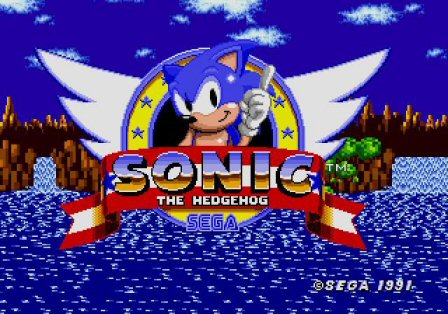
My theory is that the start button is part tradition and part technical necessity. After all, the game has to load the main menu, right? My guess is that in some cases the start button gives the system time to do that while also letting you mentally prepare yourself. But I think that it's more than that. The first start buttons on arcade games were there so that you would have time to finish putting your coins in before the game started. Since then, I think that it's become akin to a book cover; it's merely an aesthetic choice.
But opening a book seems so passive when compared to the pushing of a button. By pressing start, you're entering into a relationship that is part of what separates gaming from other media -- the unprecedented level of user participation. The start screen tells you, "This is the story that you've chosen, and you're going to have to tell it yourself." Pressing the button is the "all systems are go" signal that the game needs to receive before takeoff.
So am I advocating the removal of the title screen? Absolutely not. After this post is done, I'll probably go back to gaming without ever taking pause for this topic again.
I like it though. The start button is just one of those little, unique quirks. It's wonderful to think that although it's something tiny, it's one of many traits that set gaming apart from other mediums -- that give our hobby a life of its own. It's not a novel, and it's not a movie. To some extent, you're the author. A book will sit on a shelf with its story told, whether you read it or not. The last page exits along with the first. A film will roll whether you're in the seat, in the bathroom, or out at the concession stand. But a game is only going to tell its story if you're there to experience it.
So what are you waiting for? Press start!