

Separator
Bitmob Breakdown: How do we make Brink better?
Me
Saturday, May 14, 2011

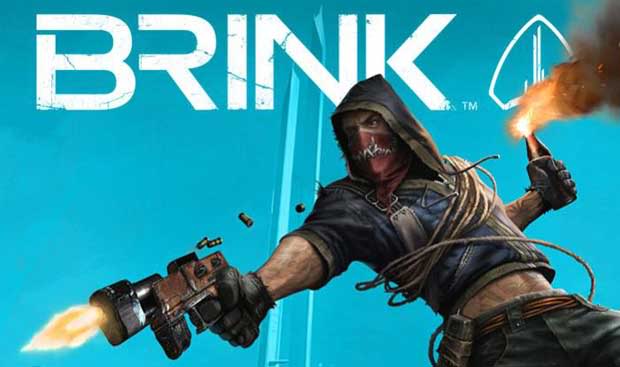
Brink Logo

In the words of Ratatouille’s restaurant critic Anton Ego, “We thrive on negative criticism, which is fun to write and to read.” But there come moments when we have to remind ourselves that such entertaining commentaries tend to be nothing more than cheap thrills. And so I ask: Why not provide suggestions for fixing bad game design rather than simply wag a finger at it? These developers work their asses off, so they deserve such feedback, correct? Every month, I will find a game that had great potential yet failed to deliver. I will point out some of the obvious flaws, give a few of my own tips on how to fix them, and then open this up for you to offer your suggestions as well. It’ll be kind of like fantasy football, only manlier.

This month, we’ll take a look at Brink from developer Splash Damage. This game promised a lot of great ideas and had a lot of gamers crossing their fingers (including me). Splash Damage aimed (no pun intended) to change the first-person-shooter genre by implementing new and risky ideas, splicing together subgenres, and combining multiple types of experiences. They fell short, though their efforts and ideas should not be dismissed. Here are some of Brink’s faults that should definitely be reworked:


Blending single-player with multiplayer

I was excited about Splash Damage's plans to integrate single- and multiplayer into one seamless experience, but the results disappointed. The game simply took multiplayer, made human players and bots interchangeable (not a new idea), and slapped on a few simple cutscenes before every match for the sake of narrative. If you want to successfully blend the unique features of both modes, then look for inspiration in games that have been successful without any multiplayer at all.

A stellar solo experience features far more than just the one-step process of going from point A to point B. Along the way, they reward you with chunks of narrative, additions to the gameplay (new moves, weapons, etc.), and different obstacles in your path. If Brink wanted to deliver a competent single-player experience, it would have featured more narrative than an intro cutscene to each map, more gameplay additions than upgrades to already-existing skills, and more obstacles than just the enemies of the opposing team. Brink is a multiplayer game at heart, so that aspect of its design holds up nicely. It’s fast, frantic and fun as hell. The only thing missing is actual single-player elements.
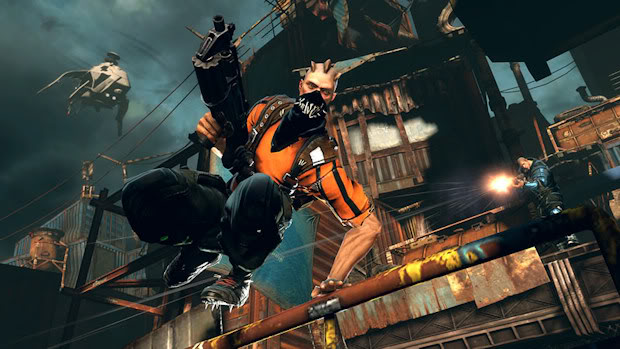
Traversing with ease.

Free-running/parkour

Mirror’s Edge was a great game and provided a new, fresh take on the first-person genre. It showed us that fast, free-flowing movement could be used in tangent with the environment and level design. It worked so well that guns weren’t even the main focus of the gameplay. Fortunately for fans of Mirror’s Edge, Splash Damage saw this idea and thought it would go nicely with the fast pace of traditional shooters that we’re all used to. They were right, except they left out one crucial thing: more opportunities to use it.

In Brink, this type of navigation is known as SMART (Smooth Movement Across Random Terrain), and its purpose is quite clear. The only problem is that a lot of the maps are as flat and boring as a Nickleback song. What made this feature useful in Mirror’s Edge was the nature of its setting; a free-running mechanic works perfectly within the variety of highs and lows that are found in urban locations. Brink lacks all of the above, rendering its SMART feature nearly pointless.

The fix is easy: Tailor your level design to your gameplay/controls. Gears of War’s maps feature waist-high walls because of its cover-based shooting. Halo’s locales are large and sprawled out because of its vehicular elements. Most of the areas in Brink feature no unique flavor and could easily be found in any other shooter. If you’re going to have a game with free-running in it, then design your setting accordingly. Everyone in the world of Brink seems to know parkour, so why wouldn’t the developers build their architecture with that in mind?

Customization and RPG elements

After the Call of Duty franchise struck gold with the implementation of a leveling-up system into its multiplayer, others have tried desperately to copy it. Brink tried bringing in a little bit of that, but with a max level of 20, players won't see a lot of long-term benefit for continuous play. You can access most weapons within an hour via the game’s four “challenges," and you can unlock all of the character aesthetics within a couple of days. That’s not enough!

If you want to provide a legitimate RPG experience with your shooter, then make sure you offer enough to keep the player coming back for more. Multiplayer shooters are supposed to last people weeks, after all. Developers: If you’re going to give something like this a shot, then make sure you’re giving us a Reese’s and not just a Hershey bar with “peanut butter” written on it in frosting. Trust me -- your audience will thank you for it.


Your thoughts

You’ve heard what I have to say about Brink’s shortcomings and how to possibly fix them; now give some of your own suggestions! Even if you haven’t played the game (which I don’t suggest unless you can rent it), you can imagine some great possibilities from the aforementioned ideas. I know I did.

If we’re lucky enough, perhaps Splash Damage or another developer will see what we’ve come up with, take everything into consideration, and give us the opportunity to enjoy a fresh experience in a genre that many have gotten bored of. You never know who could be reading these, especially if we offer ways to better the medium rather than just tearing it to pieces.

 
Problem? Report this post
BITMOB'S SPONSOR
Adsense-placeholder
Comments (20)
Twit
May 14, 2011

The map design is a rela let down. Most of my SMART movement comes from just moving forward in a line from spawn like a long drop or over a railing which happens to be in my way. There are some interesting opprotunities to flank using SMART but that takes some experience and experimentation and it usually just cuts corners or something similar.

I feel like the character archetypes are a bit generic or bland. I'm not even quite sure where I'm going with this but here I go:

All 4 classes just change how you interact with your team mates and the objectives. It doesn't feel like your changing the core mechanics of the ineraction but just the extra parts. For example, TF2's engineer would never fight head to head with any class except a spy because he relies on his sentry gun. Battlefield's recon normally never heads into close-quarters combat on purpose unless he's armed with a shotgun instead of a rifle.

Sure engineers can also construct turrets and medics can buff health, but all the characters use the same weapons and combat tactics. Is it a valid issue? Probably not. It may be more of their act to pursue CoD or blend CoD with other class-based games. But it's something that bugs me as a consumer regardless.

Me
May 14, 2011

I was going to say the exact same thing about the level design. It think it needs more verticality. The levels are too flat and I'm not using the SMART system to it's full potential.

I also feel that the classes could be balanced more. The Engineer can put turrets and buff people. Medics can give health,revive themselves and teammates. A soldier can only distribute ammo. It doesnt seem very fair.
 

Game modes are a must. There's only 2 I think and I don't want to say that I'm bored, I just need more variety. Something as simle as Capture the Flag could change everything.

Me
May 14, 2011

That's the first thing that came to my mind in regards to the SMART feature, Marcel. Splash Damage actually tried selling the concept by saying, "In other shooters, a table is something that gets in your way. With SMART, you can just hop over the table." Really? Are there hordes of mahogany counters and leather ottomans keeping people from enjoying Modern Warfare? Give me the opportunity to jump rooftops and scale the canopy of the shanty towns!

As a heavy soldier wielding the minigun, I tore through light classes like they owed me money. The one thing that could have tipped the odds in their favor was a high vantage point, but SMART's restrictions made that impossible.

Tumb
May 14, 2011

Could it be that the developers of Brink only implemented so few unlockables because they were busy? I mean, they implemented new gameplay mechanics, allegedly offered a vast array of customization options - maybe there wasn't much time left. Scheduled time, I mean. So they planned from the beginning to give a low level cap out of the box and just endure the inevitable complaints, while they already started to work on more unlockables that are planned to come as DLC. (Free or not).

I'm merely speculating.

Me
May 14, 2011

That's a decent concecture; I often assume the same thing. Time constraints play a large role in the quality of a finished product -- especially for smaller companies who don't have the financial support to extend a development cycle. That may very well be the case with Splash Damage and their lack of content.

Still, I don't see that as an excuse for anyone to "bite off more than they can chew," as it is said. If your game's selling points don't quite make the finished product, then that constitutes as a failure.

Even if they plan on spackling the cracks with DLC, that usually won't help mend the tarnished reputation the game now has. I'm always bummed out when I see this happen, though; I love it when smaller companies kick ass.

Tumb
May 15, 2011

<< Still, I don't see that as an excuse for anyone to "bite off more than they can chew," as it is said. If your game's selling points don't quite make the finished product, then that constitutes as a failure. >>
Was that a selling point? Did Splash Damage specifically advertise with a high - or even standard - level of .. well, leveling?

Me
May 15, 2011

Yeah, they really did try to sell the game on its RPG elements, ensuring that the content would "ensure everyone has a truly unique character." Usually, when a developer says such things, you assume they are going to have a level cap well above 20, and content that takes for than a few days to fully attain.

I wouldn't be hounding them on this if they didn't make a big deal out of their RPG elements.

Default_picture
May 14, 2011

"And so I ask: Why not provide suggestions for fixing bad game design rather than simply wag a finger at it?"

Because we're not game-designers.

Me
May 14, 2011

It doesn't take an aerospace engineer to know that rockets aren't supposed to explode. If you spend enough of your life playing games, merely saying "this sucks" is pointless and gets people nowhere.

May 15, 2011

So only game designers can offer constructive criticism? Have you never played a game and had your own ideas on how to make it better, or would that line of thinking be forbidden to you without a knowledge in game design? It's easy to spot a bad game, but it takes a little more thought to do what Perez has done and offer up some small ideas that anyone can understand, game designer or not. We can continually call a bad game, but where does that get us? 

Default_picture
May 14, 2011

Dear NASA,

My suggestion is to not have your rockets explode. Maybe you could make the rocket so that it can't explode. Or maybe if it needs to be able to explode, have it not explode when it shouldn't be exploding. I don't know what the exploding-rocket mechanism is, but it should be rethought.

Default_picture
May 14, 2011

In case that's too subtle:

"It doesn't take an aerospace engineer to know that rockets aren't supposed to explode." <—— Wagging the finger. Don't know how to fix it, but saying it shouldn't happen.
 

"And so I ask: Why not provide suggestions for fixing bad game design rather than simply wag a finger at it?" <—— What you said.

Me
May 15, 2011

If you're hoping to get me to eat my own words, Pierce, I hope you're a patient person; I'm a very big man with a very large appetite. I can even eat two foot-long Subway sandwiches in one sitting! Kirstie Alley ain't got nothin' on me.

None of us are game designers, Pierce. We're all merely fans of the medium who want to see it reach its pull potential. By your logic, nobody on this site should have the right to make any of the statements they have made. I'm sorry, but we don't feel that way. Everyone has a voice, and that voice should be heard.

Credentials obviously don't apply here, so perhaps you should think about that before questioning someone's authority to state their opinion.

Default_picture
May 15, 2011

The delivery of the message loses its potency when you have to explain yourself. Here I go anyway.

Anyone in a creative position knows how useful reviewers and critics are in pointing out flaws and areas that could be improved. Similarly, those artists know that criticism doesn't translate to suggestion. Through years of thinking critically and reviewing games, critics and reviewers are expert critics and reviewers. They know what works when it is presented to them; not so much, I would argue, the implications of implementing an idea.

We can pinpoint what's wrong, and sometimes say why it doesn't work: "This PC game has a console menu. That's very counter-intuitive due to the difference in comparison with other PC games' menus." But how many times has it been said in podcasts, forums, blogs, what have you (recent example found in "This Year in 1UP Yours 2007" with Shadowrun developer Mitch Gitelman) that audiences and enthusiast-press don't even understand what changing something like that means or entails? Furthermore, multiple journalists-turned-developers have expressed their change of perspective seeing the inner-workings of their hobby. Jeff Green couldn't move a box, Luke Smith and Shawn Elliott have talked about the difficulty of going back to a journalist standpoint.

If it's down to semantics, then your language wasn't very clear to me. There's a difference between pointing out a particular problem—id est why it sucks rather than "it sucks"—and saying what you'd need to do to fix it. I'm for the former, definitely; the latter feels as useless as "add more color" or "give it more beats."

Me
May 15, 2011

Again, by your logic, nobody on this site should have the right to make any of the statements they have made. There are very few cases where a community piece will outright blast a game, developer, or aspect of the industry. The majority of this community tends to offer its suggestions to fixing a perceived problem (a fact that I'm quite poud to state). The people here feel inclined to offer more than just shame language.

I'm an art graduate. After every assignment, we were required to cretique each other's work; the catch was that we were only allowed to speak up if we had a suggestion. Why? Because flaws are so prevalent in everything human that any "jackass" can expose them. You claim that statements such as "add more color" are useless, yet you probably have never been in a classroom of creative minds where such statements were very necessary.

Besides, how is merely pointing out a fault without a suggestion any more useful than offering up your own knowledge on the subjec?. Don't sell yourself or any other gamer short; there have and always will be plenty of cases where fans know infinitely more than professionals. That's why I came up with this idea. Bitmob is a community of extremely bright gaming minds, and it seems wasteful to not give those minds the opportunity to speak out.

By all means, write up something yourself in defense of raw criticism rather than the constructive kind. We encourage that sort of thing here.

Because, you know, "game designers" aren't the only ones who matter in this industry.

Default_picture
May 15, 2011

"By all means, write up something yourself in defense of raw criticism rather than the constructive kind. We encourage that sort of thing here."

OK. My criticism of your article got you to more convincingly and more eloquenty argue your point of view.


Dan__shoe__hsu_-_square
May 15, 2011

Funny thing is -- and this is very relevant to Pierce's snarky remarks -- I've actually talked to industry publishers and developers who have specifically said they wish reviewers would be more constructive in their arguments instead of just having fun tearing down their products. Now, I'm not saying we should change reviews to appease them. But I do know some game makers who would love what Ryan's doing with this series here.

Default_picture
May 15, 2011

Of course they love to hear what gamers and reviewers have to say. Levine needed some jackasses to fix Bioshock's shortcomings. But Levine didn't listen to their suggestions as to how to fix what they were laughing at; he let their design team handle that.

Default_picture
May 15, 2011

edit:

"But Levine didn't listen to their suggestions as to how to fix what they were laughing at; he let the design team handle the fixing."

Jayhenningsen
May 15, 2011
As a gamer who has personally seen one of his suggestions make it into a game, I find Pierce's comments amusing. Certainly, the number of good (and feasible) player-made suggestions is pretty low, but the idea that people who don't design games for a living shouldn't make suggestions at all is ludicrous. History has proven many times that great ideas often come from outside one's specialty. Also, it's not like game designers are born that way. I'd venture to say that most of the ones alive today started out as gamers.

You must log in to post a comment. Please register if you do not have an account yet.