Separator

Disposable Media: Video Games vs. Board Games

Dscn1538
Tuesday, November 30, 2010
EDITOR'S NOTEfrom James DeRosa

I have to disagree with Leslie. For me it's all about the experience. I'm a pretty narrow-minded gamer who has a lot of niche tastes, and I generally stick to quirky, weird, and experimental titles. Of course, I'm not sure my preferences are representative of the average game buyer.

I was in the music section of Barnes and Noble when it hit me. I was looking at a copy of Neil Young’s Le Noise, and I told my girlfriend that I could borrow or download it rather than pay $17 for the album. As we walked out of the music section, we saw the store's board-game selection. I eyed two items that cost $35 each. It was then that I realized I was willing to pay twice as much for something I might only be able to play once a month. If I bought the album, I could listen to it whenever I please.
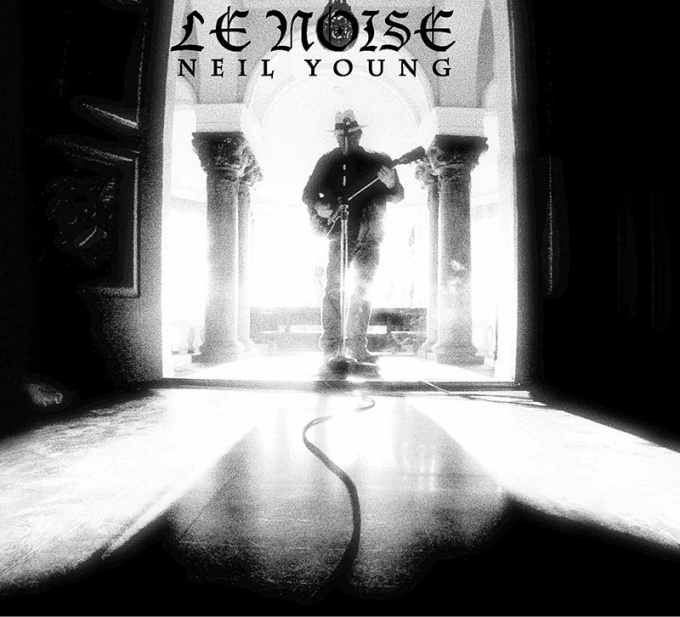
Neil Young
I still really want this album.

It dawned on me that the reason I devalued the album is because I saw it as something I would consume -- listen to it a dozen times and forget about it. The board games are experiences. This distinction is important because it explains the direction my video-gaming habits have gone. I don’t buy games often. And it's not because I don’t have the money. It's because new, must-have experiences rarely present themselves to me. Mount and Blade and Men of War generally scratch any interactive itches I get. And my Steam account features more than half a dozen shooters I can play any time I please.

While both video games and board games are consumer products, the culture surrounding the former has become consumption focused. Games are disposable: We buy them, eat them up, and throw them away, either metaphorically or literally.


I remember back when I thought it was a big deal to have Spore, Grand Theft Auto 4, and Mass Effect on the first day. I wanted to play as many titles as possible, and when I couldn’t find a new one, I would seek out reviews and watch videos. I read EGM and listened to podcasts. I commented on forums and had arguments with friends. Gaming became about experiencing the breadth of product, not the experiences themselves. Then something changed.

I got into board games.
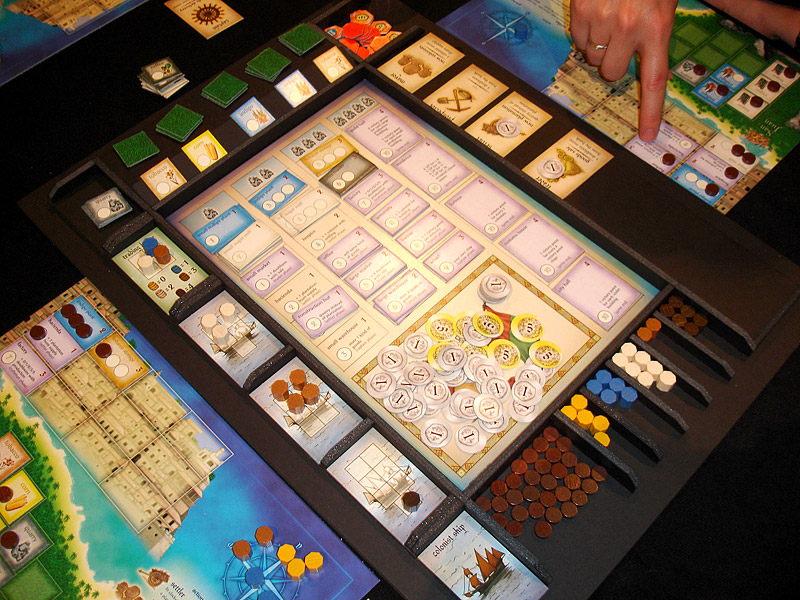

It's not as complicated as it looks. No, wait a sec...it is.

I am not saying that board-gaming culture doesn't possess this quality; it does. Enthusiasts refer to it as "the cult of the new.” This term refers to people who obsess about the newest games. Most of the community, however, focuses on playing the best efforts in the format, regardless of newness or age. Two of the most popular titles on BoardGameGeek.com right now are Puerto Rico and Agricola: One is seven years old, and the other is three. To put that into perspective, imagine if the most popular video games right now were Grand Theft Auto: San Andreas and Madden 07. My favorite, Memoir ’44, came out six years ago.

As a board-game convert, my comparison is probably unfair. Since Bitmob is a video-game website, I'd like to know what you think. Why is it necessary to ceaselessly buy new games? I thought the economy would have driven down the price of new game. I also thought the whole new-games-equals-big-sales thing would have gone away. My assumptions were so incorrect that EA and Activision are starting to move PC prices to $60. It's insanity, but it's also their right to price them however they see fit and my right to decline to buy them.

Do we merely consume games, or do we experience them? Is a night of Black Ops on Xbox Live as fulfilling and meaningful to you as a round of Risk with some buddies?

 
Problem? Report this post
BITMOB'S SPONSOR
Adsense-placeholder
Comments (9)
Photo-3
November 29, 2010

I've never tried any of those board games you have listed, but I totally get where you're coming from as far as paying for experiences (rather than simply products) go. Have you played the card game Bang? It's amazing!

Alexemmy
November 29, 2010

I've thought about buying some of the board games that I've heard a lot of talk about, but I would never have anyone to play them with. It'd be cool if I could organize some kind of weekly board game session but I only have one or two old friends that I would still hang out with. Everyone else has moved away.

I definitely see your point about music though. It used to be I would be a CD and lay on my bedroom floor the rest of that day with it cranked as I read the lyrics from the booklet. Nowadays I just download the new CDs I want, throw them on my ipod, and listen to them while at work and only half pay attention. Video games are still different to me because there is no way you can skip through a game or multitask while playing. You sit down in front of the game and play your way through it from beginning to end. In that way I don't feel so casual about games as I do with music.

Robsavillo
November 30, 2010

A Eurogamer op-ed makes a [url=http://www.eurogamer.net/articles/2010-11-29-artists-of-convenience-opinion]similar argument[/url] about the disposable aspect of games and places the blame squarely on publishers.

I think this is a byproduct of the hits-driven marketing strategies of the biggest publishers as well as the game press's incessant march of previews-focused coverage. We have little retrospective in the conversation, thus, we see classics only mentioned in relation to new games on the horizon.

Not to mention that video games suffer from technical hurdles that board games do not. A copy of Space Hulk (the board game) will always work -- provided that I maintain all the physical playing pieces (which is easy enough to do). Conversely, my copy of Space Hulk: Vengeance of the Blood Angels (the video game) stops working once I upgrade to Windows 7 (and I was lucky enough that I could run it in XP with several work arounds).

Brett_new_profile
November 30, 2010

Along the lines of what Rob said: Board games differ from video games in that technology doesn't really factor into it. Agricola doesn't look much different than games made today or games made 10 years earlier. Video games, on the other hand, benefit immensely from technology. Part of the reason people are playing Black Ops today instead of COD 3 is because of the vast improvements in tech -- and the fact that most everyone else online is playing it. Board games don't need those things, and that's why the formulas that work remain perennial.

Scott_pilgrim_avatar
November 30, 2010

I sort of fall in the same camp as James described in his Editor's Note, so my initial response is that we choose. This past weekend, I borrowed Dante's Inferno from a friend I was house sitting for. I didn't want to deprive him of it when he got back, so I plowed through it in a couple of days. I definitely "consumed" that one. On the other hand, I also spent a maybe five hours to finally play a few games of Last Night on Earth with friends. Those I "experienced" and are what I'll remember most from Thankgsiving '10, haha!

All that said, the consumer culture has certainly pervaded the industry, and one of the most annoying examples is in the journalism. Sure, it's nice to be able to read a game review a week before the game ships, but knowing that the reviewer probably consumed instead of experienced, sometimes makes me question the review. But I also just don't like being made to feel like I'm somehow behind the times.

For example, IGN has been asking its readers to weigh-in on their nominations for best games of 2010 for almost a week. Really? The year isn't even over yet, and we're already discussing the best games it produced? And we're doing it as if I've had the time to play even half of those games?! And most of the games I did play aren't even on their list! In fact, less than half of the games I've played this year even came out this year!

But this is why I like Bitmob. I can visit the site and read about a game that came out two years ago because the writer just got around to playing it, like me.

Shoe_headshot_-_square
November 30, 2010

I'm strange in the sense that I like collecting things, so I like having a game collection. Seeing shelves full of games excites me, and I love scanning them over to see what I'm playing next.

I'm the same with with board games, too...and I find myself collecting them faster than I can actually play them. A lot of that is because I get too lazy to read the rules (right now, The Lord of the Rings, Race for the Galaxy, and The Last Night on Earth are sitting there, unplayed, unloved). But I like the *idea* that I have these new games available to play the instant I want.

I actually have a lot of video games because of the line of work I'm in, but I love collecting board games because they're all such new experiences for me. Each one has different rules, ideas, themes, gameplay, components...I think board games are wildly more different than the average console game. So I love going into the store to discover new experiences. I don't get that magical feeling or sense of discovery with video games so much since I'm so thoroughly immersed in them.

Shoe_headshot_-_square
November 30, 2010

I need that custom Puerto Rico tray, by the way. I need one for Caylus, Agricola, and Goa, too! Look at me name-dropping board games like that. ;)

Robsavillo
December 02, 2010

Leslie, a little off topic, but I stumbled upon an [url=http://www.daysofwonder.com/memoir44-online/en/download]online version[/url] of Memoir '44.

Dscn1538
December 02, 2010

Rob, I love the online version of Memoir. It is pay to play, but you get 100 GI for free, which gives you up to fifty free games. I play online quite a bit, so it would be easy to find me. My name is: Quintmorrison.

I think that board games are sold primarily as experiences, and every element of them are. The feeling of opening a box and handling the components. Shoe, I think reading the rule book is as much of the experience as playing it. I find that the computer and video games that I do play are based more on gameplay than story. My roommate wants stories from games, so he finds Crackdown to be terrible because it expects gameplay to move him along and not the story that he enjoys in noninteractive games like AC2. I move more toward the experience of board games out of disgust for how story focused many video games have become. I don't mind story, but the gameplay is what I am actually experiencing: it is the element of the game that gives me agency. I want AC2 to start in the city and let me run around and interact. My roommate wants Crackdown to tell him a long story about a cop and his life. My point is, as I get older, I find it a little ridiculous that these games are trying to tell me stories when I can open one of my half dozen Creative Writing textbooks and get a better story in less time.

You must log in to post a comment. Please register if you do not have an account yet.